what approach did you consider and where did you get stuck? if you are inexperienced it makes sense that you would try to avoid tracing existing car wiring and connecting anything to it other than power. one simple option is to use reed switch and magnet... or inductive proxy sensor..
Older car doors used a NO (Normally Open) simple push button switch going from Dome Light to Ground. When the door was open the NO switch closed completing the dome light to ground (chassis).
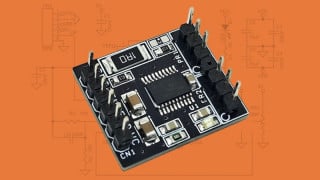
Your question is difficult to answer not knowing the physical arrangement of the car door in question. A simple prox switch as seen here or similar may be a good start. You make no mention of the current your light will draw? You also make no mention of your mounting configuration?
...or for that matter, the detail of what the proximity switch is intended to sense. Most likely your car was manufacturer with the light and a switch that turns it on when the door is open. Why change this?
An actual PROXIMITY SWITCH, a non-contact, non-mechanical device, is not that simple. At least, if you are wanting such a switch in a small durable weather-proof housing. Common Fully electronic proximity switches mostly include an oscillator circuit arranged so that proximity to "something" changes the condition of the oscillation and that changes the state of the output. So the circuit has quite a few components.
I have included quite a few proximity switches in machines, but never designed on, since it has been much less expensive to purchase them ready made.
that is correct (here is an example https://www.ti.com/tool/TIDM-INDUCTIVEPROX) which is why i asked what is the objective. for single install interfacing to existing door switch may be easiest (sort of). but if this is a product that should be installed into any vehicle (different wiring, connections) then design would need to be something that can be universally applied. and if not willing to touch vehicle wiring, simplest solution may be to use own sensor, specially if concern is water/moisture or finding correct style of connectors. reed switch can be sealed easily and held in place by piece of tape or clip. another option is to interface with vehicle network via ODBII and read state of the signal(s). there are many ways... so what is the real goal and preferred path in this case?
It would be a serious challenge to produce as reliable a door switch as the MOPAR switch used from the early sixties thru at least most of the eighties. Not only did those switches need to last forever and never corrode or rust, they had to be timed perfectly with opening the door when the body sheet metal clearances varied a half inch or more. Without any adjustment after installation. I know how they did it.

 Facebook
 Google
 GitHub
 Linkedin