Facebook
 Google
 GitHub
 Linkedin

Here's an article from AAC and I need some clarification about single ended an double ended inputs:
https://www.allaboutcircuits.com/te.../chpt-8/single-ended-differential-amplifiers/
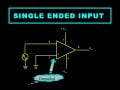
An op-amp has a differential input consisting of two common emitter amplifiers with NPN transistors. Normally, the non-inverting input of the differential pair is grounded and the input signal is applied to the inverting input which is the other amp of the differential pair. Since both transistors are biased 1/2 way ON, the input signal will add to or subtract from the bias point of the transistor for the inverting input. However the since the transistor for the non-inverting input is grounded, it will just stay turned on 1/2 way.
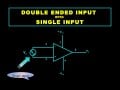
So what is the practical effect of using a single ended or a double ended input?
https://www.allaboutcircuits.com/te.../chpt-8/single-ended-differential-amplifiers/
An op-amp has a differential input consisting of two common emitter amplifiers with NPN transistors. Normally, the non-inverting input of the differential pair is grounded and the input signal is applied to the inverting input which is the other amp of the differential pair. Since both transistors are biased 1/2 way ON, the input signal will add to or subtract from the bias point of the transistor for the inverting input. However the since the transistor for the non-inverting input is grounded, it will just stay turned on 1/2 way.
So what is the practical effect of using a single ended or a double ended input?