Clarification of Relay markings and voltages

Thread Starter

paul28

Joined Aug 27, 2024
18
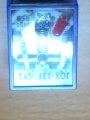
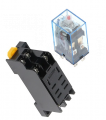
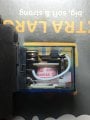
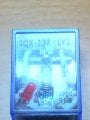
I have an unbranded generic model JQX-13F LY2 relay that is marked as 12A 240 VAC / 28VDC on the clear plastic casing enclosure to the coil. The coil plugs into the terminal base via connector pins. The coil is marked as 220/240 VAC on the white plastic coil wrapping. The terminals are 8 (+ve) and 7 (-ve) for the coil, N/C 6-2 and 5-1 and N/O 6-4 and 5-3.

Does this mean the coil must be energised using a 240V AC power supply and that the limits for the current rating of the non coil terminals and pins and their associated wiring inside the relay and base are either 240VAC or 28VAC depending on whether these are taking DC or AC loads through them. In other words it is an AC energised coil for the switch to control either AC or DC signals/power so to speak. The difference between the VAC and the VDC is to do with limits for arcing across terminals.
IMG_2622.JPGIMG_2620.JPG

Any help on this would be appreciated.

Many thanks

Paul
 

Thread Starter

paul28

Joined Aug 27, 2024
18
I have an unbranded generic model JQX-13F LY2 relay that is marked as 12A 240 VAC / 28VDC on the clear plastic casing enclosure to the coil. The coil plugs into the terminal base via connector pins. The coil is marked as 220/240 VAC on the white plastic coil wrapping. The terminals are 8 (+ve) and 7 (-ve) for the coil, N/C 6-2 and 5-1 and N/O 6-4 and 5-3.

Does this mean the coil must be energised using a 240V AC power supply and that the limits for the current rating of the non coil terminals and pins and their associated wiring inside the relay and base are either 240VAC or 28VAC depending on whether these are taking DC or AC loads through them. In other words it is an AC energised coil for the switch to control either AC or DC signals/power so to speak. The difference between the VAC and the VDC is to do with limits for arcing across terminals.

View attachment 330202View attachment 330203

Any help on this would be appreciated.

Many thanks

Paul
1724780465577.png
 

panic mode

Joined Oct 10, 2011
4,913
i used to work with LY and very similar MY relays quite often.
unfortunately that part number is not complete...
LY2 is just a product family, not a specific product within family.

the JQX-13F is the pinout information
The LY2 is the DPDT series.
the rating value printed on front clear cover is for the contacts.
the rating value printed on the coil is for the coil
the +/- info next to coil contacts only has meaning of this is a DC coil.
Note: relay coil itself is of course not polarized but on DC models polarity does matter when indicator LED and suppression diode are present.

check this:
http://www.langirele.com/htm/general-purpose-relay-ly.htm

your relays full part number should be JQX-13F LY-2 AC240V S
 
Last edited:

Thread Starter

paul28

Joined Aug 27, 2024
18
i used to work with LY and very similar MY relays quite often.
unfortunately that part number is not complete...
LY2 is just a product family, not a specific product within family.

the JQX-13F is the pinout information
The LY2 is the DPDT series.
the rating value printed on front clear cover is for the contacts.
the rating value printed on the coil is for the coil
the +/- info next to coil contacts only has meaning of this is a DC coil.
Note: relay coil itself is of course not polarized but on DC models polarity does matter when indicator LED and suppression diode are present.

check this:
http://www.langirele.com/htm/general-purpose-relay-ly.htm

your relays full part number should be JQX-13F LY-2 AC240V S
Thank you. That answers my queries and confirms what I thought.

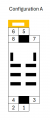
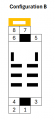
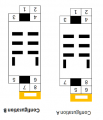
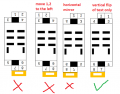
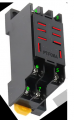
One last matter. The plug in base for the relay is not marked with terminal numbers. Would the below interpretation be correct or should the positions of 8 & 7 and 6 & 5 be swapped? i.e. Configuration A or B. (see below).

Many thanks

1724788813695.jpeg


1724789007163.png


1724789443134.png1724789500168.png
 

panic mode

Joined Oct 10, 2011
4,913
i do not understand the question.

also why are you posting images that are upside down or flipped/mirrored? texts in pictures need to be readable.
and why don't you post actual part numbers or whatever is written on it?
if you want others to help you, you need to make the first step yourself. a bit of photoshop done correctly goes long way...

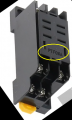
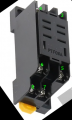
this is how it looks like when mirrored back and rotated so it is oriented correctly. now one can see and read PTF08A on it....
1724796653261.png

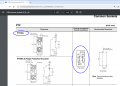
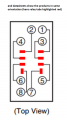
next step is to justs google it and find datasheet. note the fat lines representing socket connections (six horizontal and two vertical slots, top view). they are oriented in the datasheet the same way one is supposed to look and read the label on the actual socket. is this what you are after?
1724796889577.png

terminals 1 and 2 are not visible from this angle
1724797186988.png

so i turned your drawings the proper way (so that relay connections match the orientation used by me and the datasheet).
it is clear that both of them are wrong. you got the din rail clip release on the bottom but images are still mirrored horizontally and terminals 1 and 8 are not kitty corner from each other.
1724797898818.png
 
Last edited:

MisterBill2

Joined Jan 23, 2018
27,271
As for the relay ratings, it is indeed a relay with a 220/240 volt coil and the claimed contact rating is 12 amps, with 240 volts AC or 28 volts DC.
 

Thread Starter

paul28

Joined Aug 27, 2024
18
your configuration B is the closer match....
it can be fixed like this
View attachment 330267
Many thanks for this.

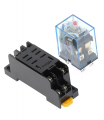
I was trying to be helpful by flipping the base because the relay in the photo on the vendor's site was not orientated the same way around as the base as you can see below:

1724840069518.png


Please note I had already asked the vendor for the data sheets but had not had a response. I had not realised the number on the base was a part number. Its the one thing I hadn't search for on the net.

So again a great big thank you for your help.

Hopefully now I can get my circuit to work. If not I am sure I'll be back to request more help and advice.
 

panic mode

Joined Oct 10, 2011
4,913
looking at things in correct orientation reduces chances of mistakes.
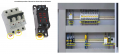
normally in electrical panels devices are mounted like this with release tabs at the bottom:

1724849743269.png

datasheets show products in such orientation as well:
1724849770372.png

compare that with some of images...
this is how it should be, top view, release tab at the bottom, label readable...
1724850110101.png

and then there are some others. human brain can compensate to a degree but it is clearly demanding more effort and increases chances of mistakes.
1724849983010.png
if other post had attachments like that, they would look something like this o_O
1724850764117.png
 

MaxHeadRoom

Joined Jul 18, 2013
30,589
To add to post #10, the mounting shown uses DIN rail, which many panel mount devices optionally use now, there are around three or four forms of DIN rail in use for panel building.
 

Thread Starter

paul28

Joined Aug 27, 2024
18
looking at things in correct orientation reduces chances of mistakes.
normally in electrical panels devices are mounted like this with release tabs at the bottom:

View attachment 330300

datasheets show products in such orientation as well:
View attachment 330301

compare that with some of images...
this is how it should be, top view, release tab at the bottom, label readable...
View attachment 330304

and then there are some others. human brain can compensate to a degree but it is clearly demanding more effort and increases chances of mistakes.
View attachment 330303
if other post had attachments like that, they would look something like this o_O
View attachment 330307
All noted and thanks
 
Top