Circuit with Variable Load – Switch-Induced Spikes When Changing Load

Thread Starter

a.antelmi1

Joined Dec 20, 2024
9
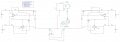
The circuit is a combination of two Improved Howland Current Pump subcircuits, alternated by two switches controlled by a voltage (Square Wave 0-4V), with two electrodes as a variable load (1-1kΩ).
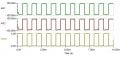
Everything works fine, except for the presence of spikes caused by the activation of the switches. I've already tried using snubbers and capacitors, but haven't found a solution that completely eliminates the spikes when changing the load from 1Ω to 10kΩ.
Any advice or suggestions would be appreciated! DEFINITIVO.JPG900_Ohm.jpg500_Ohm.jpg
 

MisterBill2

Joined Jan 23, 2018
27,179
Since neither the actual switches nor the actual load are sources of energy, it appears that the spikes are from the power supply. To avoid producing spikes the power supply regulation response needs to be faster than the load resistance rate of change. NOTE THAT SUCH A FAST RESPONSE WILL BE DIFFICULT TO ACHIEVE. In theory, all it will require is a supply with both zero source resistance and zero source inductance. In reality, that is a problem.
Now I am wondering what sort of medical application this is related to. The Medtronic organization has produced a large number of break-thru technologies, they may be interested in purchasing any company that has made any serious technologies.
 

MrAl

Joined Jun 17, 2014
13,667
The circuit is a combination of two Improved Howland Current Pump subcircuits, alternated by two switches controlled by a voltage (Square Wave 0-4V), with two electrodes as a variable load (1-1kΩ).
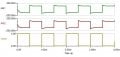
Everything works fine, except for the presence of spikes caused by the activation of the switches. I've already tried using snubbers and capacitors, but haven't found a solution that completely eliminates the spikes when changing the load from 1Ω to 10kΩ.
Any advice or suggestions would be appreciated! View attachment 341635View attachment 341634View attachment 341633
Hello,

Whatever you have some sort of power supply that has an output that jumps up suddenly when the load is disconnected, you have to have some sort of secondary clamp that can absort the power for at least a short time.
The trip voltage of this clamp can be a little higher than the normal output voltage.
There are a lot of different kinds of clamps the simplest would be a zener if the output clamp threshold does not have to be too accurate.
A typical type involves an SCR, but you have to make sure it is fast enough for your application. You may end up using a MOSFET based clamp circuit which would be faster. You can get very fast comparators and coupled with a MOSFET I would think you could get it to react really fast.
I am not sure exactly what you need as far as speed goes.
 

MisterBill2

Joined Jan 23, 2018
27,179
Another common trick to reduce power supply variation caused bt sudden load changes is a large shunt capacitor across the points that suffer the most from the sudden jump. That may be a problem if space is tight, because capacitors of 100 MFD or greater, or up to 1000 MFD, take up a lot of space.
 

MrAl

Joined Jun 17, 2014
13,667
Another common trick to reduce power supply variation caused bt sudden load changes is a large shunt capacitor across the points that suffer the most from the sudden jump. That may be a problem if space is tight, because capacitors of 100 MFD or greater, or up to 1000 MFD, take up a lot of space.
Hi,

Yeah and I would add to that, low ESR is probably best.
 

MrAl

Joined Jun 17, 2014
13,667
Even using a low ESR, it doesn't remove the spikes. The two sub-circuit are explained in the attached pdf.
Hi,

Snubbers have been around for a long time, but their design depends, for one thing, on knowing how much energy must be absorbed and dissipated. They would use diodes and capacitors and a resistor to dissipate the energy.

If a low ESR does not remove the spikes, then perhaps the value of the capacitor has to be increased. It also calls for very tight circuit wiring. In some cases you have to also add a series impedance like a small inductance.

An active clamp is probably the way to go though anyway.

I'll see if I can get the time to review that link information.
 

Thread Starter

a.antelmi1

Joined Dec 20, 2024
9
I can get acceptable results playing with a parallel capacitor, now how can I replace the switches with something commercially available?

Hi,

Snubbers have been around for a long time, but their design depends, for one thing, on knowing how much energy must be absorbed and dissipated. They would use diodes and capacitors and a resistor to dissipate the energy.

If a low ESR does not remove the spikes, then perhaps the value of the capacitor has to be increased. It also calls for very tight circuit wiring. In some cases you have to also add a series impedance like a small inductance.

An active clamp is probably the way to go though anyway.

I'll see if I can get the time to review that link information.
 

MrAl

Joined Jun 17, 2014
13,667
I can get acceptable results playing with a parallel capacitor, now how can I replace the switches with something commercially available?
A snubber is usually made with at least a diode, capacitor, and bleed resistors.
The diode conducts when the spike appears, and the energy of that spike is absorbed by the capacitor. As the spike goes away, the bleed resistor dissipates the energy absorbed by the capacitor from the spike. This action repeats for every switch cycle.
This requires a fast diode, a low ESR capacitor, and the value of the bleed resistor depends on how much energy has to be dissipated in order to keep the average voltage across the capacitor low enough so it does not charge up to the peak of the spike, yet keeps the capacitor voltage high enough so it does not absorb energy during the non-spike portion of the switch cycle.

To choose a switch you have to look at what the needed specs are, then look at some online stores and see if you can get one that fits that specification. I do not see any switches in your schematic though.
 

Thread Starter

a.antelmi1

Joined Dec 20, 2024
9
thanks, there are 2 voltage regulated switches, for switching between the 2 sub-circuit

A snubber is usually made with at least a diode, capacitor, and bleed resistors.
The diode conducts when the spike appears, and the energy of that spike is absorbed by the capacitor. As the spike goes away, the bleed resistor dissipates the energy absorbed by the capacitor from the spike. This action repeats for every switch cycle.
This requires a fast diode, a low ESR capacitor, and the value of the bleed resistor depends on how much energy has to be dissipated in order to keep the average voltage across the capacitor low enough so it does not charge up to the peak of the spike, yet keeps the capacitor voltage high enough so it does not absorb energy during the non-spike portion of the switch cycle.

To choose a switch you have to look at what the needed specs are, then look at some online stores and see if you can get one that fits that specification. I do not see any switches in your schematic though.
 

MisterBill2

Joined Jan 23, 2018
27,179
After re-examining the circuit in post #1, which, by the way, is drawn in a very confusing manner, it seems that probably a more detailed explanation of the actual desired performance will be a lot of help.
In addition, I see someplace a listing for "Homework Help", which , given that the TS is listed as a student, may put this thread in a different section.
Besides that, asking for a suggestion of a suitable commercial product switch tells me that the entire project presently only exists in simulation, which may be quite different from reality.
 

Thread Starter

a.antelmi1

Joined Dec 20, 2024
9
The circuit is divided into three subsections:

  1. Sink Section – This includes two operational amplifiers (dual-supply: -81V and 4V) configured as an Improved Howland Current Pump. It has two input voltages (3.4V and 0.1V) controlled by a switch, which is driven by a square wave generator. The output connects to the load section via another switch.
  2. Source Section – Identical to the Sink Section but with a single-supply (85V) for the operational amplifiers.
  3. Load Section – Initially designed as a variable resistor, it was later refined to better represent the skin-electrode model. It includes resistances for the double layer, gel, epidermis, and underlying tissues, along with capacitances for the sublayer and epidermis.

The design includes two pairs of operational amplifiers, where

the second acts as a buffer, improving output impedance and minimizing feedback current errors.

After re-examining the circuit in post #1, which, by the way, is drawn in a very confusing manner, it seems that probably a more detailed explanation of the actual desired performance will be a lot of help.
In addition, I see someplace a listing for "Homework Help", which , given that the TS is listed as a student, may put this thread in a different section.
Besides that, asking for a suggestion of a suitable commercial product switch tells me that the entire project presently only exists in simulation, which may be quite different from reality.
 

Thread Starter

a.antelmi1

Joined Dec 20, 2024
9
Now I need to transfer the simulation to a breadboard, and I need to figure out how to replace the voltage-controlled switches with practical components.

Since the simulation used ideal switches controlled by voltage, I’m looking for a suitable real-world alternative that can be implemented on a breadboard.
 

MisterBill2

Joined Jan 23, 2018
27,179
Given that there are four RC circuits i series with the load connection, which I am guessing is represented by the two ammeters, and the resistor between them, there is no way to avoid current peaks with instant change overs.
And for the two "voltage-controlled switches", any semiconductor switches will add a fair amount of complexity to the circuit because they must include driving circuitry. So I suggest appropriate reed relays. The "Pickering" company is a large and honest supplier with a lot of experience and they will have suitable devices available. Search for "Pickering Reed Relays"
 

Thread Starter

a.antelmi1

Joined Dec 20, 2024
9
I'll try and let you know, thank you very much
Given that there are four RC circuits i series with the load connection, which I am guessing is represented by the two ammeters, and the resistor between them, there is no way to avoid current peaks with instant change overs.
And for the two "voltage-controlled switches", any semiconductor switches will add a fair amount of complexity to the circuit because they must include driving circuitry. So I suggest appropriate reed relays. The "Pickering" company is a large and honest supplier with a lot of experience and they will have suitable devices available. Search for "Pickering Reed Relays"
 
Top