Changing USB Powered Security Cameras to AC 120

Thread Starter

pctechtv

Joined Aug 10, 2016
25
I have video cameras that run on USB power, but the factory USB cable is much longer than I need. The Lorex cameras I’m using have built‑in floodlights, and I want to install them in the same locations where my existing floodlights are mounted. That means removing the old floodlights and powering the Lorex cameras from the same AC wiring that currently feeds those fixtures. Is there a part or adapter I can buy — or safely build — that lets me shorten the USB power cable and connect the camera to the same AC power coming from the floodlight’s junction box?

I only show this as an example of what I might need. However it does not seem to be the most acquirable part. Could anybody link to an aquiable part?

Thanks for any help
 

Thread Starter

pctechtv

Joined Aug 10, 2016
25
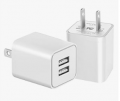
Will these do it?
If you need higher current, the one made for Raspberry Pi5 are rated up to around 5amps.
Hi, thanks for the reply. No, because I am cutting the wire. At the point of connection I really believe I only need about 5-6". The Lorex camera's wire is about 12' it comes with. My wires for the AC inside the floodlight are right there in the fixture.
 

crutschow

Joined Mar 14, 2008
38,607
The simplest and safest would likely be to add an AC outlet by the floodlight and then plug in a USB power adapter such as Max posted.

What's the problem with a long wire?
Just wrap up the excess in a coil an secure with a cable-tie.
 

MisterBill2

Joined Jan 23, 2018
27,870
QUESTION: How does the video from the camera get to wherever it is going?? Is there a coaxial cable?? Or is it wireless?? or do these cameras simply record??
Do your new cameras communuicate over that USB cable??
 

wayneh

Joined Sep 9, 2010
18,130
Another vote for using the purpose-built adapter. They do the exact job you want and are built in huge volumes to be very inexpensive. Most of us have spares lying about the house. We certainly wouldn't bother to build one. Just be sure to get one rated to at least the current level required.

If you don't want to install a receptacle to plug the adapter into, you could solder the AC feed wires directly to the prongs of the adapter. It's sort of poor form but I guess I'd do it if I was pressed for space. Cracking the adapter open and separating the guts from the prongs is also possible. The success of such hacks depends on your level of experience with such things. Some people could get it done safely, but I can't recommend it for everybody.

As for the long cable, who cares? If you really want it shortened, I'd just buy one the length you want. It'll be cheap and your time just isn't worth it. Besides, the day may come when that long cable is really handy.
 
Last edited:

B-JoJo-S

Joined Jan 3, 2026
439
QUESTION: How does the video from the camera get to wherever it is going?
The camera's communicate only via WiFi...
If this is an outside unit then the USB Power Cubes (wall warts) Max (Oops) Ya'akov referred to in post #2 are not rated for exterior use. The small unit you linked to in post #1 would need to be inside a weather proof box. Having that inside with other electrical power is iffy. We would like pictures of where you'd put this module before we could give you any sage advice.

I have Lorex cameras. Mine are powered directly from a USB type wall wart but it's kept indoors. Power runs to each camera from its own wall wart and the video is fed via coaxial cable back to the head unit. My head unit and all cameras are plugged into a UPS so that during brief power failures I continue to have security cameras recording all goings on around my house.
 
Last edited:

B-JoJo-S

Joined Jan 3, 2026
439
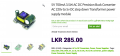
This is what you linked to in post #1
Screenshot 2026-07-24 at 1.48.40 PM.png
If you make your own power cables you need to be absolutely positive which wire goes where. Sounds easy to build but it's also easy to mistakenly reverse polarity and damage equipment.
 

B-JoJo-S

Joined Jan 3, 2026
439
Two issues: First, the USB PS has USB-C outlet. A short USB-C to whatever USB the camera is - you can just buy a short cable. Or maybe you even have something lying around from some other item purchased and came with its own USB cable. I have some very short USB cables for charging things like ear pods or a pet toy.

Second issue:
The Lorex cameras I’m using have built‑in floodlights, and I want to install them in the same locations where my existing floodlights are mounted.
Unless he has flood lights inside the home whatever he uses should be rated for exterior use. Or in a very dry location where no rain and limited fog can have any affect.

EDIT: Third issue: If these flood lights are motion sensitive then power is always on. But if the floods are only switched on when desired then the cameras are not going to be powered unless the floods are on. OR if the camera is being used to replace the floods with the camera flood lights. But then are those floods infrared? Or are they white light? If infrared then they won't function as lighting such as a flood lamp does. All things to consider.
 

Ya’akov

Joined Jan 27, 2019
10,269
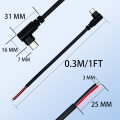
Two issues: First, the USB PS has USB-C outlet. A short USB-C to whatever USB the camera is - you can just buy a short cable. Or maybe you even have something lying around from some other item purchased and came with its own USB cable. I have some very short USB cables for charging things like ear pods or a pet toy.
Did you miss the Type-C pigtails?

Second issue:

Unless he has flood lights inside the home whatever he uses should be rated for exterior use. Or in a very dry location where no rain and limited fog can have any affect.
First, I am confused by this, why on earth did you not mention this in your own post and instead whinge about polarity?
Second, these go inside the electrical box. Outdoor floodlights are generally mounted to weatherproof boxes.

EDIT: Third issue: If these flood lights are motion sensitive then power is always on. But if the floods are only switched on when desired then the cameras are not going to be powered unless the floods are on. OR if the camera is being used to replace the floods with the camera flood lights. But then are those floods infrared? Or are they white light? If infrared then they won't function as lighting such as a flood lamp does. All things to consider.
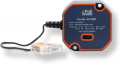
The floodlights white light emitters associated with the cameras and use PIR sensors or app-based manual control.
1784936755319.png
[source]

Are you just grasping for things to criticize? Did you follow the links in my post? Did you do any research at all about the likely cameras involved? Why write so much about nothing?
 
Mr. Ya’akov - sir - I have great respect for your experience, insight and wisdom. In post #12 you mentioned splicing pigtails. I'm not saying you can't do that. Just saying you can purchase very short cables with the proper ends on both ends of the cable. The TS said his cameras came with 12 foot long cables, and I can surely understand the desire to not have to wind up all that surplus cabling. The TS posed the idea of using that module he mentioned. I merely highlighted the need to pay close attention to the polarity as it can be an easy mistake to make, which could damage equipment.

The Lorex cameras I have come with infrared flood lights; so I speak of things I am accustomed to. Since the TS has options I'm not aware of - this doesn't mean I'm being critical of anything or anyone. My cameras are 12VDC powered and power cables come attached to the coax cables that bring video from the camera to the DVR.

As for weather proof boxes, I have four exterior lights that are original to the house. Power to those lights come through brickwork. The lights are mounted directly to the bricks. I have a fifth exterior light that I installed. I opened the brickwork and installed a standard plastic electrical box, glued in place, with the lamp properly mounted to that. One porch light had to be replaced and it was murder trying to get enough wire through to make the connections. I spent a good 45 minutes trying to get that lamp installed. Incidentally, that one is most exposed to weather, rain, snow, wind, insects etc. The copper wires get tarnished and poorly conduct.

As for the PS you recommended, I like that idea. Just - in my area - that would be exposed to outdoor weather. Indoors that wouldn't be a problem. Since the TS mentioned replacing flood lights I took it that these were exterior lighting. Here, in Lake Tahoe, (United States) I don't recall ever seeing a weather proof box used on homes built before the 1970's. I have a pond and a pavilion with outdoor fan and lighting. Those, including the switch for the lights are in weather proof boxes. Because I installed them.

I want to repeat myself: I have respect for you. I admire your wisdom and insight in everything I've read that you've authored. I would not think of myself to be superior to you. To just about anyone who's here on a regular basis. I've seen how many times others know far far more than I do, that includes you as well. If I've upset you please know I didn't mean to.

I know this is far off topic in some ways, but to be public about my respect for other members here is something I want to have clearly understood by all. My apologies to you sir.
 
I have not seen any mention of wire siz or voltage drop in any of the posts. LED FLOODLIGHTS are good, BUT they do draw more current. SOME of those ready-made cables use very skinny conductors, and so the voltage drop at even half an amp may be excessive to adequate performance.
By "very skinny conductors" I mean wires size #30 or smaller.

Unfortunately I have never come across any device or scheme to check USB cable voltage drop. THAT could be a useful tool.
 

Ya’akov

Joined Jan 27, 2019
10,269
I have not seen any mention of wire siz or voltage drop in any of the posts. LED FLOODLIGHTS are good, BUT they do draw more current. SOME of those ready-made cables use very skinny conductors, and so the voltage drop at even half an amp may be excessive to adequate performance.
By "very skinny conductors" I mean wires size #30 or smaller.

Unfortunately I have never come across any device or scheme to check USB cable voltage drop. THAT could be a useful tool.
It's common on the higher end USB testers.
 

Ya’akov

Joined Jan 27, 2019
10,269
I know this is far off topic in some ways, but to be public about my respect for other members here is something I want to have clearly understood by all. My apologies to you sir.
For my part I apologize for being overly harsh and quick to judgement. It's not am excuse but as an explanation too many people online write for themselves rather than the readers and it rankles me badly.

So, thank you and please accept my apology as well.
 
Top