Changing USB Powered Security Cameras to AC 120

Thread Starter

pctechtv

Joined Aug 10, 2016
25
I have video cameras that run on USB power, but the factory USB cable is much longer than I need. The Lorex cameras I’m using have built‑in floodlights, and I want to install them in the same locations where my existing floodlights are mounted. That means removing the old floodlights and powering the Lorex cameras from the same AC wiring that currently feeds those fixtures. Is there a part or adapter I can buy — or safely build — that lets me shorten the USB power cable and connect the camera to the same AC power coming from the floodlight’s junction box?

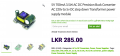
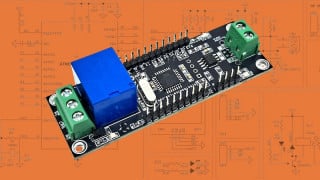
I only show this as an example of what I might need. However it does not seem to be the most acquirable part. Could anybody link to an aquiable part?

Thanks for any help
 

Thread Starter

pctechtv

Joined Aug 10, 2016
25
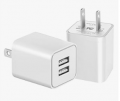
Will these do it?
If you need higher current, the one made for Raspberry Pi5 are rated up to around 5amps.
Hi, thanks for the reply. No, because I am cutting the wire. At the point of connection I really believe I only need about 5-6". The Lorex camera's wire is about 12' it comes with. My wires for the AC inside the floodlight are right there in the fixture.
 

crutschow

Joined Mar 14, 2008
38,603
The simplest and safest would likely be to add an AC outlet by the floodlight and then plug in a USB power adapter such as Max posted.

What's the problem with a long wire?
Just wrap up the excess in a coil an secure with a cable-tie.
 
QUESTION: How does the video from the camera get to wherever it is going?? Is there a coaxial cable?? Or is it wireless?? or do these cameras simply record??
Do your new cameras communuicate over that USB cable??
 

wayneh

Joined Sep 9, 2010
18,128
Another vote for using the purpose-built adapter. They do the exact job you want and are built in huge volumes to be very inexpensive. Most of us have spares lying about the house. We certainly wouldn't bother to build one. Just be sure to get one rated to at least the current level required.

If you don't want to install a receptacle to plug the adapter into, you could solder the AC feed wires directly to the prongs of the adapter. It's sort of poor form but I guess I'd do it if I was pressed for space. Cracking the adapter open and separating the guts from the prongs is also possible. The success of such hacks depends on your level of experience with such things. Some people could get it done safely, but I can't recommend it for everybody.

As for the long cable, who cares? If you really want it shortened, I'd just buy one the length you want. It'll be cheap and your time just isn't worth it. Besides, the day may come when that long cable is really handy.
 
Last edited:
QUESTION: How does the video from the camera get to wherever it is going?
The camera's communicate only via WiFi...
If this is an outside unit then the USB Power Cubes (wall warts) Max referred to in post #2 are not rated for exterior use. The small unit you linked to in post #1 would need to be inside a weather proof box. Having that inside with other electrical power is iffy. We would like pictures of where you'd put this module before we could give you any sage advice.

I have Lorex cameras. Mine are powered directly from a USB type wall wart but it's kept indoors. Power runs to each camera from its own wall wart and the video is fed via coaxial cable back to the head unit. My head unit and all cameras are plugged into a UPS so that during brief power failures I continue to have security cameras recording all goings on around my house.
 
This is what you linked to in post #1
Screenshot 2026-07-24 at 1.48.40 PM.png
If you make your own power cables you need to be absolutely positive which wire goes where. Sounds easy to build but it's also easy to mistakenly reverse polarity and damage equipment.
 
Two issues: First, the USB PS has USB-C outlet. A short USB-C to whatever USB the camera is - you can just buy a short cable. Or maybe you even have something lying around from some other item purchased and came with its own USB cable. I have some very short USB cables for charging things like ear pods or a pet toy.

Second issue:
The Lorex cameras I’m using have built‑in floodlights, and I want to install them in the same locations where my existing floodlights are mounted.
Unless he has flood lights inside the home whatever he uses should be rated for exterior use. Or in a very dry location where no rain and limited fog can have any affect.

EDIT: Third issue: If these flood lights are motion sensitive then power is always on. But if the floods are only switched on when desired then the cameras are not going to be powered unless the floods are on. OR if the camera is being used to replace the floods with the camera flood lights. But then are those floods infrared? Or are they white light? If infrared then they won't function as lighting such as a flood lamp does. All things to consider.
 

Ya’akov

Joined Jan 27, 2019
10,266
Two issues: First, the USB PS has USB-C outlet. A short USB-C to whatever USB the camera is - you can just buy a short cable. Or maybe you even have something lying around from some other item purchased and came with its own USB cable. I have some very short USB cables for charging things like ear pods or a pet toy.
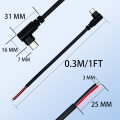
Did you miss the Type-C pigtails?

Second issue:

Unless he has flood lights inside the home whatever he uses should be rated for exterior use. Or in a very dry location where no rain and limited fog can have any affect.
First, I am confused by this, why on earth did you not mention this in your own post and instead whinge about polarity?
Second, these go inside the electrical box. Outdoor floodlights are generally mounted to weatherproof boxes.

EDIT: Third issue: If these flood lights are motion sensitive then power is always on. But if the floods are only switched on when desired then the cameras are not going to be powered unless the floods are on. OR if the camera is being used to replace the floods with the camera flood lights. But then are those floods infrared? Or are they white light? If infrared then they won't function as lighting such as a flood lamp does. All things to consider.
The floodlights white light emitters associated with the cameras and use PIR sensors or app-based manual control.
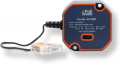
1784936755319.png
[source]

Are you just grasping for things to criticize? Did you follow the links in my post? Did you do any research at all about the likely cameras involved? Why write so much about nothing?
 
Top