Both the short and long tons are defined (at the relevant time) as 20 hundredweights. But in England, there were many different hundredweights and it wasn't until 1835 that England standardized it as being 8 stone, each of which is 14 lb, making the official hundredweight 112 lb and, therefore, a ton 2240 lb. But by then, America (both U.S. and Canada) had largely settled on the hundredweight as being 100 lb, which seems pretty reasonable, given the name, which made the ton 2000 lb. Even before England standardized their system, the banned the use of the American hundredweight as fraud, but legalized it in 1879 by having the names be cental and imperial hundredweights, while in the Americas these were known and the short and long hundredweight.
A few years ago I switched to using metric units, metric hardware, and a 24-hour clock (often UTC) whenever I wasn't forced to use traditional American units or a 12-hour clock.
When a person learns two languages early in life they have equal weight. The meanings of the words are contained in the words themselves, not in comparison to other words or the bundles of concepts they invoke.
When bilingualism comes later in life, a person will usually translate the words they hear into their mother tongue as they process the meanings. Since languages often differ in which concepts are represented by available words, some words won't be translated because they are novel to the new learner, they become native words.
When I decided to adopt metric and 24-hour standards I absolutely converted units from metric to "native". If I heard 20°C I thought ~68°F. If I heard 25mm I thought ~1". Over time I have been able to reduce the translation for things like distance, weight, and volume—but two areas still haven't become "intuitive".
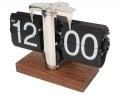
The first is time. The truth is I may be mischaracterizing this a bit—24-hour time actually does feel intuitive now—but with one oddity: I still instantly and frictionlessly convert to 12-hour clock. If I see or hear 1500 it becomes 3:00PM, though the "PM" isn't conscious content but the 3:00 is.
This happens so automatically it feels like 1500 means 3:00, that is, 3:00 is the same as "mid-to-late-afternoon". So, when I "translate" it doesn't feel like translation, it feels like the definition, it feels like a native understanding. I don't think this will ever change because there seems no reason for it, it presents no friction that would prompt a change.
On the other hand, there is temperature. While it is easier now that when I started, I still don't have the same natural relationship with C as I do with F. Certain temperatures are exceptions. The ranges that are typical for outdoor temperatures are fairly baked in to my brain at this point. The important distinction is—I still struggle to convert from C to F intuitively with any accuracy.
The truth is, I don't know why that is my standard for fluency in C. I can use it in either forecasts if I don't try to equate it to F. I can tell if it will be a comfortable or uncomfortable day. I can tell if there is danger of freezing water causing damage. What I can't tell is someone else what the F equivalent is, not without noticeable effort.
I have seen the argument that F is "more intuitive" because of the range of human comfort and because of the smaller increments in the unit. I don't find this convincing. I learned long ago that "intuitive"means "aligned with what I am used to". The object lesson for me was software where claims of intuitiveness made this clear.
Software for MacOS and IBM's CUA (adopted by Microsoft) was "intuitive" because once you learned the enforced standard things were consistent. So intuition is a matter of learning, even in the more informal sense, our pattern matching brains "intuit" apparently novel things because at base they aren't novel at all.
In the same way, I believe, these units and their real-world implications can be "intuitive"—we know them implicitly as with my 24 to 12 hour instant conversion, something around 70°F well that's "room temperature", for C users, that would be 20° which is colder but a nice round figure.
Neither is more "intuitive" than the other—it's what we know. The scale doesn't matter, needing to use half-degrees for precision doesn't matter, what we know matters.
But, as an aside, there is an impact. Growing up with 70°F as "room temperature" I expected a certain level of warmth. 2°F is a noticeable difference and the 68°F that the 20°C of "metric room temperature" represents was jarring when—was it the 70's?—the campaign to save energy by redefining room temperature to 68°F had people keeping living spaces cooler. The truth is once we got used to it, there was really no problem—but it started out feeling like one.
And then there's sizes of things. If you choose sizes based on TAU (Traditional American Units) they will be different than based on metric units in a way that can be material. The numbers shouldn't matter, but they do. We want "easy" numbers, whole numbers on 6 and 12 boundaries for TAU and for metric it's 5 and 10, of course. With smaller differences there's 16ths or 32nds and mm—I'm sorry but I'll take the mm every time.
Interestingly, while the sizes of things are different, they are not much different in most cases. A liter is about .95 quarts, a mm is a bit bigger than 1/32" of an inch, and there are other examples but also examples that don't line up nicely. The main point is, whichever set one uses it seems "right' and "natural".
There is one place where TAU do have a leg up is woodworking. This is because the divisions strongly favor halves and humans are strangely good at visually dividing things into two equal parts. Most woodworkers will agree it is easier to work in TAU (or in the UK and Commonwealth "Imperial").
So, it F better or worse than C? I don't think so, though I do like to keep my electric kettle in C where the temperature feels like "percent done". But that's the origin of C and F can't have any equivalent—you just have to learn it.
When a person learns two languages early in life they have equal weight. The meanings of the words are contained in the words themselves, not in comparison to other words or the bundles of concepts they invoke.
One thing I observed when my daughter was just three years old, and who was learning both English and Mandarin Chinese at the same time -- but only through the normal interaction with people around her, or listening as others conversed, or watching TV, some of which was in English and some of which was in Chinese -- happened when my mother-in-law was visiting and her English is little better than my Chinese, thus we couldn't understand each other at all. My daughter became our translator and what amazed me was that she never mixed the two languages, even though no one was telling her what words were in English and which were in Chinese as she got exposed to new words. There were several times when I would say something and she would start to tell her grandma what I said and then she would stop and turn to me and say, "Papa, don't know Chinese for <fill in word>". Sometimes it was because she didn't know what the word I used meant, but usually it was because she didn't know it's Chinese equivalent. So I would try to find a word that she did know or try to explain it differently or sometimes just quickly teach her what that word meant. Then she would turn back to her grandma and finish translating. From what I've been able to research, this is highly unusual for kids that age, but is a skill that becomes more common around age 5 or 6. But, then again, we realized a long time ago that this child is not a normal human being, but in lots of good ways.
So, it F better or worse than C? I don't think so, though I do like to keep my electric kettle in C where the temperature feels like "percent done". But that's the origin of C and F can't have any equivalent—you just have to learn it.
A few years ago I switched to using metric units, metric hardware, and a 24-hour clock (often UTC) whenever I wasn't forced to use traditional American units or a 12-hour clock.
When a person learns two languages early in life they have equal weight. The meanings of the words are contained in the words themselves, not in comparison to other words or the bundles of concepts they invoke.
When bilingualism comes later in life, a person will usually translate the words they hear into their mother tongue as they process the meanings. Since languages often differ in which concepts are represented by available words, some words won't be translated because they are novel to the new learner, they become native words.
When I decided to adopt metric and 24-hour standards I absolutely converted units from metric to "native". If I heard 20°C I thought ~68°F. If I heard 25mm I thought ~1". Over time I have been able to reduce the translation for things like distance, weight, and volume—but two areas still haven't become "intuitive".
The first is time. The truth is I may be mischaracterizing this a bit—24-hour time actually does feel intuitive now—but with one oddity: I still instantly and frictionlessly convert to 12-hour clock. If I see or hear 1500 it becomes 3:00PM, though the "PM" isn't conscious content but the 3:00 is.
This happens so automatically it feels like 1500 means 3:00, that is, 3:00 is the same as "mid-to-late-afternoon". So, when I "translate" it doesn't feel like translation, it feels like the definition, it feels like a native understanding. I don't think this will ever change because there seems no reason for it, it presents no friction that would prompt a change.
On the other hand, there is temperature. While it is easier now that when I started, I still don't have the same natural relationship with C as I do with F. Certain temperatures are exceptions. The ranges that are typical for outdoor temperatures are fairly baked in to my brain at this point. The important distinction is—I still struggle to convert from C to F intuitively with any accuracy.
The truth is, I don't know why that is my standard for fluency in C. I can use it in either forecasts if I don't try to equate it to F. I can tell if it will be a comfortable or uncomfortable day. I can tell if there is danger of freezing water causing damage. What I can't tell is someone else what the F equivalent is, not without noticeable effort.
I have seen the argument that F is "more intuitive" because of the range of human comfort and because of the smaller increments in the unit. I don't find this convincing. I learned long ago that "intuitive"means "aligned with what I am used to". The object lesson for me was software where claims of intuitiveness made this clear.
Software for MacOS and IBM's CUA (adopted by Microsoft) was "intuitive" because once you learned the enforced standard things were consistent. So intuition is a matter of learning, even in the more informal sense, our pattern matching brains "intuit" apparently novel things because at base they aren't novel at all.
In the same way, I believe, these units and their real-world implications can be "intuitive"—we know them implicitly as with my 24 to 12 hour instant conversion, something around 70°F well that's "room temperature", for C users, that would be 20° which is colder but a nice round figure.
Neither is more "intuitive" than the other—it's what we know. The scale doesn't matter, needing to use half-degrees for precision doesn't matter, what we know matters.
But, as an aside, there is an impact. Growing up with 70°F as "room temperature" I expected a certain level of warmth. 2°F is a noticeable difference and the 68°F that the 20°C of "metric room temperature" represents was jarring when—was it the 70's?—the campaign to save energy by redefining room temperature to 68°F had people keeping living spaces cooler. The truth is once we got used to it, there was really no problem—but it started out feeling like one.
And then there's sizes of things. If you choose sizes based on TAU (Traditional American Units) they will be different than based on metric units in a way that can be material. The numbers shouldn't matter, but they do. We want "easy" numbers, whole numbers on 6 and 12 boundaries for TAU and for metric it's 5 and 10, of course. With smaller differences there's 16ths or 32nds and mm—I'm sorry but I'll take the mm every time.
Interestingly, while the sizes of things are different, they are not much different in most cases. A liter is about .95 quarts, a mm is a bit bigger than 1/32" of an inch, and there are other examples but also examples that don't line up nicely. The main point is, whichever set one uses it seems "right' and "natural".
There is one place where TAU do have a leg up is woodworking. This is because the divisions strongly favor halves and humans are strangely good at visually dividing things into two equal parts. Most woodworkers will agree it is easier to work in TAU (or in the UK and Commonwealth "Imperial").
So, it F better or worse than C? I don't think so, though I do like to keep my electric kettle in C where the temperature feels like "percent done". But that's the origin of C and F can't have any equivalent—you just have to learn it.
1 ST = 907....Kg
1 MT = 1.000 Kg
1 LT = 1.016 ... Kg
In bulk carriers the temptation to neglect the "small" difference between MT and LT, proved inaceptable considering the big amount of cargo carried in a voyage (say 60.000 MT).
BTW in the USA, many terminals did request your intended stow plan in ST!!! no matter if the final cargo documents would be signed in MT.
Once, prior starting to load in a Richard's Bay terminal (SA), the supervisor asked me to tell how much cargo he should keep to trim the vessel (draft adjustment prior sailing).
But he asked the quantity given in "scoops".
After a lot of questions those "scoops" resulted to be the clamps used to drop the coal into the rail cars going alongside in the pier. Go figure...
Well, all these measurement digressions are interesting but, getting back to the subject of this thread, the consensus seems to be that whatever temperature scale you used most in you life is the one you prefer/think-is-the-best, regardless of any particular advantage or disadvantage one scale may have compared to the others.
That's basically what I was interested in learning.
So I'll stick with my Fahrenheit scale that has a nice 0 to 100 degree span for the human comfort/discomfort range with a 1°F increment being about the change a human can detect, and is a nice increment for a house thermostat setting change.
The rest of the world can/will keep using the Celsius scale, which I think is very well suited to scientific/technical uses, but which has none of those attributes.
But feel welcome to continue on with your measurement unit comparisons, which is also interesting.
Yes, it is that simple, it's what people are used to using.
I grew up with imperial and the old pounds, shillings and pence and knew people that could work in feet, yards, inches in their head, tell you almost instantly how many inches were in 9 yards, 2 feet, 7 inches.
Likewise with the old currency where 1 Pound = 20 Shillings and 1 Shilling = 12 pennies.
They could add/subtract prices very accurately and quickly.
Incidentally that old currency seems ridiculous but it had several features that must have been important historically, one of them being that it was easy to divide any amount by 2, 3, 4 or 6 because a shilling was 12 pennies, a bit like time where we still break a day into 24 hours and an hour into 60 minutes etc.
Incidentally that old currency seems ridiculous but it had several features that must have been important historically, one of them being that it was easy to divide any amount by 2, 3, 4 or 6 because a shilling was 12 pennies, a bit like time where we still break a day into 24 hours and an hour into 60 minutes etc.
It's always interesting to work on a piece of equipment and trying to determine whether the bolt/nut/allen-screw you need to loosen or replace is metric or SAE.
So I try the various metric and SAE wrenches/hex-keys I have until I find the one that best fits.
Of course, for some sizes, the two are close enough that it's difficult to determine which it is.
Good question, I don't know, but I do wonder if Britain had kept it a few more years then someone (Sinclair?) might have produced a calculator that supports £sd.
I have an electric kettle that the digital temperature can be set, and it will maintain it when reached.
For my 6000ft altitude here in Denver, I set it for 202°F which is near the local boiling point, since my wife likes her coffee hot.
And then there are the decimal inches, popularized by semiconductor manufacturers, with the ubiquitous 0.100” and multiples and submultiples of it during the THT-component era, which is when I started laying out my first board artwork (using Bishop Graphics templates and tapes).
But as semiconductor packaging has switched almost universally to SMT, now almost everything is in millimeters, and I have adapted.
But when I lay out a board, I still like to describe the track width in decimal inches and copper weight in oz.
1 ST = 907....Kg
1 MT = 1.000 Kg
1 LT = 1.016 ... Kg
In bulk carriers the temptation to neglect the "small" difference between MT and LT, proved inaceptable considering the big amount of cargo carried in a voyage (say 60.000 MT).
BTW in the USA, many terminals did request your intended stow plan in ST!!! no matter if the final cargo documents would be signed in MT.
Did you ever load bulk grain? Were the units used Bushels (a volume unit) and had to convert to MT?
Similarly to loading Barrels of crude oil, again a volume unit, but with different weights depending on the crude type.

 Facebook
 Google
 GitHub
 Linkedin