Burnt Plug Socket - Why?

Thread Starter

DavidBean

Joined Jul 11, 2023
23
I am using 4mm2 Cable rated @ 37amp on 230v

Which feeds Two 13A Schneider Double Sockets that I have put on a separate ring.

My four BTC miners run continuous and use 1250watts(5.25Amp) each per machine per plug, when I have arrived back they are all off and the fourth socket at the very has melted.

The sockets are rated at 13A, per double, and my 2500W load per double socket is only 10.8A.

Is the likely cause of this overloading or another common cause such as arching?

Also, being the fourth most-last socket, I am wondering does this give any hints?
 
Last edited:

Ian0

Joined Aug 7, 2020
13,100
I am using 4mm2 Cable rated @ 37amp on 230v

Which feeds Two 13A Schneider Double Sockets that I have put on a separate ring.

My four BTC miners run continuous and use 1250watts(5.25Amp) each per machine per plug, when I have arrived back they are all off and the fourth socket at the very has melted.

The sockets are rated at 13A, per double, and my 2500W load per double socket is only 10.8A.

Is the likely cause of this overloading or another common cause such as arching?

Also, being the fourth most-last socket, I am wondering does this give any hints?
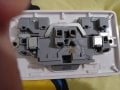
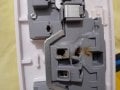
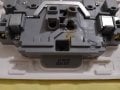
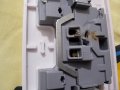
How about a photo, and a photo of the plug that was plugged into it, both inside and outside.
 

Ian0

Joined Aug 7, 2020
13,100
UK sockets are made of Urea-Formaldehyde - which can't melt.
A loose wire or loose fuse in the plug would tend to create heat which will conduct down the pin into the socket. That would show up as damage in the plug, which may melt, because not all plugs as UF.
 

MaxHeadRoom

Joined Jul 18, 2013
30,570
Growing up in the UK with 13a ring mains, I was always surprised at the over heating that would occur on the plug/sockets, given the amount of brass used in the pins etc.
When I came to NA and seeing the much smaller amount of brass used in the plug/socket, I definately expected to see the same condition.
But I have never really come across any thing like my UK experiences.
 

Ian0

Joined Aug 7, 2020
13,100
Growing up in the UK with 13a ring mains, I was always surprised at the over heating that would occur on the plug/sockets, given the amount of brass used in the pins etc.
When I came to NA and seeing the much smaller amount of brass used in the plug/socket, I definately expected to see the same condition.
But I have never really come across any thing like my UK experiences.
How long is it since you left? Things have gone downhill since then! Sockets used to be a lot better made when they were designed to run 3kW heaters. Now they seem to be engineered to run a phone charger.
 

nsaspook

Joined Aug 27, 2009
16,259
I don't know UK power standards but with that much power 7/24 I would hardwire my miner (money maker) power connections to a fused disconnect switch. The 100% duty cycle seems be causing thermal effects at the wire/plug/socket connections on some parts of questionable quality.
 

Thread Starter

DavidBean

Joined Jul 11, 2023
23
Excuse my incorrect words.

When I say Plug Socket, the actual part that shows melting and burning is inside the schnieder double socket, facia plate where the live wire screws in.

not the appliance end/ plug etc

I can get a photo later
 
Last edited:

Thread Starter

DavidBean

Joined Jul 11, 2023
23
I don't know UK power standards but with that much power 7/24 I would hardwire my miner (money maker) power connections to a fused disconnect switch. The 100% duty cycle seems be causing thermal effects at the wire/plug/socket connections on some parts of questionable quality.
I was considering doing somthing like that.


If we allow for some extra draw in my previous calculation, and say 10.8A to 11.5A continuous, is that not suitable for a 13A socket running 24/7
 

Ian0

Joined Aug 7, 2020
13,100
Excuse my incorrect words.

When I say Plug Socket, the actual part that shows melting and burning is inside the schnieder double socket, facia plate where the live wire screws in.

not the appliance end/ plug etc

I can get a photo later
I'd guess that the screw wasn't tight. If it was the live side then it's not conducted heat from the plug, as it would have to get through the switch.
If it was a problem with the socket, then both of them would be equally affected.
 

Ian0

Joined Aug 7, 2020
13,100
Looks like a simple connection failure from a loose wire.

I use proper Ferrules for stranded on these types of electrical connections and the proper torque to tighten solid or stranded with a properly crimped ferrule..
https://www.assemblymag.com/articles/92666-ferrules-prevent-connection-failures
It would be normally be solid core wire, 2.5mm^2, but the TS used 4mm^2, which would be stranded 7/0.85mm.
I’ve never like the 7-strand cables - they tend to move after tIghtening the screw. No-one uses ferrules on them, and I’m not sure how easy they would be to crimp.
4mm^2 stranded would normally be 56/0.3mm and that would work better both with and without the ferrule.
 

dl324

Joined Mar 30, 2015
18,232
+1 for a bad connection/loose wire. Since you're using so much current continuously, I'd opt for an old-style socket with screw terminals.
 

bertus

Joined Apr 5, 2008
22,897
Hello,

Indeed, the burning is from a bad/loose contact.
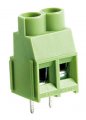
I prefer screw terminals with a loop to hold the wire, like this one used for a PCB:
Screw-Terminal-Block.jpg
It can be used with solid and stranded wires.

Bertus
 

Thread Starter

DavidBean

Joined Jul 11, 2023
23
So the consensus is Loose wires, however a question - How is the burning caused on the socket interior? Via Arching?
What else could it be caused by?
 
Top