The datasheet for the FQP30N06 Mosfet shows that some of them barely turn on (0.25mA) when the gate is 4V and your input will be close. Use a "Logic Level" Mosfet instead.
The datasheet shows that a typical 1N4007 has a voltage drop of 1.4V at 20A but son of them could drop 2V. Do you want to lose 2V?
Ok I decided to undo the board completely (remove everything except the nano headers) and use a different wiring setup that would allow me to use the same protoboard but using all new holes. Here is the diagram:
The Top Header(2 pins) = for 9V battery
The Mid Header(2 pins) = for 1Ω Resistor or multimeter leads
The Bot Header(2 pins) = for diode
The vertical 3 Head Pin = for mosfet
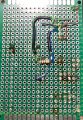
Here is what I came out with:
I checked continuity and all works as I expect it (only failed continuity across R but thats normal).
I also learned a couple of things about soldering:
1. double sided tape to hold headers in place for soldering as well as holding connections of 2 or more parts at one spot.
2. when soldering a part with 1 connection on one side and many on the other side, solder the single one first
3. The problem I encountered is that I'm good at soldering pins (from a Nano or Header pins to holes on the board). But I'm not good at the second part which is soldering hook wire to a previously soldered pin & hole.
Explanation:
The red marks the red cable - 9V + from battery
The green marks the black cable - 9V - from battery to Source and Nano GND
The blue marks the black and blue cable - from Gate to Nano GND thru Resistor to D5
The yellow marks the Drain to header to diode.
The other soldered pads are the old ones.
It worked the first time I tried it today right after soldering. I'll give it a few tries everyday this week and post back.

 Facebook
 Google
 GitHub
 Linkedin