Building a harmonic distortion remover

Thread Starter

Samantha Groves

Joined Nov 25, 2023
151
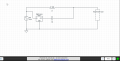
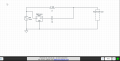
I am building a circuit which would remove any harmonics(despite the fundamental frequency) of a non-linear load driven by a AC voltage source.

The idea is to isolate the harmonics and create a 180 degrees phase shift between the current which contains only the harmonics and the current which contains both the fundamental frequency and the harmonics then sum up those 2 currents.

But the high pass filter will inevitably load C2 so I dont think I can use a 1 stage high pass filter because the overall phase shift wont be 90 degrees between IC2 and V2 but a little less.Which kind of high pass filter would you suggest me use?


1748409905424.png
 

Attachments

Ian0

Joined Aug 7, 2020
13,097
Passive power factor correction has been tried, but the inductor sizes necessary to remove 150Hz are prohibitive. That’s why power factor correction is almost always active.
 

schmitt trigger

Joined Jul 12, 2010
2,027
I am building a circuit which would remove any harmonics(despite the fundamental frequency) of a non-linear load driven by a AC voltage source.

View attachment 350072
Do you realize that your sentence, which I have bolded, goes against the fundamental operation of passive filters. The reactive components will be only be turned at a specific single frequency.
And even at that exact same frequency, the phase won’t be exactly +or- 90 degrees, because said components have an equivalent series resistance, which prevents that.
And lastly, the steel core required for the powerline inductor, can only be tuned by introducing airgaps, which means that the realistic achievable tolerances will be in excess of 10%.

For that reason on others, including the humongous weight and size, passive power factor correction is seldom done and implementation has turned to active devices as mentioned by Ian.
 

MisterBill2

Joined Jan 23, 2018
27,164
While it has already been referenced, the phase-shift from the high pass filter will cause problems. A parallel resonant circuit tuned to each harmonic, in series, can certainly reduce harmonics, but the actual size to produce a 15 , 200, 250, or 300 HZ RESONANCE has been understated a bit. Consider that to produce a useful resonance there will need to be enough iron to avoid saturation distortion at the required current .
Certainly the inductance of a coil can also be adjusted by changing the number of turns in the coil, or the amount of iron in the core. adding an air gap is the easy way but it seriously reduces the effective inductance. So an air gap requires a lot more coil turns.
 

Thread Starter

Samantha Groves

Joined Nov 25, 2023
151
While it has already been referenced, the phase-shift from the high pass filter will cause problems. A parallel resonant circuit tuned to each harmonic, in series, can certainly reduce harmonics, but the actual size to produce a 15 , 200, 250, or 300 HZ RESONANCE has been understated a bit. Consider that to produce a useful resonance there will need to be enough iron to avoid saturation distortion at the required current .
Certainly the inductance of a coil can also be adjusted by changing the number of turns in the coil, or the amount of iron in the core. adding an air gap is the easy way but it seriously reduces the effective inductance. So an air gap requires a lot more coil turns.
Can I use a N-stage RC high pass filter then?
 

Ian0

Joined Aug 7, 2020
13,097
An air-gap will be mandatory (although for small currents, the natural gaps between the laminations will do the job). This will be an inductor intended to store energy, so will need an air-gap in which to store it. Without an air-gap it is likely to saturate.
 

Ian0

Joined Aug 7, 2020
13,097
Can I use a N-stage RC high pass filter then?
It will be lossy.
Also, don't forget that in order to cancel the harmonic currents, you would not only require equal phase shifts in opposite directions, but also equal amplitudes. As inductive impedance increases with frequency and capacitive impedance reduces, only one frequency will possibly meet the relevant criteria.
 

Thread Starter

Samantha Groves

Joined Nov 25, 2023
151
It will be lossy.
Also, don't forget that in order to cancel the harmonic currents, you would not only require equal phase shifts in opposite directions, but also equal amplitudes. As inductive impedance increases with frequency and capacitive impedance reduces, only one frequency will possibly meet the relevant criteria.
Yes but wont the resistors of the high pass filter decrease the resonant frequency?So in the end we may not need such big inductors...
 

Thread Starter

Samantha Groves

Joined Nov 25, 2023
151
It will be lossy.
Also, don't forget that in order to cancel the harmonic currents, you would not only require equal phase shifts in opposite directions, but also equal amplitudes. As inductive impedance increases with frequency and capacitive impedance reduces, only one frequency will possibly meet the relevant criteria.
Hmm yes you are correct so I will able to eliminate only 1 harmonic.
 

Ian0

Joined Aug 7, 2020
13,097
Hmm yes you are correct so I will able to eliminate only 1 harmonic.
And the worst offender is always the 3rd harmonic, so you just need a band-reject filter at 150Hz, which is simply a capacitor and resistor in parallel in series with the load. Been done before. NO longer used because the inductor weighs several kg for any decent power level.
 

PeteHL

Joined Dec 17, 2014
562
I am building a circuit which would remove any harmonics(despite the fundamental frequency) of a non-linear load driven by a AC voltage source.

The idea is to isolate the harmonics and create a 180 degrees phase shift between the current which contains only the harmonics and the current which contains both the fundamental frequency and the harmonics then sum up those 2 currents.

But the high pass filter will inevitably load C2 so I dont think I can use a 1 stage high pass filter because the overall phase shift wont be 90 degrees between IC2 and V2 but a little less.Which kind of high pass filter would you suggest me use?


View attachment 350072
Can you give an example of a non-linear load? Does the non-linear load result in the voltage source producing harmonics?

On the conceptual level, I think that is a valid method for attenuating the harmonics. The upper unfiltered connection from the voltage source to the load lags by 90 deg. due to the inductor in the path. The high-pass filtered connection to the load leads by 90 deg. due to the capacitor in that connection. Summing the two signal paths to the load cancels the harmonics. Dong such a thing with active electronics I think might be possible.
 

Ian0

Joined Aug 7, 2020
13,097
Does the non-linear load result in the voltage source producing harmonics?
That's what non-linear loads do
Summing the two signal paths to the load cancels the harmonics.
Provided that their amplitudes are the same.
If the third harmonics are the same, then the fifth, seventh, ninth etc. harmonics won't be, because the amplitudes in the inductor path decrease with increasing frequency, and the ones in the capacitor path increase with increasing frequency.
 
Top