Building a +15 -0- -15 DC PSU

dl324

Joined Mar 30, 2015
18,370
It's not steady and I am measuring it in-circuit at the input to the XSTR @ -21.90 to -22.03.
How much filter cap to you have on the negative output from the rectifier?

Max from the LM317 is 20.38V
My bad. When I asked if you have the regulator set to 14.72V, I should have said 22.08V. If the max you can get is 20.38V, the maximum input to the inverting opamp should be 6.8V.

Check the resistor values for R3,5,6,7. Whatever voltage you have on the inverting input of the first opamp should give you -3X on the output.
 

Thread Starter

SamR

Joined Mar 19, 2019
5,497
Took a short dinner break and left it running. -22.04 and stable at the XSTR and 20.4 and steady on the +rail.
I'll check the resistors again and brb.
 

Thread Starter

SamR

Joined Mar 19, 2019
5,497
If the max you can get is 20.38V, the maximum input to the inverting opamp should be 6.8V.
I replaced R4 with a std. 1k pot and at pin 2 I get 9.69V to 9.24V adjusting the pot end to end.
With the +rail at 20.43V

All the resistors check out. didn't have 30k so series a 10 & 20k for 30.04k.
 

dl324

Joined Mar 30, 2015
18,370
so it's maxed at 20.43V
Are you using 10k resistors for R3, 5, and 6? R3-6 form a 3:1 voltage divider. It might look like 2:1, but R5 and R6 are in parallel because the inverting input of the opamp is at virtual ground. The voltage at pin 2 should be very close to 0V and the voltage on the other end of R6 should be 6.81V.

It looks like you're using a 20k resistor for R7. That will only give you -2X and the negative voltage would be -13.62V.
 

Thread Starter

SamR

Joined Mar 19, 2019
5,497
Are you using 10k resistors for R3, 5, and 6?
R3 is 9.09k exactly. R5&6 are 9.99k all measured values.
I looked past the 358 and found the XSTR in backward.
NOW pin 2 is 0.59 - 1.08V
R7 is a series combined 9.89k + 20.05k for 30.04k.
at the junction of R3,R5,R6 is 7.7V
The -rail is at a fairly steady -18.76 to -18.82 my Fluke 8050A won't settle on it
 

dl324

Joined Mar 30, 2015
18,370
Remove R6 and adjust R4 until you get half of what the LM317 is set for. Then re-install R6 and you should get 1/3 of the LM317 output voltage. Pin 2 of the opamp should always be at ground. If that's not the case, I'd suspect the opamp.
 

Thread Starter

SamR

Joined Mar 19, 2019
5,497
Rail @ 20.7
removed R6
Voltage set to 10.35
replaced R6
Voltage @ 7.03 ~1/3
Pin 2 0.63V
also attached to Pin 2 is the the30k to Pin 1 which is @ -18.83V. Would this be holding Pin 2 off of 0V?
Replaced LM358, Pin 2 0.63V
Replaced LM358 again, Pin 2 0.64V

Pin 7 -19.53V at base of 2N2903
emitter @ -19.03V
collector @ -22.52V

Replaced 2N2903
no change
 

dl324

Joined Mar 30, 2015
18,370
Either both of the LM358's are bad or there's a wiring problem.

The 30k resistor shouldn't be causing pin 2 to not be ground, but you can remove it from the circuit to be doubly certain.

Try making a test circuit for the LM358 and test them as voltage followers. Connect the output to the inverting pin and apply a variable voltage to the non-inverting input. The output should track the non-inverting input. The inputs can't be higher than 2V from the positive supply, so keep that in mind. The inputs can go to the negative supply because they're PNP transistors.

What transistor are you using? I thought you were using 2N3906.

Do you have a scope?
 

dl324

Joined Mar 30, 2015
18,370
Removed it and the voltage jumped up to ~10V
That shouldn't be the case because the input is floating. It should. Make a test jig to test the opamps as voltage followers.
EDIT: corrected statement.
Yes, I have a scope.
Measure your unregulated supplies to see how much ripple they have. Also measure the zener voltages to see if they have ripple.
 
Last edited:

Thread Starter

SamR

Joined Mar 19, 2019
5,497
Went ahead and did it now instead of waiting til morn.
Ok, I had 3 chips. A National Semiconductor from china and 2 TI from DK. All test out good.
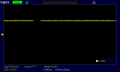
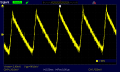
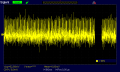
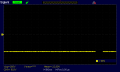
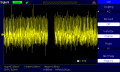
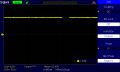
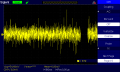
Here is what I get from filtered rectifier and zeners.
10V zener
1606277905271.png
1606277950360.png

-20 zener
1606278008206.png
1606278084653.png

Neg Rectified and filtered
1606278162091.png
1606278196932.png

Pos Rectified and Filtered
1606278279397.png
1606278317002.png
 

Thread Starter

SamR

Joined Mar 19, 2019
5,497
@dl324 OK Dennis, thought about it and rebuilt it on a full breadboard with both full-size pots. It does track! BUT the negative rail stops following @ -18.6V. Below that it tracks perfectly! Was thinking I might need to add some capacitors to tame the noise but apparently not.
IMG_0805[1].JPG
 

dl324

Joined Mar 30, 2015
18,370
BUT the negative rail stops following @ -18.6V. Below that it tracks perfectly!
Since this was intended to be a learning exercise, study the circuit and see if you can figure it out. See if you can understand why I used a voltage divider instead of using the output of the LM317 directly, why that ratio was chosen, and how the supply voltages for the opamp were derived.

Once you understand that circuit, I can show you how to simplify by removing the voltage divider and one opamp.

If you want to add current limiting, I finally got around to drawing schematics for a design I've been planning to use for years. A member was trying to implement current limiting with an LM317 and he went the route that many do. They lower the voltage in over current conditions and can only go to 1.2V unless they add a negative supply. My circuit doesn't have that limitation.
 
Top