Bounds between blocks !

Thread Starter

Ryan$

Joined Dec 14, 2018
178
You are not understanding the concepts of discrete and continuous. I would suggest that you do some reading on scale types.

In the case of memory addresses, we are talking about discrete values. There is no space between address 123 and address 124. There is no memory address of 123.5, for example.

Temperature, on the other hand, is on a continuous scale. There is always space between the values of 123 and 124. There is a value of 123.5, for example.

You can see this - right? You understand the difference between discrete and continuous? If not, there is plenty of information available for you to read on that issue, but you have to actually search and do the reading.
Thanks for your detailed answer!
Secondly what's confusing me how would for example a block ends in 123 and another block starts in 123?! It either starts or end in a specifi address.

I give up. Maybe someone else can succeed in getting this guy to understand, but I'm done trying.
But you didnt explain any thing you just said it's not taking place; why isn't it taking space?!
 
Last edited by a moderator:

Thanks for your detailed answer!
Secondly what's confusing me how would for example a block ends in 123 and another block starts in 123?! It either starts or end in a specifi address.
You are welcome. It is not clear to me that you understand at all and so I want to ask you a question. Is barometric pressure (let say measured in mbar/hPa or whatever common unit that you like) on a continuous or discrete scale? Also, why do you think it is one or the other?

I don't want to answer more questions until you provide some evidence that you are understanding. When you just say thank you and proceed to another question, I feel like I might be politely played (i.e,. Riteshian Dynamics). Hope that is not too harsh, but I would like you to answer in the best English that you can, please.
 
Last edited:

BR-549

Joined Sep 22, 2013
4,931
One thing can stop at the same place and time that another thing begins. That place and time are common and part of each thing.
 

WBahn

Joined Mar 31, 2012
32,840
Thanks for your detailed answer!
Secondly what's confusing me how would for example a block ends in 123 and another block starts in 123?! It either starts or end in a specifi address.
Are we talking about memory or some other discrete property, or not?

If we are talking about memory, then address 123 generally belongs to only one block of memory (although memory blocks can overlap and can contain other blocks -- but usually when that's the case we are talking about different levels of abstraction, so let's leave those cases aside). So if one block ends with 123, the next block would begin with 124 (or higher).

As for your "------------------------" between memory pages, you need to understand that the map is not the territory. A line drawn on a piece of paper is NOT part of EITHER page -- it is merely part of the drawing that we are using to convey concepts. You can't look in the memory chips and find that line somewhere.
 

Thread Starter

Ryan$

Joined Dec 14, 2018
178
You are welcome. It is not clear to me that you understand at all and so I want to ask you a question. Is barometric pressure (let say measured in mbar/hPa or whatever common unit that you like) on a continuous or discrete scale? Also, why do you think it is one or the other?

I don't want to answer more questions until you provide some evidence that you are understanding. When you just say thank you and proceed to another question, I feel like I might be politely played (i.e,. Riteshian Dynamics). Hope that is not too harsh, but I would like you to answer in the best English that you can, please.
It's continues ; why?! because at every point(measure) of height there is a value of pressure.....

Are we talking about memory or some other discrete property, or not?

If we are talking about memory, then address 123 generally belongs to only one block of memory (although memory blocks can overlap and can contain other blocks -- but usually when that's the case we are talking about different levels of abstraction, so let's leave those cases aside). So if one block ends with 123, the next block would begin with 124 (or higher).

As for your "------------------------" between memory pages, you need to understand that the map is not the territory. A line drawn on a piece of paper is NOT part of EITHER CX"page -- it is merely part of the drawing that we are using to convey concepts. You can't look in the memory chips and find that line somewhere.
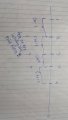
So if I understand you well; the line
" between " pages is something as abstract .. Not counted at all
For example here in my attachment(in the next comment)... The line at number 2 isn't counted

Here
 

Attachments

Last edited by a moderator:

WBahn

Joined Mar 31, 2012
32,840
So if I understand you well; the line
" between " pages is something as abstract .. Not counted at all
For example here in my attachment(in the next comment)... The line at number 2 isn't counted
Between "pages" of what? Memory?

If so, how could it be anything other than abstract?
 

Thread Starter

Ryan$

Joined Dec 14, 2018
178
Between "pages" of what? Memory?

If so, how could it be anything other than abstract?
Once again I'm not specifying by the line to memory or something ...I intened it as something in general we are using in math/physics/every material ..

What I want to know that whenever I have "-------------" betweeen two things; how do I consider that line ?

For example: lets say I want to calculate the size between thos numbers/elements:

3 -------------------

4--------------------

5--------------------

Size between 3,4 is 4-3=1 ; now lets say i want to calculate the size of 4,5 ; it's 5-4=1 but what's confusing me that line of 4 is already common between 4,3 so to calculate the size between 4,5 I must do like this 5-4-£(epsilon ) ! But that's wrong and i dont know why ..
What's stuck on my head that how could first size(between 3,4) ends with 4 and the other size(between 4,5) begins with 4 .. If the first one ends with 4 then "4" belongs to the first size (4-3) and shouldn't be included in the second size(5-4) ..because "4" we already calculated it in first size ..
 

jpanhalt

Joined Jan 18, 2008
11,087
What I want to know that whenever I have "-------------" betweeen two things; how do I consider that line ? <snip>

...but what's confusing me that line of 4 is already common between 4,3 so to calculate the size between 4,5 I must do like this 5-4-£(epsilon ) ! But that's wrong and i dont know why..
Can you subtract 4 from 5? Does it confuse you that there is no line between them? Then, just remove the line between the blocks.
 

Thread Starter

Ryan$

Joined Dec 14, 2018
178
what exactly I find it hard is, how to be used that the lines/bounds while solving/mapping are Zero(having no space)? for example in real life if I want to make a bound between two things then the bound "take a space" .. that's what actually what's confusing me, every time I see lines I visualize it as walls which in real life walls has a space ..
sorry about that but maybe because I don't have a good learning when I was a child
 

jpanhalt

Joined Jan 18, 2008
11,087
what exactly I find it hard is, how to be used that the lines/bounds while solving/mapping are Zero(having no space)? for example in real life if I want to make a bound between two things then the bound "take a space" .. that's what actually what's
There is space between the memory banks, it's just really tiny and on the silicon. Here's a picture.

Your questions are going in circles. Can you perhaps express your doubt in another way?
 

Thread Starter

Ryan$

Joined Dec 14, 2018
178
There is space between the memory banks, it's just really tiny and on the silicon. Here's a picture.

Your questions are going in circles. Can you perhaps express your doubt in another way?
Once again, forget the subject of memory ! what's confusing me the lines we are using to demarcation anything to represent it on the paper , see my attachment down , I have put the "?" which implies "there" what's confusing me .. if we want to calculate the size of first size, we include the label/number "2" which is 2-1=1, if we want to calculate the second size which is between 2 and 3, we are doing 3-2 but 2 is already included in the first size .. so the size of second size must be 3-2-(epsilon ) for not including "2" in the size of 3. but what I'm claiming is incorrect.. I don't know why we are neglecting "epsilon" in calculating the size between 3,2
 

jpanhalt

Joined Jan 18, 2008
11,087
Once again, forget the subject of memory ! what's confusing me the lines we are using to demarcation anything to represent it on the paper , see my attachment down , I have put the "?" which implies "there" what's confusing me .
I suggested removing those lines, if they bother you. They don't matter. No width at all, epsilon = 0 Why haven't you done that?

Is your field of study something to do with computers or typesetting?
 

Thread Starter

Ryan$

Joined Dec 14, 2018
178
I suggested removing those lines, if they bother you. They don't matter. No width at all, epsilon = 0 Why haven't you done that?

Is your field of study something to do with computers or typesetting?
I've done that but is that something mathematically accepted that on specific points/lines the space is zero?!
 

Thread Starter

Ryan$

Joined Dec 14, 2018
178
I suggested removing those lines, if they bother you. They don't matter. No width at all, epsilon = 0 Why haven't you done that?

Is your field of study something to do with computers or typesetting?
hhhhhh ofcourse not typesetting, because typesetting is like syntax on coding .. "the same analogues" we
don't care about
 

djsfantasi

Joined Apr 11, 2010
9,237
In general, you seem to have trouble with boundary issues. Whether points in time when smooshing data or some other quantifiable object.

Do you understand the concept of dimensions? A zero dimensional object is a point. A one dimensional object is a line. A two dimensional object is an area in a plane.

So, consider the number line containing only integers. The point at the integer 2 is a boundary for integers less than or equal to 2 and the remainder of the integers.

A point has zero dimensions. It is otherwise irrelevant to the integers on the line. That is, having zero dimensions implies that it takes up no “space” in the line of integers.

The point could be 2 or 0X0A2F. It doesn’t matter.

This simple example also applies to higher dimensions. It is presented to illustrate that a boundary condition does not occupy “space”.
 
Top