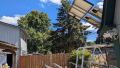
The feature that is captured by the label "balcony" is that you can just plug it into a normal outlet and draw power from it without requiring any modifications to your house wiring. This makes them very portable and easy to set up. But there are issues and not all of them can be resolved by a properly-designed balcony module. Perhaps the easiest to see is local overloading of the wiring. Say you have a 15 A circuit that you plug the module into and it is rated to output 10 A max. The circuit has a 15 A breaker that is there to protect the wiring on that circuit, but it can only do that if all of the current in the wiring on that circuit flows through the breaker. So say you plug in two space heaters on the same circuit as the balcony unit and each space heater draws 12 A. Your circuit might be completely happy supplying 24 A to that outlet, with 10 A coming from the balcony unit and 14 A coming from the breaker. But the wiring is overloaded and could cause a fire. There are other problems as well.
The system design goals are different. Has to be somewhat portable, with low(er) total install cost and power, plug and play and safe for a regular appliance consumer.
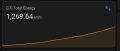
My design baseline system setup is 3 400W panels with a AC energy meter for power production and load data. There are also separate power monitor plugs (using WiFI or Thread/Matter) for things like space heater/aircon loads for excess draw monitoring and control (throttle GTI power from the solar and inform the user what's happening so the can move those devices off circuit to increase solar power into the supply circuit) for single circuit power limitations. https://www.evehome.com/en/eve-energy
Certainly itis an interesting concept. AND, it might actually perform as it is claimed. THAT it would actually be cost effective is a different question completely.
There is also a question as to the actual quality and durabiity of the system being sold. THATcould be a big issue.
One thing that never gets discussed in any of these stories is that the more that electrical needs are supplied by privately-owned panels such as these, the more rates are going to go up for electricity supplied by the utility. That's neither inherently good nor bad, it's just reality. The cost that consumers pay for electricity covers not just the actual cost of the energy itself, which is generally pretty low, but it's also paying for the construction and maintenance of the power distribution networks, substations, rights-of-way leases, vehicle fleets, equipment, the capitalized cost and maintenance of the power generation facilities (if there are any -- the utility may be purchasing all of its energy from other providers), and the cost of all of the employees that do the line repairs in the middle of thunderstorms and perform all the billing, and, yes, the profits that the utility earns. The wholesale price of electricity is somewhere in the 5 cents/kWh while the residential rate is more like 15 cents/kWh. That 10 cent/kWh is overwhelmingly fixed costs associated with providing the infrastructure needed to meet peek demand for the number of customers and is quite insensitive to the amount of electricity those customers actually use, especially on average.
The billing model that most utilities have long used is to have a small (if any) monthly service fee plus a per-kWh usage fee. The idea was to spread out the fixed costs in proportion to the fraction of the energy consumed by each customer. But at the core of this approach is the assumption that each customer is getting all of their electrical energy from the utility, so that they are paying for their share of the cost of the infrastructure needed to meet overall peek demand. But if too many customers are generating most of their energy locally and only using the utility when their demand is above their capability (such as when their capability is very low such as on a hot summer night or during days of prolonged heavy cloud coverage), then they are now paying as though they were a very small consumer while expecting to be served with a share of peak power commensurate with a much larger customer.
Using this model, if average energy supplied by the utility is cut in half by the widespread adoption of local panels, then the residential rate would need to go from 15 cents/kWh to 25 cents/kWh. Of course, these higher rates would encourage more people to install local panels, which will make the situation more extreme. If the penetration were such that 80% of the demand was met by local panels, then that rate would soar to 55 cents/kWh. The real insidious part of all of this is that those people than don't or can't install local panels end up paying vastly higher costs for their electricity in order to subsidize the availability of peak-demand energy to the panel users.
I suspect what we will see is the adoption of billing models that reflect the fact that people need to pay for fixed costs in a way that is related to their peak demand needs, independent of what their average consumption is, combined with a per-kWh usage fee that is close to the wholesale rate plus a modest overhead factor. Perhaps the simplest way to do this, though not necessarily the best, is to charge a flat monthly fee based on the size of the installed service that is sized to cover the fixed costs.
Assuming that their claim is not a bunch of BS, it probably means that they are burning their investor's money to subsidize the sale price in order to establish a market hoping that that will result in greater sales so that they can either raise the price to a sustainable level or, possible, reach a scale that their costs come down (possibly simply by spreading out their fixed costs over more units) enough to make the current sales price profitable.
My testing solar array(s) currently generate a good slice (I have 15 kWh of total battery storage to time shift) of total house usage per day. Plenty to cover my server usage and some of the summer cooling costs. I have off-grid solar inverters for emergency power (and a generator).
Most people think that energy rates are going to increase with or without widespread small solar adoption. Panels, batteries, and the power electronics are dirt cheap now. Don't know how long that will last but current prices are fantastic compared to when I started in 2010.
Assuming that their claim is not a bunch of BS, it probably means that they are burning their investor's money to subsidize the sale price in order to establish a market hoping that that will result in greater sales so that they can either raise the price to a sustainable level or, possible, reach a scale that their costs come down (possibly simply by spreading out their fixed costs over more units) enough to make the current sales price profitable.
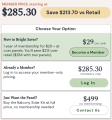
Say I buy one panel without the membership: $499.00
Now I buy one panel with a membership: $29 + $285.30 = $314.30
Savings: $184.70 (well short of the claimed $213 savings).
It appears that their "savings" disregards the cost of the membership. Okay. A bit misrepresentative, but okay.
But I have NO idea how they come up with a savings of $284 with two panels. Unless their "two panel" price is a lot less than simply buying two of the same thing. Perhaps it is, since you wouldn't need additional electronics.
Leaving all that aside, their "At Cost" price of $285 for a 180 W system is $158/100 W. My understanding is that this is not unreasonable, but is getting a bit toward the expensive side unless the electronic components are quite high quality.
But, that means that they are requiring you to buy a membership for the privilege of paying the fair market price.
It also calls into question the plausibility that this is their actual cost.
Their "List Price" of $499, at $277/100 W, appears to probably be fake marketing bull to exaggerate their claim of the savings.
I would strongly recommend that anyone considering this spend some time really exploring the alternatives and look only at the actual end costs. Don't pay any attention to any claimed deals or savings.

 Facebook
 Google
 GitHub
 Linkedin