Balcony solar panels

Thread Starter

nsaspook

Joined Aug 27, 2009
16,250
https://www.npr.org/2026/03/12/nx-s1-5737287/solar-panels-utilities-energy-saving
Easy-to-use solar panels are coming, but utilities are trying to delay them
So Boyce says the blades on the end of the plug could shock someone.
No, they won't if disconnected to the utility power. This is old tech.
German utilities expressed many of the same concerns nearly a decade ago when plug-in solar started to become popular in Germany. But with more than a million systems installed, no safety incidents have been reported for customers who used the panels as instructed, according to a research paper funded by the U.S. Department of Energy.
https://www.mdpi.com/1996-1073/18/8/2132
Barriers to Balcony Solar and Plug-In Distributed Energy Resources in the United States

These things need a dedicated circuit and a utility power monitor to be 'safe' from overloading wiring issue. Power on utility lines during an outage is not a issue with modern systems, as even the cheapest Chinese units have good Anti-islanding hardware.
https://www.anernstore.com/blogs/diy-solar-guides/ieee-1547-anti-islanding-pv-shutdowns
IEEE 1547 and Anti-Islanding: What It Means for PV Shutdowns
 
Last edited by a moderator:

MisterBill2

Joined Jan 23, 2018
27,180
FIRST: Feeding power INTO an outlet by using a plug fed by some power source IS TOTALLY UNSAFE!! NOT ONLY is there an obvious shock hazard, but an accidental reversal of polarity can result in a "very exciting" shorted circuit. I have seen that when an inlaw was patching a generator into his home electrical system. Fortunately the current parted the connection inside the plug with only a loud bang and a small blast of blue spark.
 

Thread Starter

nsaspook

Joined Aug 27, 2009
16,250
FIRST: Feeding power INTO an outlet by using a plug fed by some power source IS TOTALLY UNSAFE!! NOT ONLY is there an obvious shock hazard, but an accidental reversal of polarity can result in a "very exciting" shorted circuit. I have seen that when an inlaw was patching a generator into his home electrical system. Fortunately the current parted the connection inside the plug with only a loud bang and a small blast of blue spark.
Misinformation again. Stick to subjects you actually have detailed knowledge on.
 

MisterBill2

Joined Jan 23, 2018
27,180
Misinformation again. Stick to subjects you actually have detailed knowledge on.
If the plug being inserted is energised with 120 volts, there is a hazard. a careful person will not get zapped, but ty the OSHA inspecter wouldsee a problem. Maybe not a short circuit problem, but certainly a safety issue. My guess is thatthe solar panel inverter supplies voltage before connection, and then synchronizes to the mains. But maybe not.
 

BobTPH

Joined Jun 5, 2013
11,463
Presumably there is no voltage on the pins until it is plugged in and sees the line voltage.

Look up how grid-tied inverters work, then you will understand. This is not the same as plugging in an alternator or independent inverter.
 

WBahn

Joined Mar 31, 2012
32,703
https://www.npr.org/2026/03/12/nx-s1-5737287/solar-panels-utilities-energy-saving
Easy-to-use solar panels are coming, but utilities are trying to delay them
German utilities expressed many of the same concerns nearly a decade ago when plug-in solar started to become popular in Germany. But with more than a million systems installed, no safety incidents have been reported for customers who used the panels as instructed, according to a research paper funded by the U.S. Department of Energy.
Note the fine print: "who used the panels as instructed."

That's an interesting caveat that robs the statement of much of its value. How many safety incidents have been reported for customers that DIDN'T use the panels as instructed? How easy/difficult is it to use the panels in a manner other than instructed that presents safety risks? What fraction of panels are used in ways other than instructed?

Is that caveat just a throw-away statement to cover their behind, or is it necessary in order to make the claim itself accurate?
 

Thread Starter

nsaspook

Joined Aug 27, 2009
16,250
Note the fine print: "who used the panels as instructed."

That's an interesting caveat that robs the statement of much of its value. How many safety incidents have been reported for customers that DIDN'T use the panels as instructed? How easy/difficult is it to use the panels in a manner other than instructed that presents safety risks? What fraction of panels are used in ways other than instructed?

Is that caveat just a throw-away statement to cover their behind, or is it necessary in order to make the claim itself accurate?
"who used the panels as instructed"

You can't beat stupid. That shouldn't be a product safety requirement either. It's very difficult to use IEEE 1547, IEC 62109 and UL 1741 approved products improperly. This is old tech that lots of people are using safely today and have been for decades.

Those are the standards US approved 'Balcony' solar panel products MUST have.
https://www.intertek.com/energy-commodities/renewable/inverter-and-converter/
 
Last edited:

Thread Starter

nsaspook

Joined Aug 27, 2009
16,250
If the plug being inserted is energised with 120 volts, there is a hazard. a careful person will not get zapped, but ty the OSHA inspecter wouldsee a problem. Maybe not a short circuit problem, but certainly a safety issue. My guess is thatthe solar panel inverter supplies voltage before connection, and then synchronizes to the mains. But maybe not.
Fail again with more misinformation. Stop guessing (instead of reading and getting informed) at things you know nothing of, it makes you seem foolish.
 
Last edited:

bassbindevil

Joined Jan 23, 2014
918
I just think balcony solar is a waste of money compared with larger scale systems, like, the roof of the apartment building, schools, malls, warehouses, or using urban waste land and parking lots for community solar. It's something to do after we've run out of all the more efficient places to locate solar, or when you live where grid power is unreliable and you can charge up a home battery.
 

Thread Starter

nsaspook

Joined Aug 27, 2009
16,250
I just think balcony solar is a waste of money compared with larger scale systems, like, the roof of the apartment building, schools, malls, warehouses, or using urban waste land and parking lots for community solar. It's something to do after we've run out of all the more efficient places to locate solar, or when you live where grid power is unreliable and you can charge up a home battery.
For a huge group of people, balcony solar is the only thing that will work to put a small dent in utility energy use and it's yours to take with you if you move. I would says it's inefficient instead of wasteful.

Stupid ideas like solar roads are wasteful grift.
 

MisterBill2

Joined Jan 23, 2018
27,180
Fail again with more misinformation. Stop guessing (instead of reading and getting informed) at things you know nothing of, it makes you seem foolish.
Since I do not have any of those solarpanels, it is rather difficult to read the instructions! Inaddition, I do not follow every posted link!

AND, what sort of power system does not deliver power until it is connected to an active power circuit???
THAT ALONE is rather anti-intuitive!!
ALL of my power inverters start to deliver power when they are switched on. That is common with all of the power inverters that I have been aware of.

Of course I realize that some products may be differet, but it was not mentioned that the solar converters in the discussion were that sort, although it did mention that they somehow "synchronised themselves with the mains". That function is certainly possible.

So there seem to be solar systems that are not intended to be alternative power sources, but rather to somehow reduce the consumption of the utility provided power, by serving as an addition, rather than a substitute. That seems like quite an interesting concept. I doubt that with the small packages mentioned that it is cost effective.

And none of that changes the reality that a connection cable with exposed pins on both ends has the possibility of being a safety hazard. That is not a guess, that is reality.
 

Thread Starter

nsaspook

Joined Aug 27, 2009
16,250
Since I do not have any of those solarpanels, it is rather difficult to read the instructions! Inaddition, I do not follow every posted link!

AND, what sort of power system does not deliver power until it is connected to an active power circuit???
THAT ALONE is rather anti-intuitive!!
ALL of my power inverters start to deliver power when they are switched on. That is common with all of the power inverters that I have been aware of.

Of course I realize that some products may be differet, but it was not mentioned that the solar converters in the discussion were that sort, although it did mention that they somehow "synchronised themselves with the mains". That function is certainly possible.

So there seem to be solar systems that are not intended to be alternative power sources, but rather to somehow reduce the consumption of the utility provided power, by serving as an addition, rather than a substitute. That seems like quite an interesting concept. I doubt that with the small packages mentioned that it is cost effective.

And none of that changes the reality that a connection cable with exposed pins on both ends has the possibility of being a safety hazard. That is not a guess, that is reality.
The possibility of harm is much less than overloaded circuits from electric room heaters.
That's the actual reality, not some, IMO misinformation from those that don't even understand the design concept.


The concept of output terminals safety in home grid-tie inverters as old as solar energy systems. There have been micro inverters for decades and people have been using them in small systems like this for decades.
https://enphase.com/sites/default/files/2021-04/IQ7-IQ7plus-DS-EN-US.pdf

This effort is only to make it official and likely more cost effective due to mass production of systems designed specifically for this type of operation.

That is a good thing.
 

MisterBill2

Joined Jan 23, 2018
27,180
OK, I learned something today. Thanks for that.
BUT still, the OSHA inspector will be on your case if they find a cord with exposed, possibly live, connectors on both ends.
AND a reminder that just because a lot of people do something and get away with it, does not make it safe, or even a good choice.
 

Thread Starter

nsaspook

Joined Aug 27, 2009
16,250
OK, I learned something today. Thanks for that.
BUT still, the OSHA inspector will be on your case if they find a cord with exposed, possibly live, connectors on both ends.
AND a reminder that just because a lot of people do something and get away with it, does not make it safe, or even a good choice.
Sure, basic electrical safety is still the standard.

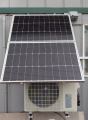
One of the supplemental (Balcony solar) systems I'm designing and building.

Panels.
1774199603575.png
1774200581718.png
A few 100W panels for the grid-tie power. Shade for the shop mini-split.

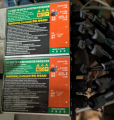
Grid-tie Inverters.
1774199818625.png

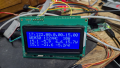
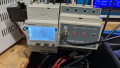
PIC1857Q84 interface to energy meters, a RPi talks to the PCB via SPI using a Linux kernel modules to convert the raw data to a common format for display on Home Assistant.
1774199956772.png
1774200766696.png
Using the MODBUS rtu interface on both types of energy meters.

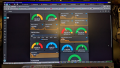
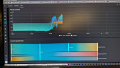
Home Assistant display of the GTI (the block of guages on the left) and off-grid system. The off-grid system (the block of guages on the right) uses a separate inverter not designed to connect to the grid. Balcony systems won't have off-grid capabilities like this that charge batteries.
1774200178208.png
1774201166040.png

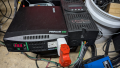
Off-grid inverter.
1774200297218.png
 
Last edited:
Top