Back EMF protection

Thread Starter

thedark1811

Joined Dec 20, 2020
40
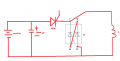
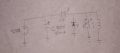
Hello, I want to protect a capacitor bank from back emf, I have read that they use an anti-parallel diode and another a varistor or MOV and another both. The bank is 4800uF at 900V and this will discharge to a 10 awg coil and 200 turn air core. That pulse would be almost 2KJ in the coil but I don't know how much back emf can be returned to my bank. For now I have a 600V 95A 35ns DSEI2X101-06A IXYS double diode where I will connect it in series for the voltage I require. I wonder if that would be enough to protect my bank or do I also add a MOV for more protection? My circuit would be something like thiscoil.jpeg
 

crutschow

Joined Mar 14, 2008
38,503
Diode D should effectively bypass any reverse EMF from the inductance.
For now I have a 600V 95A 35ns DSEI2X101-06A IXYS double diode where I will connect it in series for the voltage I require.
Where is that connected in the circuit, and how do you expect it to protect the capacitor?
 

Thread Starter

thedark1811

Joined Dec 20, 2020
40
Where is that connected in the circuit, and how do you expect it to protect the capacitor?
In my circuit it would be the D that would be connected in anti-parallel or in reverse polarity to the capacitor bank. The capacitor bank would be discharged through a scr that would be activated with a pulse of voltage and current. when the diode is discharged it would be in non-conduction mode and all the current from this would go to the coil and when the bank charge is finished it would go with inverse polarity and the diode conducts in a short and the coil energy would go to through there.
I am right? Is it necessary to add a varistor? Or is the size of the diode enough and that it doesn't explode? the datasheet says 250W power dissipation
1687743748342.png
 

Danko

Joined Nov 22, 2017
2,167
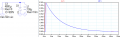
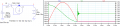
Depends on ESR of capacitor, inductance and resistance of coil,
thyristor and diode should be able to work with current up to 6000 A.
1687749320370.png
 
Last edited:

Thread Starter

thedark1811

Joined Dec 20, 2020
40
Depends on ESR of capacitor, inductance and resistance of coil,
thyristor and diode should be able to work with current up to 6000 A.
View attachment 297083
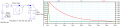
Oh, how would I calculate that back emf if I have the inductance, the esr, and the resistance of the coil? And what is that simulator called? I forgot that the scr is the t508n16tof 1600 500A peak of 5kA, And how to calculate the maximum current peak of this circuit considering the values of ESR RL HL and in which simulator can I see the time when the maximum current peak arrives?
 

Danko

Joined Nov 22, 2017
2,167
Oh, how would I calculate that back emf if I have the inductance, the esr, and the resistance of the coil? And what is that simulator called? I forgot that the scr is the t508n16tof 1600 500A peak of 5kA, And how to calculate the maximum current peak of this circuit considering the values of ESR RL HL and in which simulator can I see the time when the maximum current peak arrives?
Use free LTspice simulator: https://ltspice.analog.com/software/LTspice64.exe
In LTspice load file pulse.asc (it is attached here),
change parameters of C1 > Rser (ESR) and coil L1 > Rser, L.
Run simulation.
Here is no back EMF because it blocks by diode.
ADDED:
Time of current peak you can see on diagram.
ADDED:
Download books:
"ELECTRONIC CIRCUIT ANALYSIS USING LTSPICE XVII SIMULATOR" https://ebin.pub/qdownload/electron...ginners-1nbsped-1032040769-9781032040769.html
"LTspice IV Getting Started Guide" https://www.analog.com/media/en/sim...ettingstartedguide.pdf?modelType=spice-models
And many useful articles are here: https://ltwiki.org/index.php?title=SPICE_and_LTspice_Courseware_and_Tutorials
 

Attachments

Last edited:

BobTPH

Joined Jun 5, 2013
11,515
I could be wrong, but I think you are trying to solve a non-problem. The back EMF pulse occurs when current in an inductor is switched off abruptly. But an SCR switch remains on until the current has fallen below its holding current. So there is no abrupt shut-off of a large current that will create a back EMF pulse.
 

MisterBill2

Joined Jan 23, 2018
27,505
I could be wrong, but I think you are trying to solve a non-problem. The back EMF pulse occurs when current in an inductor is switched off abruptly. But an SCR switch remains on until the current has fallen below its holding current. So there is no abrupt shut-off of a large current that will create a back EMF pulse.
Bob is correct. The current will rise at a ratelimited by the inductance of the coil and the resistance of the connections. The current will fall based on the ESR of the capacitor. And any possible voltage spike will be clamped by the internal resistance of the 900 volt supply.
What is the intended function of this circuit, anyway???
 

Faran381

Joined Nov 17, 2025
1
When working with a capacitor bank as large as 4,800 µF at 900 V, protecting your system from back-EMF is essential because you’re dealing with nearly 2 kJ of stored energy. When this discharges into a 200-turn air-core coil, any interruption or rapid change in current can create extremely high voltage spikes. Using only an anti-parallel diode often isn’t enough especially if you’re stacking 600 V diodes in series because voltage sharing becomes unreliable and reverse-recovery behavior can actually generate additional spikes. A better approach is to use a single high-voltage SiC diode (1200–1700 V class) with a high surge rating, placed close to the switching node. You should also add a series resistor of a few ohms to limit di/dt and reduce the size of the transient. An RC snubber across the coil (for example, 10–100 nF high-voltage capacitor with a damping resistor) helps absorb high-frequency ringing. MOVs can be used, but only high-energy, properly rated ones, since many will degrade quickly at this energy level; alternatively, a GDT or spark gap provides a more robust clamp for extreme spikes. For repeated operation, an RCD clamp or regenerative clamp is even safer, routing excess energy into a resistor or back into the supply rather than stressing components randomly. Finally, layout matters short leads, wide traces, and placing clamps close to the coil and switch makes a huge difference. If you share your coil inductance and switching characteristics, I can help you size the resistor and snubber more precisely.
 

MisterBill2

Joined Jan 23, 2018
27,505
@F381: It seems to me that discharging a 900 volt capacitor bank into a 200 turn air core coil will certainly produce a whole bunch of high voltage oscillations! I would presume that is the purpose for doing it!!
If there is another purpose, Please explain what that purpose is!! Remember that this website does not support the discussion of weapons, including rail-guns and such.

The SCR will stay in the conducting mode until the forward current drops below some low level. So until the SCR stops conducting there can't be much voltage developed across it. If the SCR's PRV (Peak Reverse Voltage) rating is adequate then the developed high voltage will have no effect.
 

Sensacell

Joined Jun 19, 2012
3,784
When working with a capacitor bank as large as 4,800 µF at 900 V, protecting your system from back-EMF is essential because you’re dealing with nearly 2 kJ of stored energy. When this discharges into a 200-turn air-core coil, any interruption or rapid change in current can create extremely high voltage spikes. Using only an anti-parallel diode often isn’t enough especially if you’re stacking 600 V diodes in series because voltage sharing becomes unreliable and reverse-recovery behavior can actually generate additional spikes. A better approach is to use a single high-voltage SiC diode (1200–1700 V class) with a high surge rating, placed close to the switching node. You should also add a series resistor of a few ohms to limit di/dt and reduce the size of the transient. An RC snubber across the coil (for example, 10–100 nF high-voltage capacitor with a damping resistor) helps absorb high-frequency ringing. MOVs can be used, but only high-energy, properly rated ones, since many will degrade quickly at this energy level; alternatively, a GDT or spark gap provides a more robust clamp for extreme spikes. For repeated operation, an RCD clamp or regenerative clamp is even safer, routing excess energy into a resistor or back into the supply rather than stressing components randomly. Finally, layout matters short leads, wide traces, and placing clamps close to the coil and switch makes a huge difference. If you share your coil inductance and switching characteristics, I can help you size the resistor and snubber more precisely.

A capacitor bank like this is not easy to damage via a "voltage spike".
The capacitor represents a very low impedance to high frequency spikes, the capacitor will not see much voltage change from a "spike"

It's the semiconductor that is going to need protection- always.
 
Top