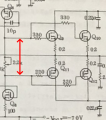
Audio amplifier

Thread Starter

joni.vanderhaeghe

Joined Feb 26, 2025
1
Dear All

I found an AB audio amplifier schematic online, and ordered the PCB. The issue is that the mosfets connected to the upper VCC are working, but seem to become extremely hot. The other mosfets connected ot the lower VCC are seem not to be working. A lot of testing has been done, but no improvements.
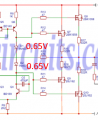
When I simulate this in software (falstad) like multisim. I see that the two mosfets connected tot the - VCC are not switching. A picture of the schematic and simulation below.
Someone any idea? I can give some further information if needed.
Thanks in advance.
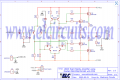
1740588166850.png
1740588086170.png
 

crutschow

Joined Mar 14, 2008
38,507
Someone any idea?
The Class AB output transistor bias current is significantly affected by the Vgs(th) of the output MOSFETs, and that design may not properly account for the large differences of that voltage between different samples of the transistors (the data sheet states it can vary for 0.15V to 1.45V).
If that's the problem, there's no easy solution.
A larger value for bias resistors R17 and R18 may help, at the expense of some reduction in maximum output power.

(Nit: Please use right-angle, not angled, lines and part layout for your schematics, as the original schematic has. Angled lines/parts are amateurish and make it harder to read the schematic.)
 

ronsimpson

Joined Oct 7, 2019
4,693
Many schematics on the internet will not work.
Before the schematic was modifier for MOSFETs the output stage looked much like this.
At resting: All the diodes and B-E diode have about the same voltage drop. The voltage made by the top diode causes the top transistor to be just turned on. There will be a small current flowing from +V to -V.
Often the two diodes are connected to the heatsink of the transistors. As the transistors heat up the B-E voltage changes and thus the Diodes also need to change in voltage by the same amount. 1740593580401.png
Now look what happens with MOSFETs. They function differently. They need a voltage of 3 to 5 volts G-S before they turn on. That voltage is also temperature dependent. The two diodes needs to be an adjustable voltage of 6V, (who knows it is very dependent on what type of MOSFETs you have.
How to choose the voltage. At no signal. Start out with a small voltage and increase it until a small amount of current is drawn.
If the voltage is not right, you will have crossover distortion.
1740594266348.png
 
Last edited by a moderator:

LowQCab

Joined Nov 6, 2012
5,101
Audio-Amplifiers are very fussy, especially when You start mixing BJTs and FETs.

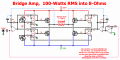
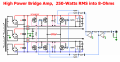
Below is an untried idea that I came up with .........
It uses 6, hopefully identical, FETs, all mounted very close to each other to hopefully
keep them tracking at very similar Temperatures on the Heat-Sink.
Two of the Six "identical" FETs provide the Bias-Voltage for the other four FETs.
They are all driven by rather expensive High-Current-Op-Amps.
They may, or may not, actually work in the real world.
.
100-Watt    Bridge Amp 1 .png.
250-Watt  Bridge Amp 1 .png
.
.
.
 
Last edited:

0ri0n

Joined Jan 7, 2025
173
When I simulate this in software (falstad) like multisim. I see that the two mosfets connected tot the - VCC are not switching. A picture of the schematic and simulation below.
Someone any idea? I can give some further information if needed.
Replace the MOSFETs in the output stage with bipolar power transistors. If you prefer MOSFETs, replace the two 1N4007 diodes with a resistor/trimmer.
 
Last edited:

Ian0

Joined Aug 7, 2020
13,132
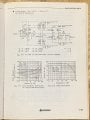
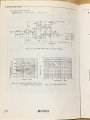
That circuit should work: it is straight out of the Hitachi application note.
Are you sure about your power transistors? That circuit uses the Hitachi lateral MOSFETs which have the source in the middle. Every other MOSFET has the drain in the middle. There are plenty of fakes with the wrong pinout.
The circuit will work reasonably well with no bias at all (short out the two diodes) - if overbias is the problem that will sort it out,
 

MrAl

Joined Jun 17, 2014
13,704
Audio-Amplifiers are very fussy, especially when You start mixing BJTs and FETs.

Below is an untried idea that I came up with .........
It uses 6, hopefully identical, FETs, all mounted very close to each other to hopefully
keep them tracking at very similar Temperatures on the Heat-Sink.
Two of the Six "identical" FETs provide the Bias-Voltage for the other four FETs.
They are all driven by rather expensive High-Current-Op-Amps.
They may, or may not, actually work in the real world.
.
View attachment 343305.
View attachment 343307
.
.
.
Hi there,

There is a much simpler way to drive the MOSFETs. I'll try to post a circuit later sometime. It does not require any special biasing method.
 

MrAl

Joined Jun 17, 2014
13,704
That circuit should work: it is straight out of the Hitachi application note.
Are you sure about your power transistors? That circuit uses the Hitachi lateral MOSFETs which have the source in the middle. Every other MOSFET has the drain in the middle. There are plenty of fakes with the wrong pinout.
The circuit will work reasonably well with no bias at all (short out the two diodes) - if overbias is the problem that will sort it out,
Do you happen to have that app note handy?
I am having a problem seeing how the two mosfets do not turn on at the same time for some inputs or maybe all inputs. It's a tricky circuit though with the feedback partly compensating for the bias voltages.
 

MrAl

Joined Jun 17, 2014
13,704
Dear All

I found an AB audio amplifier schematic online, and ordered the PCB. The issue is that the mosfets connected to the upper VCC are working, but seem to become extremely hot. The other mosfets connected ot the lower VCC are seem not to be working. A lot of testing has been done, but no improvements.
When I simulate this in software (falstad) like multisim. I see that the two mosfets connected tot the - VCC are not switching. A picture of the schematic and simulation below.
Someone any idea? I can give some further information if needed.
Thanks in advance.
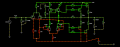
View attachment 343296
View attachment 343295
Hi,

I would not be surprised that the transistors get hot. Transistors used for audio work in the linear mode always get hot because there is a large amount of power wasted. Each transistor will go through a current and voltage range where there is a significant voltage drop drain to source while there is still significant current. The Class D type was designed to get around this, and that is where the transistors are operated switchmode.
 

Ian0

Joined Aug 7, 2020
13,132
Do you happen to have that app note handy?
I am having a problem seeing how the two mosfets do not turn on at the same time for some inputs or maybe all inputs. It's a tricky circuit though with the feedback partly compensating for the bias voltages.
In the original book! I’ll scan it for you this evening.
Lateral MOSFETs have quite a low threshold voltage, but they also have a very low zero tempco point of Vgs, so if they start to get warm the bias current will reduce, not run away.
 

ronsimpson

Joined Oct 7, 2019
4,693
Someone, show this running in spice. Let's see the crossover distortion. There is a large amount of gain, maybe it can compensate for the output stage having a bump in it.
Maybe we have wasted time trying no not build an output stage like this. Maybe the books are wrong. It has happened before.
 

Ian0

Joined Aug 7, 2020
13,132
Someone, show this running in spice. Let's see the crossover distortion. There is a large amount of gain, maybe it can compensate for the output stage having a bump in it.
Maybe we have wasted time trying no not build an output stage like this. Maybe the books are wrong. It has happened before.
The original design is 0.002%.
It was used in hundreds of MOS FET amps in the 1980s and 1990s.
 

AnalogKid

Joined Aug 1, 2013
12,130
Why does the Falstad image have a battery with no voltage value connected to GND? If the simulator sees this as 0 V at 0 ohms, the 8 ohm load now is constantly on the upper output transistors while the lower output transistors are doing nothing. Separate from that it will screw up the bias points of everything else in the circuit. Q7 and Q8 could be trying to pump 4-5 A into the load, and because they are source-followers they are *not saturated*. Not good.

Also, the series feedback resistor R10 should be 47K, not 47 ohms. The lower value decreases the circuit gain, which widens the bandwidth, probably enough to exceed the circuit's gain/phase margin and cause oscillation.

ak
 
Last edited:

Ian0

Joined Aug 7, 2020
13,132
Do you happen to have that app note handy?
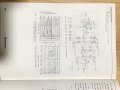
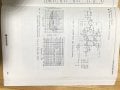
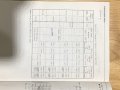
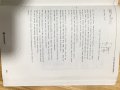
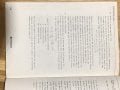
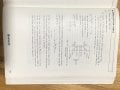
Here it is. There are two versions. I always thought I had two copies of the same data book, but they are actually different.
I’ve never seen the version with the cascaded JFET front end in a commercial amplifier.
It goes on to class-D designs on the next page. Let me know if you want that as well, as it’s not exactly relevant to this topic.3654FA68-249F-48B6-9156-690C7E2A50BD.jpegDBA9BF05-7A42-47DF-90B7-CD363660A21E.jpeg3C8D6E2F-F396-4960-88B8-C2F15CD8344A.jpeg69C37291-5860-4473-BC1D-885F6AE4B260.jpegBE070FB3-FACB-4E2F-B8CE-B022CCE4F2CC.jpegF97028F8-379D-43BA-BF19-F5AA19BF275F.jpegB5AF0331-8E6B-4785-954B-2F6AE2AA1E49.jpeg1A8E243C-B096-4D91-8AB1-4DB773B09CFD.jpeg
3654FA68-249F-48B6-9156-690C7E2A50BD.jpeg
 

ronsimpson

Joined Oct 7, 2019
4,693
The biasing for the output stage is for junction transistors not MOSFETs. The person that drew this just switched from transistors to FETs without making any changes. (from post #1)
1740695149907.png
The bias for the second picture is much more than 1.3V. It is set by 22k pot. (post #17)
1740695275863.png
 

Ian0

Joined Aug 7, 2020
13,132
Actually it's about right.
This it the datasheet.
With 0.6V gate-to-source, the typical drain current is about 100mA per pair of FETs. Probably a bit warm, but usable.
A vertical MOSFET such as IRFP240/IRFP9240 would need about 6V total.
 
Top