Are GaN Transistors the Future of Power Electronics?

Thread Starter

kami100

Joined Apr 30, 2025
6
Hello all,

I am following the transition of GaN (Gallium Nitride) transistors into the power electronics industry with particular interest: for instance, GaN is being implemented into consumer electronics like fast charging devices, laptop adapters, and compact power supplies. GaN devices are superior to traditional silicon MOSFETs in that they provide:

- Improved efficiency
- Enhanced switching speeds
- Decreased size and weight
- Reduced thermal drawbacks

Thus, GaN can be used almost anywhere from DC-DC converters and EV inverters to RF applications.

But I wonder:

Do you think that GaN transistors will truly become the universal standard for power electronics?

What about factors such as cost, thermal management, gate driving, and high-voltage reliability, both in terms of design and demanded standards: do you think these pose any challenge or limitation?

Does anyone here have experience integrating GaN into an actual project or a commercial product?

I am looking forward to everyone’s responses whether you design power systems, play around with dev boards like GaNFast, or simply observe the industry from a distance.

Appreciate it!
 

crugorocks

Joined May 1, 2025
31
GaN devices do offer game-changing advantages over traditional silicon. However, GaN is still more expensive per device compared to silicon,
 

Tonyr1084

Joined Sep 24, 2015
9,744
Good enough is often better than the best when cost becomes a deciding factor. That's why a bridge is engineered to handle an expected load and is designed to manage the unexpected loads. But you can build a bridge that can handle 20 times the expected load at 40 times the cost. Good enough wins out every time.
 

nsaspook

Joined Aug 27, 2009
16,250
The lack of commercial P-types is more important than cost of current devices. No P-types limits the types of general circuits you can build with GaN today. The commercial semi process required for competitive complement devices is still at the research stage. The doping requirements are crazy and are impractical/incompatible with commonly used fab tools.
1746618434590.jpeg

https://link.springer.com/article/10.1007/s11664-025-11882-y

https://eepower.com/news/gallium-nitride-discovery-aims-for-more-energy-efficient-electronics/

"It's very difficult to simultaneously achieve n-type and p-type in a wide bandgap semiconductor. Right now, silicon carbide is the only other one that has both besides GaN. But the mobile electrons in silicon carbide are more sluggish than those in GaN," said co-senior author Huili Grace Xing, the William L. Quackenbush Professor in electrical and computer engineering and in materials science and engineering. "Using these complementary operations enabled by both n-type and p-type devices, much more energy efficient architecture can be built."
 
Last edited:

ronsimpson

Joined Oct 7, 2019
4,647
I have used GaN. From the very first experimental parts.

I was doing PWM power supplies using bipolar transistors. There is an art to driving the Base. (now forgotten)
MOSFETs at first cost too much and had problems. They are easy to drive the Gate. There was a learning curve.
IGBTs have the advantage of having an insulated Gate. Simple drive.
The GaNs have a learning curve. They have improved greatly. Some of the hard to use ones have dies out. Costs will drip just like the MOSFETs did. People will learn. The need to make supplies small will push the frequencies higher.

GaN needs more thought. It borders on microwave. You can't just hand a schematic to the layout person. The board needs to be engineered. Now GaN Gate driver ICs are available. There are GaN transistors with the Gare driver IC built inside. That makes the project much easier. RF and power has moved into GaN. Someday there will be something better.
 

nsaspook

Joined Aug 27, 2009
16,250
I have used GaN. From the very first experimental parts.

I was doing PWM power supplies using bipolar transistors. There is an art to driving the Base. (now forgotten)
MOSFETs at first cost too much and had problems. They are easy to drive the Gate. There was a learning curve.
IGBTs have the advantage of having an insulated Gate. Simple drive.
The GaNs have a learning curve. They have improved greatly. Some of the hard to use ones have dies out. Costs will drip just like the MOSFETs did. People will learn. The need to make supplies small will push the frequencies higher.

GaN needs more thought. It borders on microwave. You can't just hand a schematic to the layout person. The board needs to be engineered. Now GaN Gate driver ICs are available. There are GaN transistors with the Gare driver IC built inside. That makes the project much easier. RF and power has moved into GaN. Someday there will be something better.
One of my former techs (ex-navy nuke tech) moved to a small fab making GaN parts in Portland. He was amazed at the difference in processing technology (Hydrogen (H) and magnesium (Mg) ion implantation). They are still using old doping process technology (for bulk doping) from the 80's for GaN production that's been long replaced by implantation in Si.

1746631646389.png
I don't think it will replace Si completely in Power related applications until they find a way to make practical wafer scale P-type devices at a much lower cost.

https://pubs.aip.org/aip/jap/articl...ess-on-and-challenges-of-p-type-formation-for
 

Ian0

Joined Aug 7, 2020
13,097
GaN needs more thought. It borders on microwave. You can't just hand a schematic to the layout person. The board needs to be engineered. Now GaN Gate driver ICs are available. There are GaN transistors with the Gare driver IC built inside. That makes the project much easier. RF and power has moved into GaN. Someday there will be something better.
How do you deal with the heatsinking? I’m used to TO220 and TO247 packages, micas and grease!
 

schmitt trigger

Joined Jul 12, 2010
2,027
Electronics is a very competitive industry.
As others have already pointed out, someone as a design engineer requires to carefully balance the cost/performance ratio.
There are certain applications, like military or aerospace devices, in which performance is the key driver and therefore will be mostly used there.
But this isn’t a new trend, for the very first silicon transistors and the very first ICs both the DoD and NASA were the initial customers.

As the product and processes matured and lowered in cost, the technology trickled down to commercial applications. I would expect a similar trend with wide bandgap semiconductors, and already you can find these devices on high performance commercial products. In my humble experience, SiC appears to be one step ahead of GaN.
 

ronsimpson

Joined Oct 7, 2019
4,647
How do you deal with the heatsinking?
I do not like GaN parts in through hole packages. The lead length is too long for those speeds. I think those parts are not being used anymore.

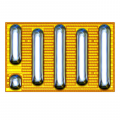
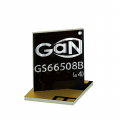
Here is a picture of a transistor I used. I think it is 2.5x1.5mm. 100V 0.006ohm 29A continuous and I have pulsed it at 100A. I used the copper in the PCB as the heat sink. There is a very good heat connection to the PCB. This type also comes in a BGA footprint. Most of the power supplies the power loss is low.
1746638919898.png
I like this footprint. Again, the copper is the heatsink.
1746639350479.png
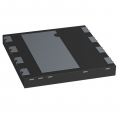
These, we pushed a heatsink up against the transistor. This is one of the few examples where there is a real heat connection for external heat sink.
1746639489654.png
I used these. The heat goes into the PCB and also you can place a pad over the entire PCB. Push the pad onto a heatsink.

1746639887785.png
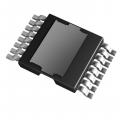
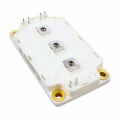
In SiC I used these in cars and used the frame as a heat sink. They are not near as fast because the transistor is not fast and because the package is not good for mhz speeds.
1746639725138.png
 
Last edited:

Ian0

Joined Aug 7, 2020
13,097
I do not like GaN parts in through hole packages. The lead length is too long for those speeds. I think those parts are not being used anymore.

Here is a picture of a transistor I used. I think it is 2.5x1.5mm. 100V 0.006ohm 29A continuous and I have pulsed it at 100A. I used the copper in the PCB as the heat sink. There is a very good heat connection to the PCB. This type also comes in a BGA footprint. Most of the power supplies the power loss is low.
View attachment 348654I like this footprint. Again, the copper is the heatsink.
That's the one I was looking at, but 29^2*6mΩ is 5W (and that doesn't include switching losses) That seems to me like a lot to dissipate from a PCB.
I wanted to switch 100A, and four of those devices in parallel just didn't look as though they could manage it. Maybe I should try it and see for myself.
 

BobTPH

Joined Jun 5, 2013
11,463
GaN is just another tool to use. There are places for tubes. Places for 2N2222A. Places for relays.
And apparently, there are still uses for mag amps, from Wikipedia:
The magnetic amplifier has now been largely superseded by the transistor-based amplifier, except in a few safety critical, high-reliability or extremely demanding applications. Combinations of transistor and mag-amp techniques are still used.
 

MisterBill2

Joined Jan 23, 2018
27,177
Certainly a magnetic amplifier is able to withstand both voltage and current spikes and overloads that would damage or totally destroy most semiconductor devices. In addition, they do not require the same amount of heat removal.
 
Top