High-frequency amplifier using bipolar transistors

Thread Starter

Dorag

Joined May 26, 2025
6
Could someone please help design a cascode amplifier with these parameters?
  • Frequency range: 200 kHz to 20 MHz
  • Input signal voltage: 10 mV to 1 V
  • Power supply voltage: 5 V to 12 V
  • Power consumption: up to 100 W

And if possible, please also include the calculations showing how to achieve this result.
 

Ian0

Joined Aug 7, 2020
13,112
What is the load impedance? Assuming 25% efficiency for a cascode because it is class A, would still mean an output power of 25W and getting 25W out of a 5V supply into the usual 50Ω or 75Ω load at 20MHz might be tricky.
 

Thread Starter

Dorag

Joined May 26, 2025
6
What is the load impedance? Assuming 25% efficiency for a cascode because it is class A, would still mean an output power of 25W and getting 25W out of a 5V supply into the usual 50Ω or 75Ω load at 20MHz might be tricky.
This is just circuit research and modeling, so I think the load impedance can be anything.
 

Thread Starter

Dorag

Joined May 26, 2025
6
What is the load impedance? Assuming 25% efficiency for a cascode because it is class A, would still mean an output power of 25W and getting 25W out of a 5V supply into the usual 50Ω or 75Ω load at 20MHz might be tricky.
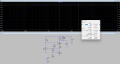
I also tried creating the schematic using an LC circuit for the high-cutoff.
1748254604068.png
 

WBahn

Joined Mar 31, 2012
32,746
Could someone please help design a cascode amplifier with these parameters?
  • Frequency range: 200 kHz to 20 MHz
  • Input signal voltage: 10 mV to 1 V
  • Power supply voltage: 5 V to 12 V
  • Power consumption: up to 100 W

And if possible, please also include the calculations showing how to achieve this result.
Would you also like us to write it up and submit it for you?

This is "Homework Help", not "Homework Done For You".
 

Thread Starter

Dorag

Joined May 26, 2025
6
Would you also like us to write it up and submit it for you?

This is "Homework Help", not "Homework Done For You".
I wasn’t specifically asking you for help. I’ve provided examples of the circuits I designed, and if someone could help me calculate them and create another similar one, I would be grateful.
My work is already completed, but I need to understand it in greater depth. For this, I require more detailed calculations using the formulas; if you’re unable to help with that, please don’t reply.
 

sparky 1

Joined Nov 3, 2018
1,218
Ive been there and I really I just wanted to understand.

I started looking at flea power qrp oscillator circuits. I began to notice that a 2N3866 second stage would put out 1W
provided it is done correctly. I am not sure but I think the old semiconductor company continental is in India.
I would go to the public library but finding a book that can explain was difficult. The text books had so much math that I often failed to see
that the definitions and terminology was just as important and the example problems were not as bad as they looked once I understood
the concepts there was more insight motivating me to approach the task even though I was feeling it was just another level of fog.
Datasheet is more of a summary than a really comprehensive explanation. Some are motivated by blaming others because of deep seated affects of oppression.
Tata Technologies joins the AUTomotive Open System ARchitecture (AUTOSAR) consortium as a premium partner - Tata Technologies


2N3866_SERIES.PDF

A popular transistor with HF. The datasheet gives a 400Mhz test circuit with a list of very explicit parts.
At first glance the circuit topology is fairly straight forward or is it? Maybe you are understanding all the details
I am guessing that probably some of the circuit may need further review possibly calculating the gain.

I could'nt take a deep breath and then start calculating everything all together, But there are those here that can,
The gain of each stage can be multiplied. I have seen a cascaded amplifier that had barely a gain of unity, the current honestly was imposable.
It was suggested that a 100Ω load be applied honestly even 100KΩ would likely fail and so the next logical step is to find out why.
 
Last edited:

Thread Starter

Dorag

Joined May 26, 2025
6
Ive been there and I really just wanted to understand.

I started looking at flea power qrp oscillator circuits. I began to notice that a 2N3866 second stage would put out 1W
provided it is done correctly. I am not sure but I think the old semiconductor company continental is in India.
Some in India have very good schooling and others had very little, however the internet is slowly improving this.
How are we doing?

2N3866_SERIES.PDF

A popular transistor with HF. The datasheet gives a 400Mhz test circuit with a list of very explicit parts.
At first glance the circuit topology is fairly straight forward or is it? Maybe you are understanding all the details
I am guessing that probably some of the circuit may need further review possibly calculating the gain.

I could'nt take a deep breath and then start calculating everything all together, But there are those here that can,
The gain of each stage can be multiplied. I have seen a cascaded amplifier that had barely a gain of unity and current honestly was imposable.
It was suggested that a 100Ω load be applied honestly even 100KΩ would likely fail.
Thank you very much for your help. This is interesting information you provided—the circuit with inductors—and I think it will be useful to me.
 
Top