No, AWG 12 is fine for 20 Amp service and is what is commonly used unless it is a very long run and you are not likely to encounter that in anything residential general use. AWG 12 is fine.
Number 10 solid is a challenge to pull around even one bend. #12 is easier, and I suggest using 3/4 inch conduit because it makes wiring easier AND it is mandatory in some applications. And if you ever need to pull in another wire then the largher conduit is the only choice.
The flexible metal covered stuff is greenfield, BX is not legal and even if it were free it would be a very poor choice because the conductors are not removable., nor can you slide them in and out. I have worked on older houses with BX and every experience has been bad. So when I visit any house in the one area I keep in mind my fire exit path from the moment I enter the door. I am aware of the problems that come with BX wiring. But Greenfield is good stuff, except that the aluminum jacket will corrode if it is against cinderblocks and there is any moisture.
Oh man am I glad I listened and didn't order 10AWG online. I ended up buying it by the foot at Home Depot and I probably wouldn't have gone with 10 once I felt it, because even 12 gauge is quite beefy. I had just 3 conductors to push through about 12' of 1/2" conduit and it went through easily. I was able to have both ends of the conduit open for that step and then closed everything up after pulling the wire through.
Question about grounding: My two new boxes are weatherproof metal and have a grounding terminal built in. I grounded the boxes using the green wires. The weatherproof outlet receptacles I installed also have a green grounding screw. Is it proper to NOT use that terminal, since the receptacle is screwed into a grounded metal box, or do I need to go back in and run a short jumper, a grounding pigtail, from the box to the green screw on the receptacle?
Question about grounding: My two new boxes are weatherproof metal and have a grounding terminal built in. I grounded the boxes using the green wires. The weatherproof outlet receptacles I installed also have a green grounding screw. Is it proper to NOT use that terminal, since the receptacle is screwed into a grounded metal box, or do I need to go back in and run a short jumper, a grounding pigtail, from the box to the green screw on the receptacle?
That depends on the outlet. Most have the ground lug connected to the metal frame so no you do not need to run an additional ground wire to the green screw since the gang box is metal. Now in the case of a plastic gang box the box has no ground screw so yes, the green ground wire to the green ground screw. Since you have a metal box which is grounded and since the metal of the outlet itself is connected to the ground lug on the receptical there is no need to connect the green screw on the receptical to ground. Hope I made this clear enough.
There is available an item consisting of about 7 inches of green wire with a lug on the end to go under the grounding screw on the metal box. You can also buy the metal box with that wire installed already. That is for the instances where local codes demand that the box be grounded as well as the outlet or switch. Just because it is a metal box grounded through metal conduit with the outlet frame tied to the green wire ground is not good enough for some municipalities. So although what you describe having done is fine and will do the job there are some places that want more. The theory is that somehow the box might become ungrounded, and a short circuit to the box would cause a hazard, if the outlet were removed from the box. Is that dumb, or what??
And #12 wire is good for 20 amps, while #10 is suitable for 30 amps, in a conduit with only 2 power carrying wires. The ground wire does not count in the heating calculations because it carries no load current.
That depends on the outlet. Most have the ground lug connected to the metal frame so no you do not need to run an additional ground wire to the green screw since the gang box is metal. Now in the case of a plastic gang box the box has no ground screw so yes, the green ground wire to the green ground screw. Since you have a metal box which is grounded and since the metal of the outlet itself is connected to the ground lug on the receptical there is no need to connect the green screw on the receptical to ground. Hope I made this clear enough.
Yes, but I've found other suggestions online that the receptacle's mounting screws are not an acceptable ground connection. There are such things as self-grounding receptacles that include a spring clip to better ensure a good connection to the box, but I don't have those.
I'm not terribly worried about it for now but maybe some nice fall day I'll go out there and add the pigtails. After all my chores today, I'm in no mood to even think about it.
Then that being the case run a ground wire from the outlet. I generally do just as a matter of practice even with the outlets which really do not require it. I generally place a small copper lug in my box and ground it and use an additional short wire to the outlet. I am just sort of a ground freak I guess.
Then that being the case run a ground wire from the outlet. I generally do just as a matter of practice even with the outlets which really do not require it. I generally place a small copper lug in my box and ground it and use an additional short wire to the outlet. I am just sort of a ground freak I guess.
On the other hand, I am not a "grounding freak!". On the second floor of an all-wood house, far away from any plumbing or air ducts, or anything else that might be conductive, one may grab a hot wire with no feeling of any shock. So the need for the grounding everything is partly relative.
On the other hand, I am not a "grounding freak!". On the second floor of an all-wood house, far away from any plumbing or air ducts, or anything else that might be conductive, one may grab a hot wire with no feeling of any shock. So the need for the grounding everything is partly relative.
Over the course of a few years and wire by endless wire I have tugged and yanked knob and tube out of this old house with the upstairs being the last to go. I guess for over 60 years this old house did fine with a hot and neutral. When I finally yanked out the old entry fuses I remember the city inspectors busting my chops about grounding. Maybe they gave me a ground freak complex? Yeah, all wood construction so when one thinks about it there is really little to no shock hazard discounting the upstairs bathroom.
Code requires a metal box to be grounded with an attached wire, those mounting screws for outlets and wires are not sufficient for an inspector.
Some of the outlets do have an improved ground, a copper tab impinges on the mounting screw.
So, if you use metal boxes, they must be wired with their own short ground wire to the ground wire in the romex.
Other thing, code now requires those bare metal copper sleeve crimps to join all grounds together, no more just twisting grounds together. Actually that is a good idea. I have seen twisted grounds break or come apart, then you got no grounded connections.
I asked the inspector for the rational and he said if a hot wire touches the metal box and the ground is not good, then the metal box and the mounting screws are hot, a shock hazard. Most older stuff, you wont find any such extra careful grounding and all the older stuff used metal boxes everywhere.
Plastic boxes dont have this requirement.
A lot of code requirement exists because people do dumb stuff, not careful when wiring, or other people get in there and mess around. So I suppose it might help keep someone from being electrocuted in the future, even if your work is excellent now, stuff happens.
Code requires a metal box to be grounded with an attached wire, those mounting screws for outlets and wires are not sufficient for an inspector.
Some of the outlets do have an improved ground, a copper tab impinges on the mounting screw.
So, if you use metal boxes, they must be wired with their own short ground wire to the ground wire in the romex.
Other thing, code now requires those bare metal copper sleeve crimps to join all grounds together, no more just twisting grounds together. Actually that is a good idea. I have seen twisted grounds break or come apart, then you got no grounded connections.
I asked the inspector for the rational and he said if a hot wire touches the metal box and the ground is not good, then the metal box and the mounting screws are hot, a shock hazard. Most older stuff, you wont find any such extra careful grounding and all the older stuff used metal boxes everywhere.
Plastic boxes dont have this requirement.
A lot of code requirement exists because people do dumb stuff, not careful when wiring, or other people get in there and mess around. So I suppose it might help keep someone from being electrocuted in the future, even if your work is excellent now, stuff happens.
The "Big Benefit" of using crimp connections in a box is that they are not serviceable. You can't add a wire or make any changes without cutting them off, which may leave the wires too short! A correctly applied wire nut works better.
As for those who do dumb stuff, You Can't Fix Stupid!" certainly holds true in wiring as well.
The "Big Benefit" of using crimp connections in a box is that they are not serviceable. You can't add a wire or make any changes without cutting them off, which may leave the wires too short! A correctly applied wire nut works better.
As for those who do dumb stuff, You Can't Fix Stupid!" certainly holds true in wiring as well.
Copper crimp sleeves for the ground wires can be opened up again.
All your supposed to do is crimp them down with a plier.
No wires need to be cut.
Crimp sleeves are code, Plastic wire nuts are ok on grounds too. They may not be as secure though as a copper crimp sleeve.
Then that being the case run a ground wire from the outlet. I generally do just as a matter of practice even with the outlets which really do not require it. I generally place a small copper lug in my box and ground it and use an additional short wire to the outlet. I am just sort of a ground freak I guess.
Beautiful today here so my two outdoor outlets are now fully grounded.
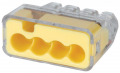
By that I mean that the receptacle is explicitly grounded to the outlet box along with the incoming and outgoing power cables. To simplify the job I bought myself a pack of these:
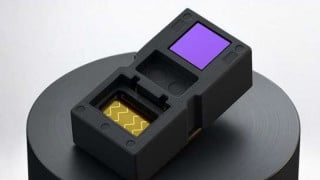
and these:
Using these allowed me to prepare much of my grounding setup at the bench so that I didn't have to fight with them laying on my back under the house. Totally worth it. Getting away from wire nuts also saved a lot of room in the outlet box, which gets pretty tight with all the 12 gauge wire in there. Done at last.
Yeah, those things are sweet. Yay as to done at last. My replacement generator is sitting in the garage waiting to be moved to the concrete pad I poured. The sucker weighs in around 550 to 600 Lbs so now I have to work out some logistics.

 Facebook
 Google
 GitHub
 Linkedin