Any simple sine wave generator?

Thread Starter

vandveuser16776

Joined Feb 21, 2026
169
Hi guys.
I have tried pretty much all op-Amp based sine gens and they all have some problems. The best and purest sine gen is Wien Bridge but as you know, it will have some clipping issues at positive or negative peak, depending on the IC. I was wondering if anyone knows any good and simple sine wave gen that produces pure AC
P.S
I needed a sine gen that can produce 1kHz AC with about 100mA muscle. I want to post a DIY Inductance Meter for those hobbyist who may not have or not want to invest in inductance meter
Thanks
 
Last edited:

dl324

Joined Mar 30, 2015
18,263
I was wondering if anyone knows any good and simple sine wave gen that produces pure AC
Getting a pure sinewave depends on how harmonic free you really need it to be.

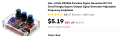
Anything based on XR2206 is likely fake. They (the fakes) sort of work:
1778609365561.png
I have one of these.

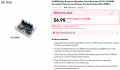
Here's another (also from AliExpress):
1778609420007.png

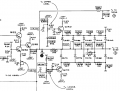
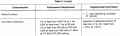
Commercial generators sometimes/often use this type of circuit for generating sinewaves (Tektronix FG-01):
1778609562482.png
1778609739625.png
 

Irving

Joined Jan 30, 2016
5,064
Are you trying to tell that you REALLY do not know the difference between pure sine wave and modified sine wave?
Of course I do, but any active device that introduces the necessary 180deg phase shift for oscillation will have non-linearities and therefore will introduce harmonic distortion - how much will you tolerate and over what bandwidth?
 

AnalogKid

Joined Aug 1, 2013
12,085
The best and purest sine gen is Wien Bridge
If the output signal is clipped, how does it meet the description of "best and purest"?

Actually, a Twin-T or L-C resonant circuit can have better performance.

but as you know, it will have some clipping issues at positive or negative peak, depending on the IC.
No and no. The clipping comes from lazy circuit design. If you put real effort into the amplitude stability loop, such as an active full-wave rectifier, and an output-biased J-FET for the gain element, there is no clipping. Clipping comes from poorly-controlled loop gain, and has nothing to do with the IC.

- OR -

I did a mostly-digital sine source for a psycho-acoustics lab. High speed clock driving a 16-bit shift register that switched a group of resistors into an 8-pole Bessel, switched-capacitor output filter. The filter clock tracked the register clock, so varying one squarewave oscillator swept the pair over octaves. Amplitude stability was below 1 dB with no active amplitude control, and harmonic distortion was below 0.1%.

ak
 
Last edited:

Thread Starter

vandveuser16776

Joined Feb 21, 2026
169
Since you said that tried pretty much all op-Amp based sine gens, I suggested switching to this one. NE5532 is a low-noise Op-Amp. You can try NE5532 in your existing design. Generic OPAMPs like LM358 or 741 are not among the best choices for your application.
Wien Bridge works well (apparently with bulb which i do not have) and I used LM358 and paralleled a 2MΩ with the bigger resistor. The clipping at the high peak was resolved and the amplitude dropped just enough to keep it below maximum head room. But the amplitude fluctuates a bit and there is no control over it. I needed a sine gen that can produce 1kHz AC with about 100mA muscle. I want to post a DIY Inductance Meter for those hobbyist who may not have or not want to invest in inductance meter
 

Thread Starter

vandveuser16776

Joined Feb 21, 2026
169
If the output signal is clipped, how does it meet the description of "best and purest"?
As I mentioned later, some YT videos use light bulb which is the original design and they monitor the output on oscilloscope. So, I can say they are not fake click baits, but I assume I would need a light bulb with a very high impedance, if i am not mistaken.
 

Thread Starter

vandveuser16776

Joined Feb 21, 2026
169
I also tried Twin-T, but the fact that I need a capacitor to get source and sink is an issue for what I need. If there is any Twin-T that does not rely on output cap, please let me know
 
I have tried pretty much all op-Amp based sine gens and they all have some problems. The best and purest sine gen is Wien Bridge but as you know, it will have some clipping issues at positive or negative peak, depending on the IC.
what problems? post your circuit. there is no reason for clipping. that suggests supply is insufficient or opamp is overloaded or out of spec.
what frequency/range? how stable frequency/amplitude? any other constraints (supply voltage, current draw,...)? what do you consider simple?

https://www.analog.com/en/resources/app-notes/an-111.html

https://www.allaboutcircuits.com/pr...m-generator-analog-devices-ad9833-ATmega328p/

to me simple is not fewest parts. it is making something that does not require holding shape of piece of jelly using rubber bands. doing everything with a simple part or stage (like single OpAmp) is often recipe for disaster.
i prefer to make designs modular. oscillator is there to oscillate (get desired signal form) and do nothing else. not trying to drive load or similar. for that add another stage that does amplification or attenuation, add another stage as driver/buffer, add another circuit to power everything...

EDIT... just saw the mention of 1kHz and 100mA output. since fixed frequency, Wien oscillator like in first link is a good choice. this can be then bufferend using an audio amp (TDA2030 or whatever). such things are common for resolver excitation (example KUKA RDW)
 
Last edited:
I was going to suggest a tuned circuit oscillator, but I have not seen a mention of a specific frequency, or a frequency range. In fact the only requirement I saw was for the pure sine wave. No degree of frequency stability or amplitude or DC offset requirements specified.
If the oscillator is for an inductance meter, why does it need to be a pure sine wave???
OR, go to the "Schematics for free" website and check their directory of oscillators. They have a lot of circuits there.
 

Thread Starter

vandveuser16776

Joined Feb 21, 2026
169
what problems? post your circuit. there is no reason for clipping. that suggests supply is insufficient or opamp is overloaded or out of spec.
what frequency/range? how stable frequency/amplitude? any other constraints (supply voltage, current draw,...)? what do you consider simple?

https://www.analog.com/en/resources/app-notes/an-111.html

https://www.allaboutcircuits.com/pr...m-generator-analog-devices-ad9833-ATmega328p/

to me simple is not fewest parts. it is making something that does not require holding shape of piece of jelly using rubber bands. doing everything with a simple part or stage (like single OpAmp) is often recipe for disaster.
i prefer to make designs modular. oscillator is there to oscillate (get desired signal form) and do nothing else. not trying to drive load or similar. for that add another stage that does amplification or attenuation, add another stage as driver/buffer, add another circuit to power everything...

EDIT... just saw the mention of 1kHz and 100mA output. since fixed frequency, Wien oscillator like in first link is a good choice. this can be then bufferend using an audio amp (TDA2030 or whatever). such things are common for resolver excitation (example KUKA RDW)
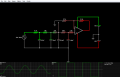
With a multi-stage RC I can shape a square wave to sine with control over bandwidth etc. but i cannot say if it is perfect sine or just looks like it. Is there any way to tell that a sine wave is 100% harmonic? 1778617110355.png
 

Thread Starter

vandveuser16776

Joined Feb 21, 2026
169
I was going to suggest a tuned circuit oscillator, but I have not seen a mention of a specific frequency, or a frequency range. In fact the only requirement I saw was for the pure sine wave. No degree of frequency stability or amplitude or DC offset requirements specified.
If the oscillator is for an inductance meter, why does it need to be a pure sine wave???
OR, go to the "Schematics for free" website and check their directory of oscillators. They have a lot of circuits there.
I did mention in post #11. It is preferably 1kHz, since it is a round number and makes calculations easier. Probably I should have mentioned in the first post what it is project about. The frequency needs to be stable, the shape pure sine otherwise that messes up calculations, and amplitude can be 2v to 5v. I think higher can be problematic if the buffer stage is not strong enough
 
Top