simple sine wave oscillator.. LMC6482 datasheet..dB

Thread Starter

Zeeus

Joined Apr 17, 2019
616
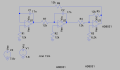
Hi..Please assist..According to book reading, this is meant to oscillate (with Capacitors of 16nF and 10k then around 1khz)..Fortunately, not oscillating...

Please why no oscillation?


And how can we go from calling something 20 db per decade to 6db per octave? (yeah voltage gain of 2 is 6db)

Thanks Thanks
 

Attachments

Last edited:

Ylli

Joined Nov 13, 2015
1,092
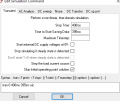
Flip the Vee power source around, or make it -7.8 volts. Then edit the simulation command to "Start external DC supply voltages at 0V".
 

Thread Starter

Zeeus

Joined Apr 17, 2019
616
Flip the Vee power source around, or make it -7.8 volts. Then edit the simulation command to "Start external DC supply voltages at 0V".
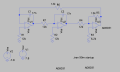
thanks, didn't notice Vee...did both but no sine wave oscillation..Something has to start the oscillation?

Also, used this op amp http://www.ti.com/lit/ds/symlink/lmc6482.pdf
Can use 7.8 and -7.8 for this op amp? there's no ground pin on the IC

Thanks
nvm, ground pin not needed
 

Attachments

Last edited:

Ylli

Joined Nov 13, 2015
1,092
Works for me with the AD8031 op-amps. It does take a long time for the output to build to maximum - it is still increasing after 100 seconds.
6 dB per octave and 20 dB per decade are the same slope.

I would expect the LMC6482 to work. Are you trying it in LTSpice or on a breadboard?
If in LTSpice, be sure you have the .model properly defined.
If doing it on a breadboard, try changing R4 to 10K.
 

Thread Starter

Zeeus

Joined Apr 17, 2019
616
6 dB per octave and 20 dB per decade are the same slope.
.
Please how is it the same? " 20db per decade"...how to calculate from this to "6db per octave"?
I would expect the LMC6482 to work. Are you trying it in LTSpice or on a breadboard?
If in LTSpice, be sure you have the .model properly defined.
If doing it on a breadboard, try changing R4 to 10K..
made this change on breadboard but nothing.. how it's working for you?? not working on spice
 

crutschow

Joined Mar 14, 2008
38,316
Try increasing R5 to about 200kΩ to give more loop gain, use uic to skip the initial operating point, and simulate for at least 400ms.

upload_2019-7-1_22-55-13.png
 

Thread Starter

Zeeus

Joined Apr 17, 2019
616
Try increasing R5 to about 200kΩ to give more loop gain, use uic to skip the initial operating point, and simulate for at least 400ms.

View attachment 180770
works, thanks (even without changing R5)...Will try on breadboard in morning...How to calculate the frequency?

Thanks

btw, please what does that mean? "skip the solution of the initial operating bias point"
 
Top