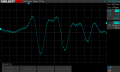
You do NOT need to connect to the O'scope. Simply put a short ~12-18" piece of wire on the probe and it will pick up the EMI being radiated. The radio's power supply is adequately filtered for line noise. The type of noise you are describing is the reason to use coax for the incoming antenna feed to the radio.
OK I will try this, of course my scope is a bench scope, I know that you mentioned using a portable scope.
So I have a question, are there any devices specifically made for portable scrutiny of electrical noise like this? something specifically designed to do what your portable scope with a piece of wire does?
One of the biggest problems facing us these days with respect to domestic appliances and stuff like RFI, is that it has become impossible to switch anything off!
In the old days we had things called "switches" that could be used to completely cut the power within a device, now we have no such luxury in many cases and must resort to the ridiculous and arguably unsafe practice of "pulling the wire out of the wall". Often, all we can do is put a device into standby which just isn't good enough control for me.
In the UK though at least they have a switch as part of the wall outlet and so one can use that at least to cut the power without pulling wires out which just strikes me as so backward in this day and age.
are there any devices specifically made for portable scrutiny of electrical noise like this? something specifically designed to do what your portable scope with a piece of wire does?
Best Bug Detector 2021: Top 5+ (Anti-Surveil) (gadgetsspy.com)
They probably cost more than this and are basically the same thing. I see the price has gone up a few bucks on them. Handy lil things about the size of a pack of cigarettes. Rechargeable so no batteries to swap out.
Many times it's noise on mains power. O-scope with FFT mode is one way to check it. Alternate method (if possible) is to run the unit from a battery (DC power).
If noise on on mains, the proper ferrite rings for the mains wires can help eliminate noise.
Many times it's noise on mains power. O-scope with FFT mode is one way to check it. Alternate method (if possible) is to run the unit from a battery (DC power).
If noise on on mains, the proper ferrite rings for the mains wires can help eliminate noise.
I am trying to imagine why it wouold be difficult to switch off, and then back on, the breakers one at a time, with the radio plugged in someplace nearby, with the volume adjusted to make the noise sudible.
One of the biggest problems facing us these days with respect to domestic appliances and stuff like RFI, is that it has become impossible to switch anything off!
In the old days we had things called "switches" that could be used to completely cut the power within a device, now we have no such luxury in many cases and must resort to the ridiculous and arguably unsafe practice of "pulling the wire out of the wall". Often, all we can do is put a device into standby which just isn't good enough control for me.
In the UK though at least they have a switch as part of the wall outlet and so one can use that at least to cut the power without pulling wires out which just strikes me as so backward in this day and age.
This is the main reason that I suggest switching off the breakers. The "off" really is off., no struggling to get to the plug, and no control that has only standby and operate functions.
AND, a cause that I mentioned once already, is LED light bulbs, especially those imported ones with the fake approval marks.
This is the main reason that I suggest switching off the breakers. The "off" really is off., no struggling to get to the plug, and no control that has only standby and operate functions.
AND, a cause that I mentioned once already, is LED light bulbs, especially those imported ones with the fake approval marks.
OK I think you're right actually. If I could take the receiver outside and stand by the panel then do as you suggest I could probably isolate the breaker that way.
One problem though is its not clear what each breaker does, but at least if I knew one particular breaker did the trick I could soon home-in.
I guess I need a decent small portable receiver that covers these bands, this seems good but is unavailable.
I don't mind buying one of these either I like small portable radios and the last one I had died or got damaged.
Anyway I retract what I said, I like this idea a lot and intend to move forward with that approach!
Switching breakers off is about the second item on the list of steps in the noise tracking instructions published by the ARRL, among others. It helps if the breakers are marked correctly, but even unmarked, one can see what things have stopped working, and investigate those items.
I am trying to imagine why it wouold be difficult to switch off, and then back on, the breakers one at a time, with the radio plugged in someplace nearby, with the volume adjusted to make the noise sudible.
OK I think you're right actually. If I could take the receiver outside and stand by the panel then do as you suggest I could probably isolate the breaker that way.
One problem though is its not clear what each breaker does, but at least if I knew one particular breaker did the trick I could soon home-in.
I guess I need a decent small portable receiver that covers these bands, this seems good but is unavailable.
I don't mind buying one of these either I like small portable radios and the last one I had died or got damaged.
Anyway I retract what I said, I like this idea a lot and intend to move forward with that approach!
Are any of them GFCI or AFCI types? They too have crude electronics inside of them. So simply turning them off may not identify the actual source of the noise.
SOME CFls are noisy, some much less noisy. AND SOME LED lights are incredibly noisy. Not sure if the noisy one that I met are dimmable ones or not.
Others are quite quiet. The noise filters do add to the cost.

 Facebook
 Google
 GitHub
 Linkedin