Analog output using optos lin

Thread Starter

barg

Joined Dec 23, 2015
129
Hello,

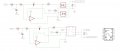
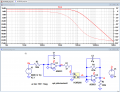
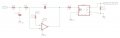
I need an assistance to design an analog input from variable pott with optocoupler (dc stable side to dc not stable side), the output needs to be accurate so I thought of using 2 optos pc8117. but i found a linear one HCNR200 and would like to change the design to work with this one. i am not sure if the bellow sketch with the linear is correct, can you advice please? also are the other components seems ok?
 

Attachments

schmitt trigger

Joined Jul 12, 2010
2,056
I have experience with the HCNR200 and can tell you that it is extremely accurate AS LONG AS you use the application circuits shown in the datasheet.

There is also a slight CTR mismatch between the pair of photo diodes, I believe they call it “K” on the datasheet, which you can trim out.
 

AnalogKid

Joined Aug 1, 2013
12,090
In both schematics, you have one optocoupler output biased with a resistor to Vcc and one output with the same value resistor to GND. This probably will not work. My guess is that both R25 nd R33 should be connected to +5 V to mimic the outputs that are parts of the feedback loops.

ak
 

Thread Starter

barg

Joined Dec 23, 2015
129
If R-27 / R-32 are selected carefully, this will provide reasonably linear response.

I would suggest using an "Opto-FET" instead, the Circuit remains the same.
.
.
.
Thank you for your reply.

LowQCab can you please advice the benefits for using opto-fet instead of linear-fet? for this application (pwm serv motor, needs to be accurate and fast response) i am new to this kind of optos linear and fets.

Also, can you advice the better value for R32 to start with(instead of 330k)? (by considering rest of the other components values are reasonable..)

in relevance to AnalogKid, the Analog input next to R33 has 5v source of a few uA.
 
Last edited:

LowQCab

Joined Nov 6, 2012
5,101
The Op-Amp will do whatever is necessary to "linearize" the Photo-Diode,
it's just that the Photo-FET starts out closer to linear in the first place,
and has no Forward-Voltage drop built-in.

Study the suggested Circuits and recommendations in the Data-Sheet(s).

Use a "Rail-to-Rail" Op-Amp for best results.
.
.
.
 

Ian0

Joined Aug 7, 2020
13,117
Hello,

I need an assistance to design an analog input from variable pott with optocoupler (dc stable side to dc not stable side), the output needs to be accurate so I thought of using 2 optos pc8117. but i found a linear one HCNR200 and would like to change the design to work with this one. i am not sure if the bellow sketch with the linear is correct, can you advice please? also are the other components seems ok?
The circuitry connected to the photodiode needs to be identical on both photodiodes for it to produce the correct output.
Don‘t forget that the output is a photodiode, so the output current is rather small.
What is the application?
 

schmitt trigger

Joined Jul 12, 2010
2,056
Exactly Ian;
As I posted previously, the HCNR200 coupler is extremely accurate as long as one strictly follows the app circuits, which also includes an opamp in the output.
When I say extremely accurate, I mean instrumentation-grade accurate, across a 1000:1 range.
You won’t get that level of linearity with independent optocouplers.
 

Thread Starter

barg

Joined Dec 23, 2015
129
Exactly Ian;
As I posted previously, the HCNR200 coupler is extremely accurate as long as one strictly follows the app circuits, which also includes an opamp in the output.
When I say extremely accurate, I mean instrumentation-grade accurate, across a 1000:1 range.
You won’t get that level of linearity with independent optocouplers.
Hi Ian,

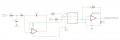
Regarding the HCNR200 is that in the sketch what you meant?

As LowQCab noted regarding the Op Amp choosing, it should be a Rail to Rail, Also the other side frequency clock is max 250kHz (right side where the vcc2). Except this two points - is there other Minimum requirements to choose the relevant op-amp?
 

Attachments

Ian0

Joined Aug 7, 2020
13,117
No - it's not rail to rail.
And your circuit still has other problems.
For it to work, each photodiode must see identical impedances. One is driving a virtual earth, and the other has a 330k resistor to 5V.
The output is a photodiode, so the current is proportional to the LED current. The output voltage is proportional to the photodiode current multiplied by its load impedance.
Look at the circuits in Vishay's application note.
Because of the virtual earth configuration, you will probably need an positive and negative supplies, or a split rail.
 

Thread Starter

barg

Joined Dec 23, 2015
129
hi barg,
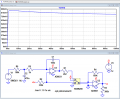
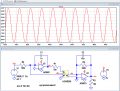
This is what LTspice shows for post #9 circuit.
Check it for accuracy.

What is the form of the Audio input?
E
View attachment 257106
Thank you Eric for the simulation,

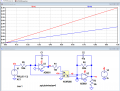
Its a servo motor not audio, and i think i will go first with the PHOTO-FET H11F1 as LowQCab suggested earlier and am trying to sketched it correctly... can you please take a look if the attached sketch is correct?

I am also struggling to make simulation with ltspice for this H11F1 sketch without success... can you please assist with that also?
 

Attachments

Ian0

Joined Aug 7, 2020
13,117
It seems like a lot of trouble for just a servo feedback. Please post the entire circuit. Including where the motor and potentiometers connect.
 

Thread Starter

barg

Joined Dec 23, 2015
129
its a driver module, I don't have the circuit but its driven by a potentiometer that its output goes to the "analog_input" as i noted in the attached. as far as i need is to know if the H11F1 schematic as i sketched it, is correct? so i can start build it...
 

Ian0

Joined Aug 7, 2020
13,117
its a driver module, I don't have the circuit but its driven by a potentiometer that its output goes to the "analog_input" as i noted in the attached. as far as i need is to know if the H11F1 schematic as i sketched it, is correct? so i can start build it...
I can't tell without the rest of the circuit, but it does not look promising.
 

ericgibbs

Joined Jan 29, 2010
21,420
Boker Tov, barg,
Why not use the HCNR200, they work fine.
You are only driving an ADC input with output.

The circuit I posted works using a DC input
E
 

Thread Starter

barg

Joined Dec 23, 2015
129
Hi Eric:)
issue is, in the output side i dont have stable dc source (difficult to add one/place/dealing with it.. - referring to the additional opamp vcc2 i need for the HCNR200 sketch) and as far as i understood regarding the optofet H11F1 as above - i just connect its outputs to the analog input directly without needing opamp in the other side.. correct me if got it wrong?
yes, its a dc input
 
Top