Amplifier noises cancellation in single vs multi channel units

Thread Starter

Secan

Joined Sep 20, 2024
205
Hello

If you want to cancel the noises in amplifiers (any like audio, medical, etc). using either Mathlab or Octave or post processing. What is the difference if the amplifiers are 4 separate or 4 single channels (that is, one channel for each unit) versus say 4 amplifiers in one unit (multi-channels). Are the interferences or noises in both case the same? If not, why do they vary or differ? Thank you.
 

LowQCab

Joined Nov 6, 2012
5,101
This depends on what You consider to be "noise", and where the noise is originating from.

There's Input-Noise,
Output-Noise,
Cross-talk-Noise,
Power-Supply-Noise,
and ambient-environmental-Noise.
.
.
.
 

Thread Starter

Secan

Joined Sep 20, 2024
205
This depends on what You consider to be "noise", and where the noise is originating from.

There's Input-Noise,
Output-Noise,
Cross-talk-Noise,
Power-Supply-Noise,
and ambient-environmental-Noise.
.
.
.
It's EEG for measuring brain waves and controlling computer peripherals (BCI.. or Brain Computer Interface applications).. So there should be at least 4 amplifiers for connecting to different parts of the brain to control one servo motor peripheral. So what would happen if the 4 amplifiers are separate single channel units versus a single unit that is multi-channel (4 channels)? Note all of these are commercially bought. I won't build one from scratch. Is it 4 single separate channels (same brand) or one unit with 4 multi-channels (of course same brand too) that can use post processing in Mathlab to remove all of the noises you mentioned more effectively. I'm not asking any particular brand, just the principle like must the 4 amplifiers be uniform in one PCB to make them have same noises that can cancelled, etc.

"There's Input-Noise,
Output-Noise,
Cross-talk-Noise,
Power-Supply-Noise,
and ambient-environmental-Noise."
 

LowQCab

Joined Nov 6, 2012
5,101
The short answer is that it will probably make zero difference whether You use 4-Singles, or a Quad-Chip.

The real problem is that You don't know what questions to ask.

What is the ( typical ) Input-Impedance of each of the 4- Input-Sources ?

What is the ( typical ) Sensed-Voltage-Range of each of the 4- Input-Sources ?

The type and configuration of the Cabling connected to the Amplifier-Inputs may be extremely critical.

I recommend that You do not attempt such a project.
Buy a Commercial-Unit with all the bugs already worked-out.
They are expensive for a variety of very good reasons.

.
.
.
 

Thread Starter

Secan

Joined Sep 20, 2024
205
The short answer is that it will probably make zero difference whether You use 4-Singles, or a Quad-Chip.

The real problem is that You don't know what questions to ask.

What is the ( typical ) Input-Impedance of each of the 4- Input-Sources ?

What is the ( typical ) Sensed-Voltage-Range of each of the 4- Input-Sources ?

The type and configuration of the Cabling connected to the Amplifier-Inputs may be extremely critical.

I recommend that You do not attempt such a project.
Buy a Commercial-Unit with all the bugs already worked-out.
They are expensive for a variety of very good reasons.

.
.
.
The input impedance of each single channel is 10,000 Megaohms
The sensed voltage range of each single channel is + -1 V input range, and + - 6V @ 1mA output range.

If each of the single channel used Ni-MH rechargeable batteries and the batteries don't have same charges. What parameter in the output waveform would be affected?
 

LowQCab

Joined Nov 6, 2012
5,101
The Battery-Charge-Level will not make any difference because there will be
a Voltage-Regulator keeping the Voltage stable.

All Sensor-Circuits operating at the same time,
and in the same general area,
should all be operating on a single, centralized, Power-Supply,
especially if the Sensor-Outputs are to be compared with each-other.

I am guessing that these Sensors are AC-only, with no DC-component, is this correct ?
.
.
.
 

Thread Starter

Secan

Joined Sep 20, 2024
205
The Battery-Charge-Level will not make any difference because there will be
a Voltage-Regulator keeping the Voltage stable.

All Sensor-Circuits operating at the same time,
and in the same general area,
should all be operating on a single, centralized, Power-Supply,
especially if the Sensor-Outputs are to be compared with each-other.

I am guessing that these Sensors are AC-only, with no DC-component, is this correct ?
.
.
.
By sensor AC-only. Did you mean AC coupling?

It has switch for AC coupling and DC coupling.

When AC coupling is selected. A low frequency (high-pass) filter of 0.1Hz is inserted.

With DC coupling. The DC input offset can be adjusted to +-2mV, +1 20mV and + - 200 mV.

Why do you if the sensor was AC-only? what is its relation to a Voltage-Regular to keep the voltage stable?
 

LowQCab

Joined Nov 6, 2012
5,101
Initially this thread sounded like You wanted to build your own Amplifiers,
now it sounds like You already have the amplifiers that You want.

Please clarify this with a more comprehensive explanation of the problem.
.
.
.
 

Thread Starter

Secan

Joined Sep 20, 2024
205
Initially this thread sounded like You wanted to build your own Amplifiers,
now it sounds like You already have the amplifiers that You want.

Please clarify this with a more comprehensive explanation of the problem.
.
.
.
In message 3 I already explained that " Note all of these are commercially bought. I won't build one from scratch. Is it 4 single separate channels (same brand) or one unit with 4 multi-channels "

I already have 2 pcs of single channels. And I saw the same brand used with a single unit with 4 channels. So wondered if there would be advantage to get the one unit with 4 channels versus getting 2 pcs more of single units. So why did you ask if the sensor is AC? It is connected to AC and DC coupling as I explained in my last message? What has voltage regulation got to do with AC or DC coupling?
 

LowQCab

Joined Nov 6, 2012
5,101
I missed the sentence stating that they are commercial units, hence the other necessary questions.

So it would appear that the whole purpose of this thread is to determine if there is any advantage to
using "single" units over "quad" units.

The answer to this is that it will "probably" not make any measurable difference.

A quad unit will "probably" have tighter calibration between channels than 4 separate single units.

But this is purely speculation.

If these units are top-quality, medical-certified, and built by a known, reliable manufacturer,
the differences are most likely not measurable.

But again, this can only be speculation.
.
.
.
 

MisterBill2

Joined Jan 23, 2018
27,181
A possible advantage of using a single-assembly four channel amplifier will be less common mode voltage difference between channel reference levels. That can be a problem in low level instrumentation.
I am guessing that you are using differential inputs to reduce external interference.
 

Thread Starter

Secan

Joined Sep 20, 2024
205
A possible advantage of using a single-assembly four channel amplifier will be less common mode voltage difference between channel reference levels. That can be a problem in low level instrumentation.
I am guessing that you are using differential inputs to reduce external interference.
Why will a single-assembly four channel amplifier have less common mode voltage difference between the channel reference levels?

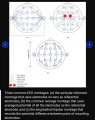
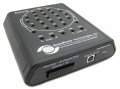
Let's take the following cases. Can you use say 18 pcs of individual single channel units (or 4 pcs, remember the 18 individual pcs is just example to drive the point) and tie up all the references to satisfy the first case where the references are the same for all electrodes? Or should the multi-channel unit be built where all references are connected together in hardware level (like in the Brainmaster 24e below)?


montages.jpg


brainmaster 24e.jpg
 
Top