AM radio

MrChips

Joined Oct 2, 2009
34,809
To summarize what has been said:

1) The telescopic antenna is for reception of very high frequency FM signal. VHF reception is limited to line-of-sight distances, about 50km.

2) A long wire antenna will receive the electric component of the transmitted radio signal. The wavelength at 1026kHz is 292m. A quarter wavelength long wire antenna would be 73m long which is not practical.

3) Portable AM radios use a ferrite rod antenna which picks up the magnetic component of the transmitted radio signal. This means that the radio reception is directional. For maximum signal reception you need to point the radio (the long edge of the radio or however the ferrite rod is mounted) towards the location of the transmitter.

ABC Melbourne transmits on 1026kHz with 10kW power from Bonds Road, Lower Plenty, City of Banyule, Melbourne.
Antenna height 133m.

https://www.asiawaves.net/mediumwave-1026.htm#mediumwave-1026
 

Thread Starter

Mellisa_K

Joined Apr 2, 2017
391
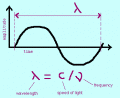
As you may know, every radio frequency have a corresponding wavelength which is a physical size. It is the distance the wave can propagate based on it’s speed, which is the speed of light, and how quickly it is changing direction, which is the frequency.

The formula λ = v / f (where λ is wavelength, v is velocity, and f is frequency) will get you the length in meters.

For 1026 KHz, the wavelength is 292m. The shortest, simple resonant antenna is a ¼ wave dipole antenna. 292/4 = 73 making the shortest simple antenna for the frequency 73m long. The loopstick antenna in the radio uses various “tricks“ to make a physically smaller antenna electrically equivalent to this (or some other resonant fraction), but the practical upshot is that a “good” antenna at this frequency is much larger than portable.

If you have seen the tower for an AM broadcaster you are not looking at something that supports the antenna like you’d see for FM or television, you are seeing the antenna itself. It is very large.
So....
WL=c/f
c = 299,800m/ second
f=1026 cycles per second or 1.026 hertz
=(299,800m/sec)/(1026cycles/sec)
=292.20273m

So in one second the signal goes through a full cycle and it therefore travels 2,922 metres; or it travels one quarter of a cycle in 73 metres.
1) What is the significance of the one quarter in terms of an antenna?
2) Does the signal go out from the broadcasting antenna parallel or at right angles to the ground? I am guessing at right angles to the ground, yes?
3) Just for arithmetical checking; If frequency is the inverse of the WL then why does not 1026/292 -1? Its out by a factor of 3.5. Something to do with the units or my arithmetic?
 

Thread Starter

Mellisa_K

Joined Apr 2, 2017
391
So....
WL=c/f
c = 299,800m/ second
f=1026 cycles per second or 1.026 hertz
=(299,800m/sec)/(1026cycles/sec)
=292.20273m

So in one second the signal goes through a full cycle and it therefore travels 2,922 metres; or it travels one quarter of a cycle in 73 metres.
1) What is the significance of the one quarter in terms of an antenna?
2) Does the signal go out from the broadcasting antenna parallel or at right angles to the ground? I am guessing at right angles to the ground, yes?
3) Just for arithmetical checking; If frequency is the inverse of the WL then why does not 1026/292 -1? Its out by a factor of 3.5. Something to do with the units or my arithmetic?
PS What is travelling through space from the broadcast antenna to the receiving antenna exactly? It must be electrons yes?
 

Thread Starter

Mellisa_K

Joined Apr 2, 2017
391
PS What is travelling through space from the broadcast antenna to the receiving antenna exactly? It must be electrons yes?
PPS
Here is a gif i found wave.gif
If you divide the WL by 4 you get the height of the wave (or same as one quarter of the length) of the wave. So Amplitude = WL/4? Is that an identity? And is that the the "dipole", yes?
 

Thread Starter

Mellisa_K

Joined Apr 2, 2017
391
To summarize what has been said:

1) The telescopic antenna is for reception of very high frequency FM signal. VHF reception is limited to line-of-sight distances, about 50km.

2) A long wire antenna will receive the electric component of the transmitted radio signal. The wavelength at 1026kHz is 292m. A quarter wavelength long wire antenna would be 73m long which is not practical.

3) Portable AM radios use a ferrite rod antenna which picks up the magnetic component of the transmitted radio signal. This means that the radio reception is directional. For maximum signal reception you need to point the radio (the long edge of the radio or however the ferrite rod is mounted) towards the location of the transmitter.

ABC Melbourne transmits on 1026kHz with 10kW power from Bonds Road, Lower Plenty, City of Banyule, Melbourne.
Antenna height 133m.

https://www.asiawaves.net/mediumwave-1026.htm#mediumwave-1026
Thankyou for the summary MrChips. Reproduced below is the relevant entry in the table. I am in Adelaide, approximately a thousand km from melbourne. So there must be a "repeater station". Ive hear the term before.
1026 kHz
10 kW
AUSTRALIABonds Road
Lower Plenty
City of Banyule
Melbourne
Victoria
37° 44' 29"S, 145° 06' 52"E
Australian Broadcasting Corporation (3PB / ABC Newsradio)24hLanguage: English.
Antenna height: 133 metres.

As https://forum.allaboutcircuits.com/members/tesla23.50669/ said there is station at Wingfield which is about 35km north of my house which is near Port Noarlunga and it operates at about one fifth of this power.

Thankyou

Mell
 

MrChips

Joined Oct 2, 2009
34,809
Thankyou for the summary MrChips. Reproduced below is the relevant entry in the table. I am in Adelaide, approximately a thousand km from melbourne. So there must be a "repeater station". Ive hear the term before.
1026 kHz
10 kW
AUSTRALIABonds Road
Lower Plenty
City of Banyule
Melbourne
Victoria
37° 44' 29"S, 145° 06' 52"E
Australian Broadcasting Corporation (3PB / ABC Newsradio)24hLanguage: English.
Antenna height: 133 metres.

As https://forum.allaboutcircuits.com/members/tesla23.50669/ said there is station at Wingfield which is about 35km north of my house which is near Port Noarlunga and it operates at about one fifth of this power.

Thankyou

Mell
Sorry, I thought that you were in Melbourne. In that case, look up the ABC station in Adelaide.
 

Thread Starter

Mellisa_K

Joined Apr 2, 2017
391
With regards to you initial problem of weak reception, you could try building an antenna signal amplifier.

https://circuits-diy.com/fm-am-mw-and-sw-antenna-amplifier-using-mpf102-transistor/

I would prefer to tune the antenna to the desired frequency first before amplifying.
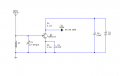
Replace the D1 diode with a 10-100pF capacitor and try connecting to the telescopic antenna.

View attachment 244176
Thankyou MrChips all components are additional to the radio - except ANT1, yes? What about L1?
 

Tesla23

Joined May 10, 2009
560
You haven't told us what sort of radio you are trying, whether you have tried changing the orientation to maximise the signal, whether there are good and bad spots around the house, and whether you have tried other radios.

According to the ABC coverage checker https://reception.abc.net.au/ :

1627012174365.png

you have a reasonable chance of 'normal reception' in your area, both on AM and DAB. Now reception prediction is not an exact science, but this does suggest that you should try the obvious things first (try another radio, change orientation etc.).
 

Thread Starter

Mellisa_K

Joined Apr 2, 2017
391
You haven't told us what sort of radio you are trying, whether you have tried changing the orientation to maximise the signal, whether there are good and bad spots around the house, and whether you have tried other radios.

According to the ABC coverage checker https://reception.abc.net.au/ :

View attachment 244177

you have a reasonable chance of 'normal reception' in your area, both on AM and DAB. Now reception prediction is not an exact science, but this does suggest that you should try the obvious things first (try another radio, change orientation etc.).
Okay, thanks. I am collecting info on the radios. And will report back. I have known for a long time that AM radios are highly directional. I have fiddled with the alignments of all of them and become so frustrated I've nearly chucked em. Its hopeless. One thing though. My car is a Honda (20 years old imported from Canada) with a great sound system. It picks up this station very well! What does that tell you? How come they make a car radio better than a portable radio. WHat do they do to overcome the "directionality"?
 

Thread Starter

Mellisa_K

Joined Apr 2, 2017
391
You haven't told us what sort of radio you are trying, whether you have tried changing the orientation to maximise the signal, whether there are good and bad spots around the house, and whether you have tried other radios.

According to the ABC coverage checker https://reception.abc.net.au/ :

View attachment 244177

you have a reasonable chance of 'normal reception' in your area, both on AM and DAB. Now reception prediction is not an exact science, but this does suggest that you should try the obvious things first (try another radio, change orientation etc.).
891 and 729 are good. 972 is the dud
 

Tesla23

Joined May 10, 2009
560
Okay, thanks. I am collecting info on the radios. And will report back. I have known for a long time that AM radios are highly directional. I have fiddled with the alignments of all of them and become so frustrated I've nearly chucked em. Its hopeless. One thing though. My car is a Honda (20 years old imported from Canada) with a great sound system. It picks up this station very well! What does that tell you? How come they make a car radio better than a portable radio. WHat do they do to overcome the "directionality"?
Take your portable out to where your car is, if your car is picking up 972 well and the portable isn't, get a better portable.

Is there a shop in town that sells radios? If so, tell them your problems and ask them what works well in the area. See if they will let you try out their recommendation.

BTW, when we talk about alignment we mean simply putting the radio on the table and rotating it from NS to EW, all the way around. You should find one direction where your signal disappears (probably when the long axis of your radio 'points' towards the transmitter), so turn it 90 degrees from where the signal disappears.
 

Ya’akov

Joined Jan 27, 2019
10,235
PS What is travelling through space from the broadcast antenna to the receiving antenna exactly? It must be electrons yes?
Did the video answer these questions for you? I didn’t watch it, so I am not sure what it covers.

This lecture by Walter Levin might clear up other questions and give some insight. It’s worth a watch if you would like to go deeper:

 
Top