Am I using ESD and cleaning tools the wrong way?

Thread Starter

denni

Joined Jul 18, 2023
65
Hi everyone,
Im replacing laptop parts and working on FPV drones for some time but I never really followed proper ESD safety.
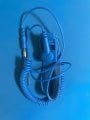
I bought one of those blue anti static wrist straps but I just wore it without connecting the clip to anything I only recently found out it needs to be grounded but I do not know what to attach it to and the cable is short I do not see any grounding point near my workspace . Does that mean the strap is useless if not grounded and is it still risky to touch components with bare hands if the laptop is unplugged and the battery is removed same for drone parts? I never used a strap before and nothing seemed to break but maybe I was lucky

I also use a small brush to clean dust and I wear black nitrile gloves .Is it safe to use the brush on laptop internals or drone circuits or does that cause static and could damage parts and do the gloves actually help reduce static ?

Btw, for the brush, I bought it from AliExpress. It’s called Anti-static Protection Small Crank Brush Scrubbing Board Water PCB Cleaning Brush. The handle is plastic and the bristles are wool. It’s marketed as anti-static, but I’m not sure if it’s really ESD certified. And for the gloves, they are basic black nitrile gloves, also from AliExpress. They’re made for cleaning and tattoo work, not labeled ESD-safe, so I guess they don’t help with static, just keep things clean, right? Finally, the static wrist straps also bought from there: called ESD Anti Static Wrist Strap Clip. It has a 180 cm cable, but I still find it hard to reach a proper ground near my workspace.

So, these are the three things I use: the wrist, strap the brush and the gloves. I want to know if I am using them correctly or if I should change my habits
 

Attachments

Last edited:

meth

Joined May 21, 2016
302
Hi everyone,
Im replacing laptop parts and working on FPV drones for some time but I never really followed proper ESD safety.
I bought one of those blue anti static wrist straps but I just wore it without connecting the clip to anything
This is hilarious :D
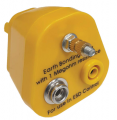
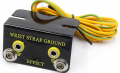
You need to connect it to ground (obviously). There are conenctors that go into the wall sockets, or some that you need to bring a ground wire. Also some soldering iron stations have grounding terminals on them.
Whatever you choose make sure there is 1M resistor, if there isnt you need to put one so during discharge you dont feel stings.

Connector for wall socket:
1749473894640.png
Table terminal (you need to bring GND wire to this one):
1749473921333.png
 

dl324

Joined Mar 30, 2015
18,267
I bought one of those blue anti static wrist straps but I just wore it without connecting the clip to anything I only recently found out it needs to be grounded but I do not know what to attach it to and the cable is short I do not see any grounding point near my workspace . Does that mean the strap is useless if not grounded and is it still risky to touch components with bare hands if the laptop is unplugged and the battery is removed same for drone parts?
Obviously the ground strap isn't going to protect anything if it isn't connected to something.

The obvious connection is to earth ground, but it can also be connected to an ESD mat used under the board in question. The thing that's important is the voltage differential. If everything is at a potential of 10KV, there's no risk of an ESD event. This is what workers on live power lines depend on. You'll see them approach in a helicopter and connect their grounding strap to line voltage before touching the live lines.
I never used a strap before and nothing seemed to break but maybe I was lucky
Or unlucky. Best case is that an ESD event kills something. Worst case is that the device is damaged and works unreliably until it eventually fails.
I also use a small brush to clean dust and I wear black nitrile gloves .Is it safe to use the brush on laptop internals or drone circuits or does that cause static and could damage parts and do the gloves actually help reduce static ?
Nitrile gloves are more static resistant than latex, but the ESD brush will dissipate charge on the gloves.
I want to know if I am using them correctly or if I should change my habits
You need to change how you're using them.

You can use a wire with clips to connect the ground strap to earth ground from a grounded electrical outlet or the earth ground terminal on a power supply. Good grounding devices will have a resistive connection to ground of up to 35M ohms.

You should also be using a properly grounded ESD mat for the device you're working on.

If you weren't taking ESD precautions in the past, I'd assume that the devices have latent (undetected) damage.
 

Thread Starter

denni

Joined Jul 18, 2023
65
This is hilarious :D
You need to connect it to ground (obviously). There are conenctors that go into the wall sockets, or some that you need to bring a ground wire. Also some soldering iron stations have grounding terminals on them.
Whatever you choose make sure there is 1M resistor, if there isnt you need to put one so during discharge you dont feel stings.

Connector for wall socket:
View attachment 350758
Table terminal (you need to bring GND wire to this one):
View attachment 350759
Thank you so much , really appreciate the help and the tips. No shame in making mistakes, that's how we grow and learn.
 

Thread Starter

denni

Joined Jul 18, 2023
65
Obviously the ground strap isn't going to protect anything if it isn't connected to something.

The obvious connection is to earth ground, but it can also be connected to an ESD mat used under the board in question. The thing that's important is the voltage differential. If everything is at a potential of 10KV, there's no risk of an ESD event. This is what workers on live power lines depend on. You'll see them approach in a helicopter and connect their grounding strap to line voltage before touching the live lines.
Or unlucky. Best case is that an ESD event kills something. Worst case is that the device is damaged and works unreliably until it eventually fails.
Nitrile gloves are more static resistant than latex, but the ESD brush will dissipate charge on the gloves.
You need to change how you're using them.

You can use a wire with clips to connect the ground strap to earth ground from a grounded electrical outlet or the earth ground terminal on a power supply. Good grounding devices will have a resistive connection to ground of up to 35M ohms.

You should also be using a properly grounded ESD mat for the device you're working on.

If you weren't taking ESD precautions in the past, I'd assume that the devices have latent (undetected) damage.
Thank you so much Sir. Alot of great tips and insights.
 

Thread Starter

denni

Joined Jul 18, 2023
65
but it can also be connected to an ESD mat used under the board in question
Just to be sure I understood this section right, I have connected the wrist strap pin to a blue anti-static mat: like in the photo ..Btw the mat is marketed as anti-static and can be used for electronics, phone, and laptop repair. I place the components I work on directly on that mat. So the strap is clipped to the mat, and the mat is supposed to be anti-static (and of course, the strap is placed on my wrist). Is this the kind of setup you were referring to when you said the strap can be connected to an ESD mat under the board in question? Or is that not enough if the ? Just want to know if this setup is good or if I misunderstood something about your recommendation.
 

dl324

Joined Mar 30, 2015
18,267
So the strap is clipped to the mat, and the mat is supposed to be anti-static. Is this the kind of setup you were referring to when you said the strap can be connected to an ESD mat under the board in question? Or is that not enough if the ?
If the mat has a connector for an ESD strap (mine has a snap type connector), connect your strap there. If it doesn't, you can connect to the alligator clip on the mat; but, before doing that, you need to determine how much resistance each device has to its clip. The total between the wrist strap and mat can't be more than about 35M ohms.

If earth ground is available, it's best to connect the ESD protection devices to earth ground.
 

crutschow

Joined Mar 14, 2008
38,407
Connecting the mat to earth ground is desirable but not absolutely necessary.
It's the voltage between you and the electronics on the mat that's important, and if you are connected to the mat with the wrist-strap then the voltage difference between you, the mat, and the electronics will remain low.,
 

MrChips

Joined Oct 2, 2009
34,698
The mat must be grounded.
The wrist strap must be grounded.
Ideally, your workbench, chair and floor will also be grounded.
Now you need to find a connection point that is connected to EARTH ground! This is the crucial point.
Do you have a point connected to EARTH?
If not, drive a metal pipe into the ground and connect to the pipe with a metal clamp.
 

crutschow

Joined Mar 14, 2008
38,407
The mat must be grounded.
.................................................
Now you need to find a connection point that is connected to EARTH ground!
Why?
I know connecting everything to earth ground is the ideal, but if the person is connected to the mat with a wrist strap before he touches the electronics on the mat, then there can be no significant difference in voltage between the electronics and the person, hence no ESD, as voltages are all relative.
The voltage of the floor, chair, or workbench are not a factor in that.
Don't see how not having the mat and person at some distant earth ground potential would make a difference(?).
 
Last edited:

MrChips

Joined Oct 2, 2009
34,698
Because Murphy is always lurking around.

User unclips wrist band, shuffles over and retrieves some static sensitive components and places them in his bare hands.
User shuffles back to the work bench and puts the components on the anti-static mat.

Zap!

The worst is still to come.

User installs components on to circuit board. Finished board works fine and passes all QA tests. Board is shipped out to customer.
Customer receives board, installs it in system, and verifies all functional tests.

Months later, board fails in the field.

Cost to diagnose and correct the failure runs into thousands of dollars just because proper anti-static ESD procedures were not followed.
 

crutschow

Joined Mar 14, 2008
38,407
User unclips wrist band, shuffles over and retrieves some static sensitive components and places them in his bare hands.
User shuffles back to the work bench and puts the components on the anti-static mat.

Zap!
No ZAP!
If it's a proper antistatic mat with a high but finite resistance (e.g. between 1 x 10^6 and 1 x 10^9 ohms), it will discharge the static slowly enough to not do damage.

But this thread is about what a home hobbyist needs to do, not an industrial production environment.
 

Tonyr1084

Joined Sep 24, 2015
9,744
Hello. And let's make some assumptions:
First, you are at a static charge level of 50KVS (Kilo Volts Static).
Second, your project is at a static charge level of 50KVS.
The moment you touch the project THERE IS NO STATIC TRANSFERENCE FROM EITHER YOU OR FROM THE PROJECT. No damage occurs.

Nets let's assume you have a properly grounded work surface, wrist strap and all the accouterments. You're grounded to earth ground.
Now, you're at a static charge level of 0VS (zero volts static)
Your project is at 10KVS.
That charge needs to go somewhere. You place your project on the work surface. What happens? Assuming your work station is properly set up the static charge on your project begins to bleed off fairly quickly because between the work surface and ground is a mega-ohm resistor. Some cases it's 1MΩ, other cases 10MΩ or even 100MΩ. The resistance is high enough to prevent static (hold on, let's talk about static for a moment)
What is static? What does "Static" mean. Static simply means it's not moving. In electronic terms static is a charge that is going nowhere. ESD is Electro Static Discharge. That means when what we're calling static is actually a potential voltage that during discharge it is no longer static but dynamic. It's moving. It's going somewhere. Since energy always flows from the higher potential to the lower potential, static (or for the moment dynamic) charges will seek to equalize themselves. Hence the damage is done when static moves quickly and burns a trace in a chip or other sensitive component. Now back to our regularly scheduled programming: The reason for the resistor on the mat going to ground is to accomplish two things: One is to keep the operator safe from becoming a pathway for high current, potentially lethal current from hurting the operator. The other reason for the resistor is to prevent static charges from dissipating at high enough current levels to damage components.

Then there's the wrist strap. It, too, has a resistor. Typically 1MΩ. That's further protection for the operator and for the components under test or construction. The whole purpose of an ESD station is to bring everything to the same static level. Even zero volts is a static level. After all, at zero volts - there is no current. No discharging.

The truth about all this is simple. If you and the project are at the same static charge level then there is no dangerous current transfer. Even if you're not grounded to ground. Yes, grounding is ideal, but you can safely get away with working on something as long as you and the project are at the same potential (or static charge). Before I set up an ESD work station I used to keep one hand on the chassis of my computer while changing or adding memory chips or other things like a gaming board or sound board. If your drone doesn't have a metal frame then you want to work at an ESD safe station. It's not likely that the drone is going to be sitting at 50KVS. And if you're grounded then you're certainly not at 50KVS.

To recap: ESD station properly grounded. Operator properly integrated into the grounding system via wrist strap. Operator not wearing static generating clothing or sitting on a plastic chair such as a lawn chair. Work piece brought to the work station in a protective static safe bag or box. You're good to go.

See next post!
 

Tonyr1084

Joined Sep 24, 2015
9,744
There are anti-static devices such as your brush. They don't generate static. But they don't protect against static. Another anti-static device is a pink polly bag. It, too, doesn't generate static. But it doesn't protect against static.

Static shielding devices such as a conductive bag or box will block static from reaching sensitive components. A jet airplane is a static shielding device during a lightning storm. Lightning (which is very big static energy) may strike the metal body of the jet but the passengers inside may be totally unaware of the event because the static charge (lightning) has been conducted around the static sensitive humans inside. Lightning passes around the body of the jet and reaches ground. You as a passenger are protected. Same is true for devices in a static shielding bag.

I've been running a woodshop. That generates a lot of dust. When vacuuming up that dust, the particles striking against the side of the plastic hose generates a lot of static. I'm constantly getting zapped with discharges from that static buildup. The other day I was running the plainer. The plastic hose that carries the chips to the bin was generating TONS of static. Enough that when my hind end got near the metal bin I got a quick snap of the towel to my rear area. Why? Because my static charge was not as high as what was in the bin. OR my static charge may have been opposite from the charge in the bin.

There are two states of charge: Positive and Negative. If you're at 50KVS (Positive) and that bin is at 50KVS (Negative) there's going to be a hell of a discharge. Having given instruction classes on ESD in the past I demonstrated positive charges and negative charges; oddly enough using those plastic lawn chairs and two assistants each with a brass rod. One would stand up and the two would touch the brass rods together and you'd hear a snap. Then the standing person would sit down and the sitting person would stand. They would touch the brass rods together and you'd hear a BANG!. When one stands up he may strip away positive ions generating a positive charge on his body leaving the chair negatively charged. After discharging the static charge to his partner when he sits down in the negatively charged chair he becomes negatively charged. The other guy has stood up and done the same thing resulting in a high positive charge. The difference between the two is where the BANG comes in.

I've been working with ESD for some 40 years. More correctly, I've been working in ESD sensitive situations that long.

You ask if you've been lucky. Probably not as lucky as you might think. Someone before me has said it but it's worth repeating - the BEST thing that can happen is there is no damage. The NEXT best thing is having the damage completely destroy the component so it no longer functions. The Worst thing that can happen is having hurt that component but it doesn't fail. As was stated before you're now flying on an unreliable chip. Take for instance a fighter jet. You're the pilot. Someone has launched a missile against your jet. You detect the approaching missile and you press whatever button it is to launch a countermeasure. It launches and you're protected. The system is working. But they fire a second missile at you. You press the button again but this time it fails because it has bee overstressed. Now you're about to have the worst day of your life.

EOS = Electrical Over Stress. That's what we call an ESD event that doesn't result in complete failure of a component. It's no longer at its designed parameter. You can't depend on it.

The subject of ESD has been a long standing argument on this website and throughout the electronics industry. But the facts are that if you and the project are both at the same potential then there is no chance of an ESD event. Remember, the D in ESD is "Discharge". If you don't discharge then nothing happens. Ideally, both you and the project being at zero volts is preferred. But if you don't have or can't work at an ESD station then the next best thing is to be at equal voltage. When X = 0 and you're at X and the project is at X then there is no discharge. When X = 10KVS and Y = 0 volts then there's a huge discharge. When both X and Y are at 10KVS or any other equal value there is no discharge. No damage. No EOS.
 
Last edited:

MrChips

Joined Oct 2, 2009
34,698
You don't need a dissertation to explain how ESD occurs.
It is not current that does the damage. It is HV breakdown inside the semiconductor structure when two terminals or pins external to the device experience HV.

In summary, external HV difference between two pins propagate at infinitely small current to the internal semiconductor structure.
It does not take a lot of current to cause HV breakdown.

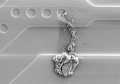
Here is an electron microscope view of a catastrophic HV breakdown inside the semiconductor device.

1749676457986.png

Not all HV discharge will cause catastrophic failure. In many cases, the semiconductor structure is compromised but the device could still pass all QA tests.

The more serious problem is when the weaken structure fails much later when the complete system is out in the field.
 

MrChips

Joined Oct 2, 2009
34,698
There is no functional test available to distinguish between a device that has never experienced ESD and one that has but still passes QA.

Hence you will never know, even if there is system failure later.

Your best approach is to adhere to and practice proper anti-ESD procedures at all stages, including at final destination (end user).
 

Tonyr1084

Joined Sep 24, 2015
9,744
It is not current that does the damage. It is HV breakdown inside the semiconductor structure when two terminals or pins external to the device experience HV.
Isn't HV breakdown the resulting current (heat) that burns the traces? In some cases it can cause a short circuit but more frequently it's the burning away of a trace that can weaken the component. Or burns away the insulation from one layer to another. IF the component doesn't completely fail then you have an EOS damaging event.
There is no functional test available to distinguish between a device that has never experienced ESD and one that has but still passes QA.
That's the most insidious result of EOS - unknown cause of latent failure. It passes bench test and may work for a while in the field. But at some unknown time and point the failure may occur. And yes, you'll never be able to test for it or determine an EOS event has occurred. That's why a customer may refuse to accept delivery of a board that may have been exposed to an EOS event. I've been witness to such refusal to accept boards because a bench has failed ESD testing. Or an operator has failed to validate the functionality of the ESD work station.
 

Ya’akov

Joined Jan 27, 2019
10,226
…if there isnt you need to put one so during discharge you dont feel stings.
The 1MΩ resistor is a very important thing, and checking that it is in place and operating properly is critical—but not just for comfort! The resistor is a safety feature. Without it, you can potentially expose yourself to mains voltage and that’s likely to end in more than just a “sting”.

I’m glad you mentioned it, I have actually seen people wrap a piece of copper wire around their wrist and stick it in the outlet ground.
 
Last edited:
Top