Facebook
 Google
 GitHub
 Linkedin
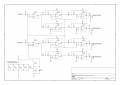
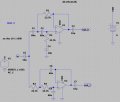
So I wanted to ask a question regarding this image here:
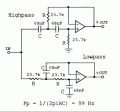
This was copied from the Linkwitz-Riley site.
I am actually working on the 24/db version of this based on Rod Elliots work over at ESP Sound Products.
I also have been playing around w/ breadboarding a basic buffer, gain and inverting amp setup using a single-ended power supply based on "Professor Flore" here:
.
So far.. I understand all that.
But where I am unsure how to procede is regarding how to "adapt" the single supply topology into the LR filter. In the photo I provide above - the 23R7 and 68nF cap are tied to ground.
So here is my first question: when using the above filter in a single ended supply setup... would I need to create a new voltage divider similar to the video and tie these two points to that? I.E. A single "virtual ground" that all the typical "ground points" within the filter network can tie into?
Or are they left "floating" to infinity by adding a 100uF capacitor between their endpoint and the (-) voltage rail?
-Dean
This was copied from the Linkwitz-Riley site.
I am actually working on the 24/db version of this based on Rod Elliots work over at ESP Sound Products.
I also have been playing around w/ breadboarding a basic buffer, gain and inverting amp setup using a single-ended power supply based on "Professor Flore" here:
So far.. I understand all that.
But where I am unsure how to procede is regarding how to "adapt" the single supply topology into the LR filter. In the photo I provide above - the 23R7 and 68nF cap are tied to ground.
So here is my first question: when using the above filter in a single ended supply setup... would I need to create a new voltage divider similar to the video and tie these two points to that? I.E. A single "virtual ground" that all the typical "ground points" within the filter network can tie into?
Or are they left "floating" to infinity by adding a 100uF capacitor between their endpoint and the (-) voltage rail?
-Dean