Active-PFC for my office : Which solution should I choose ?

Thread Starter

p699

Joined Oct 8, 2021
40
For my upcoming office, which might have around 15 computers and then some lighting, printers, CCTV cameras, modems, mobile chargers etc, which of the following solutions is better ?

Option 1) Active-PFC at the mains, included in an online UPS. The computers will have ordinary PSUs without PFC.
Option 2)Each computer will run on an Active-PFC PSU. The UPS wont have an Active-PFC feature.
Option 3) Active-PFC at both the mains and each computer.

If PFC at the mains is enough, it doesnt make sense buying expensive Active-PFC-PSUs for my computers isnt it ? I can buy cheaper (but efficient) ones instead to save some money. But I am not sure if this is enough to reduce my power bills. I can also financially stretch a bit and afford to have Active-PFC on both locations (1&2 in the diagram) if it technically results in less current consumption.

Majority of power will be consumed by the computers only. The other devices have intermittent usage and I dont care much about their efficiency. And I know for sure my LED lighting has a PF=1.

Just to make things clear I made a diagram :
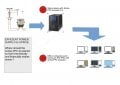
apfc4.jpg
Thanks for your time :)
 
Last edited:

Ian0

Joined Aug 7, 2020
13,097
Your electricity provider is very unlikely to be charging you for reactive power, so your best option by far is to leave things well alone.
 

Pyrex

Joined Feb 16, 2022
501
Your electricity provider is very unlikely to be charging you for reactive power, so your best option by far is to leave things well alone.
The issue is not about reactive power. Computers , LED drivers , etc. do not consume reactive power
 

Pyrex

Joined Feb 16, 2022
501
But they do have a less-than-unity power factor, so what term do you use for the difference between VA and Watts?
https://inverterdrive.com/file/Understanding-effects-of-Power-Factor-Harmonics

Page 1 :

" Types of Power Factor
There are two types of power factor: -
the Displacement Power Factor which is caused by inductance in an electrical load causing the consumed current to lag behind the supply voltage and -
the Harmonic Power Factor which results from non-linear switching of the supply voltage as in the case of rectifiers or power semiconductors.
Therefore the true power factor is a combination of both of these "
 

Ian0

Joined Aug 7, 2020
13,097
https://inverterdrive.com/file/Understanding-effects-of-Power-Factor-Harmonics

Page 1 :

" Types of Power Factor
There are two types of power factor: -
the Displacement Power Factor which is caused by inductance in an electrical load causing the consumed current to lag behind the supply voltage and -
the Harmonic Power Factor which results from non-linear switching of the supply voltage as in the case of rectifiers or power semiconductors.
Therefore the true power factor is a combination of both of these "
Precisely, but in a system where the difference between Watts and VA is caused by an inductive load, the difference (i.e. the imaginary part) is known as reactive power, and the real component as "true power". Where it is caused by a non-sinusoidal current waveform, what term do you wish to use?
 

Thread Starter

p699

Joined Oct 8, 2021
40
Your electricity provider is very unlikely to be charging you for reactive power, so your best option by far is to leave things well alone.
I did not understand. Then why do ATX-PSUs have Active-PFC in them ? Even server PSUs have it by default.
Active-PFC increases efficiency and reduces power bills isnt it ?
 

Ian0

Joined Aug 7, 2020
13,097
I did not understand. Then why do ATX-PSUs have Active-PFC in them ? Even server PSUs have it by default.
Active-PFC increases efficiency and reduces power bills isnt it ?
Not from the consumer's point of view, unless you have a vast number of poor power factor loads on a three-phase supply, it reduces harmonics currents on the mains supply, which prevents the triplen harmonics overheating the neutral on a 3-phase supply cable . It probably reduces efficiency of the power supply as there are now two power conversion stages not one.
 

Thread Starter

p699

Joined Oct 8, 2021
40
Not from the consumer's point of view, unless you have a vast number of poor power factor loads on a three-phase supply, it reduces harmonics currents on the mains supply, which prevents the triplen harmonics overheating the neutral on a 3-phase supply cable . It probably reduces efficiency of the power supply as there are now two power conversion stages not one.
Ok sir. So I have been chasing the wrong chicken all this time ? Give me some time to digest it.
My ultimate aim is to reduce power bills. Commercial electricity prices are not cheap.
EDIT : A smaller UPS saves quite a bit of money too.
 
Last edited:

Ian0

Joined Aug 7, 2020
13,097
Ok sir. So I have been chasing the wrong chicken all this time ? Give me some time to digest it.
My ultimate aim is to reduce power bills. Commercial electricity prices are not cheap.
"Chasing the wrong chicken" - I like that phrase - what language does it come from? You would hear "barking up the wrong tree" in these parts.
 

Thread Starter

p699

Joined Oct 8, 2021
40
The answer to my own question will be Option 2) for now !
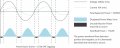
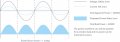
Although I have not mentioned about UPS in my question, an Active-PFC PSU in my computers will help increase UPS runtime or add more load to the same UPS. If I install solar panels as @Ian0 suggested, a PF~1 will help decrease the number of panels required. The following charts from riello-ups shows how it helps to reduce UPS/Solar size I will have to buy.
3-4.jpg

3-5.jpg
 

Ian0

Joined Aug 7, 2020
13,097
If I install solar panels as @Ian0 suggested, a PF~1 will help decrease the number of panels required.
Actually it won’t. The amount of power required is just the same. You might need a larger capacity inverter to deliver the extra current.
You could run your computers directly off the battery if you choose the right voltage. After all, the first component in the computer power supply is a rectifier, and the power supply circuit runs off DC.
 

Pyrex

Joined Feb 16, 2022
501
Precisely, but in a system where the difference between Watts and VA is caused by an inductive load, the difference (i.e. the imaginary part) is known as reactive power, and the real component as "true power". Where it is caused by a non-sinusoidal current waveform, what term do you wish to use?

Frankly, I don't know the word...
 

Ian0

Joined Aug 7, 2020
13,097
Frankly, I don't know the word...
The point I was trying to make, is that only rarely and then only for commercial premises, does one get charged for VA. All domestic meters measure true power, so the extra bit, (which would be called reactive power if it was due to a phase shift in the current, but we don’t have a name for it because it is caused by waveform distortion) is free.
 

Thread Starter

p699

Joined Oct 8, 2021
40
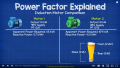
In the example explained below, both the motors are 10KW and run on same voltage. But because their "Power Factor" is different they pull different power from the mains. So isnt having a better PF reducing the power being consumed from the mains ? And thus lowering the power bill ?
1732538887684.png
 

Ian0

Joined Aug 7, 2020
13,097
In the example explained below, both the motors are 10KW and run on same voltage. But because their "Power Factor" is different they pull different power from the mains. So isnt having a better PF reducing the power being consumed from the mains ? And thus lowering the power bill ?
View attachment 336623
No, the power used (and paid for) is 10kW in both cases. Motor 1 will require more current, so cable losses will be slightly higher.
 
Top