A curiosity component

Thread Starter

q12x

Joined Sep 25, 2015
2,227
Ah... I have a request from someone who have everything at hand, not like me. Who has already a normal frequency counter and a normal oscilloscope. Can you build the circuit I posted in #16 for me? And use those tools and confirm to me it is working + images or a short movie of 1 min or something. It is a very quick circuit to make and to test. And it will make me happy. Until my frequency counter will arrive.
 

LesJones

Joined Jan 8, 2017
4,511
In post #22 you say that you have a normal frequency counter and a normal oscilloscope. If this is so then you have the required test equipment to confirm the crystals oscillate and to measure the frequency. Why do you think that you need a different frequency counter ?
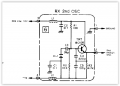
Here is another circuit to try. This is from the second conversion stage ( 10.7 Mhz to 455 Khz.)of a Pye Westminster receiver so it will work with crystals close to 10.7 Mhz.
Screen Shot 05-15-22 at 09.04 AM.PNGYou do not need the filter chokes L1 and L2.
I confirmed that the circuit that I posted in post# 10 still works but it required at least a supply of about 8 volts to work. It actually works with a crystal removed from a 10.7 Mhz filter. (From a Pye PF1 receiver.)

Les.
 

Thread Starter

q12x

Joined Sep 25, 2015
2,227
In post #22 you say that you have a normal frequency counter and a normal oscilloscope.
Please read it again. I didnt said I have them. Im pointing at someone that is having them, and not like me that I dont have them. I dont have a normal osciloscope, to be sincere, DSO138 is trembling of Parkinson and I cant rely on it 100%. At least not with this experiment I did already and got very weird results and not what I was expecting.
And also I have to wait for my other dinky frequency counter from ebay to arrive. I dont have any frequency counter at my hands.
Thats why I had the bright idea to ask someone of you who already have them ! that was the point of my question. Hope is clear now.
 

Thread Starter

q12x

Joined Sep 25, 2015
2,227
....It actually works with a crystal removed from a 10.7 Mhz filter.....
Thats exactly what happened to me as well. After I removed the Quartz from the circuit, the osciloscope was showing me the same oscilations as the Quartz was into the circuit. So thats why I blame my osciloscope not doing its job or being too dinky.
 

Thread Starter

q12x

Joined Sep 25, 2015
2,227
In my other experiments and circuits, I noticed some capacitors in the base of the transistor and I imagine they are overriding the oscilations comming from the OSX/Quartz. Is my best guess. Thats why I am putting my trust into my much simpler and older circuit in the #16 post. It has no capacitors in it and the output must be clean OSX oscillations. That's my logic. And also the circuit that guy in YT video I mentioned as well, and it worked perfectly for him. What Im asking now, is that you to try this very old and very simple circuit from my #16 post and use you normal tools (not like me with my dinky DSO138 and having NO frequency counter at my hand.)
 

Thread Starter

q12x

Joined Sep 25, 2015
2,227
I realized that all these circuits are not the problem.
The problem is my dinky osc DSO138. It measures up to 200 kHz frequency.
It is written on his forehead: dinky !
I'll have to wait for the fv counter to arrive. That was a very good thing to buy.
I hope it will not be as dinky as the osc, being an ebay 10$ tool.
 

Thread Starter

q12x

Joined Sep 25, 2015
2,227
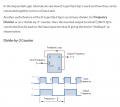
I want to make a Frequency Divider >>>(wiki link)
I have a bright idea...
After reading about this process, I understand that division by 2 is done using a D flip-flop circuit.
1652625663221.png
I understand it is a digital logic operation.
And the bright idea is to actually build a D flip-flop circuit. Or use a chip that may already have some ready flip-flop pins.
I have a small list of personal chips I can put down for you to look over, and if you spot any IC that will fit this task, then poke me. I already seen one CD4013 x1 dual D flip-flop but I have only 1 of it.
See if you find others.
Until then, I will concentrate on reading how to make a D flip-flop from discrete components. And possibly make a circuit. Mmmmm....
 

Attachments

Thread Starter

q12x

Joined Sep 25, 2015
2,227
An important update.
I didn't check this before, because I was thinking on a bigger picture, but... today for 2h or so, I was desperately trying to find a way of measuring the frequency.
I have 2 instruments here:
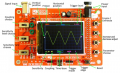
Number 1, the famous golden boy toy
DSO 138 Oscilloscope
1652879860334.png
that is showing the waveform alright but it doesnt put the numbers !
Or at least I don't think I know very well how to get them from only its waveform.
And number 2:
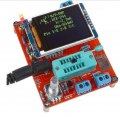
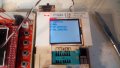
GM328A Transistor Tester
1652879879868.png
And I completely forget I have a fv counter build in, until I checked its menu today. And I checked its manual as well and it doesnt say anything useful for my problem with fv counter. I had to literally guess every port it has, and multiple times, switching polarities, and all that shi...fun. But looking now more carefully on its naked picture posted here, I noticed it has a BACK port as well.... I have a cardboard cover on him, I made it myself and I didnt see the back port. Oh my god. Haha. And indeed that was the Input port for the frequncy counter. Ohoha. What a ride. Im happy to report I have a way of measuring the fv now. But this is also limited 1Hz-2MHz. But it is good I discovered this somewhat hidden functionality. I had a very vague idea I have something related to frequency counting but I was not very sure what I had. It appears I read its menu some years ago and something remained like a shadow memory about it. Im so Lucky I even remember it. Those who have this functionality ready build into your osciloscope, kiss all his 4 rubber feet !
The fv counter that is coming should be much better than this one I have, 1Hz-50MHz.... Hmmm now that I can see and compare the 2, its not that bigger difference. I should have something to Giga or TeraHz, to really see a difference. Eh well.
What a experience.
So, I measured my newly PWM with the 555, @5V, and I got 953Hz(max) to 850Hz(min). So 100Hz range. It was not the reading I was expecting. But I had planB, with a astable flipflop, also @5V and that give me straight 9Hz not variable. So I tested 2 diferent pulsating and oscilating devices that I know for sure their value and that they work. I wished I had a more larger fv range with my 555 PWM.
Im thinking to make another board that is a pure frequency variable generator with greater range than 100Hz and not a PWM. I also think what I have already is good enough as well. So this new board remains in plan.
I am thinking out loud here a bit... thinking a little bit more on my options, I also have a fv generator in my small GM328A. But the problem is that I also have to measure with it as well, so I should have 2 of these GM328A, one for fv gen and one for fv counter.... hmmm. But the other fv counter is arriving so in theory, this GM328A can be the fv gen and that will be the fv counter. So 2 devices after all. I didn't stop to analyze these problems until now.
In conclusion, Im good. Haha.
 

Thread Starter

q12x

Joined Sep 25, 2015
2,227
very interesting update.
I managed to split 1/10 of my test PWM original fv. From its 850Hz down to 85Hz
Now Im playing with some capacitors values to bring it down to 1/100.
My target end result will be 1/1000.
And, I did managed to --average-- the 1/100 values. I say average because the fv counter is jumping a couple of Hz up and down. It should be 8.5Hz but is heavily fluctuating with diverse values between 10Hz and 6Hz. So I am theoretically at 8 but because is jumping all around these values, it was hard in the beginning to understand where I stand. But staying and watching these values for a while, a couple of minutes, I concluded it is jumping around these margins. That might be from the High resolution of the splitting, all the circuit(s) combined might present some tolerances, especially the capacitors and resistors and why not the chip(s).
At 1/10, it does not jump at all, it stays put at that fv. So.... I think im good at this point.
I might have to make a second circuit that will split another 1/10 from this one that is 1/100 and in the final output will get 1/1000. And I expect it will be extremely jumpy at that Very High resolution. If it is a way of "average" all these jumping, especially at 1/100 stage I am right now. That will give a good clear chance for the 1/1000 stage. Hmmm. But it is in plan. For now, I have to reach that 1/1000 target and Im GOOD, literally. Haha.
 

Thread Starter

q12x

Joined Sep 25, 2015
2,227
a small update:
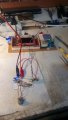
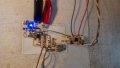
And I finished the board. it took me exactly 3h to make it (continuous work, no brakes).
20220519_185745.jpg
Is the small right (card)board
20220519_185811.jpg 20220519_185831.jpg
Not bad !
Now I can make another division, 1/10 to get a total of 1/1000.
It would be nice if you could look over the "average" problem, but... you are busy as well I guess.
I will probably not implement it, but it will had give me a very clean result in the final stage....
As I said, we'll see after I finish the whole 1/1000 process then.
 

Thread Starter

q12x

Joined Sep 25, 2015
2,227
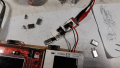
My new fv divider:
1654543783931.png
If I pinch/gather the wires between my fingers it starts to read ok. If I dont touch it, is reading erroneous.
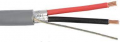
I need a special cable that goes into fv counter, instead of those 2 (very short) wires.
Something like an osciloscope wire that is shielded is my very best guess.
1654543802193.png
- I need you to tell me whats their principle and then to be able to apply it for my device here!
 
Last edited:
Top