Facebook
 Google
 GitHub
 Linkedin

Browsing videos I came across this one.
In this video the author points out that the two resistors commonly used can create a voltage divider (see Method 1) and they should be connected as in Method 2 below. However, I have only ever seen R1 and R2 represented as Method 1 in all other videos and schematics I have seen. I've never seen this mentioned in any other video/tutorial on MOSFETS before.
(R1 = 680 / R2 = 10K)
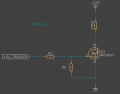
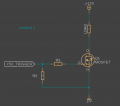
It works just fine in either method, I'm just curious if there are other reasons why Method 1 seems to be the most common method instead of method 2? In method 1, at full +5v trigger I have a V drop of 0.317 on R1 and 4.68 on R2 with 4.68v on the Gate. Method 2 I have 0v and 5v respectively and 5v on the Gate. The load appears to turn fully on in either case so the 0.317 drop probably isn't enough to be concerned with. ??
Should R2 be as close to the Gate and Source as possible and that maybe is why Method1 is so common? I have searched other schematics that use MOSFETs and they all seem to be configured as Methode 1. But Method 2 seems to make more sense.
inquiring minds want to know
In this video the author points out that the two resistors commonly used can create a voltage divider (see Method 1) and they should be connected as in Method 2 below. However, I have only ever seen R1 and R2 represented as Method 1 in all other videos and schematics I have seen. I've never seen this mentioned in any other video/tutorial on MOSFETS before.
(R1 = 680 / R2 = 10K)
It works just fine in either method, I'm just curious if there are other reasons why Method 1 seems to be the most common method instead of method 2? In method 1, at full +5v trigger I have a V drop of 0.317 on R1 and 4.68 on R2 with 4.68v on the Gate. Method 2 I have 0v and 5v respectively and 5v on the Gate. The load appears to turn fully on in either case so the 0.317 drop probably isn't enough to be concerned with. ??
Should R2 be as close to the Gate and Source as possible and that maybe is why Method1 is so common? I have searched other schematics that use MOSFETs and they all seem to be configured as Methode 1. But Method 2 seems to make more sense.
inquiring minds want to know