5v and 12v power supplies/18A and the load needs only 3A.

Thread Starter

praneshwaranm

Joined Mar 4, 2025
3
I am currently doing an experiment that I require a large number of 5v and 12v power supplies for small project works. So I chose a computer SMPS and I have seperated the supplies to but now I have a issues that I need only 3A of current but I receive 18A or around from the SMPS box. How to overcome this issues?
If this finds you please help me improve my interest.
This makes a lot sense in my career intrest when I got solution for this
 

LowQCab

Joined Nov 6, 2012
5,101
Having more Current than You need is a bonus, not a disadvantage.
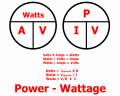
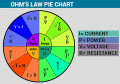
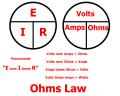
You are missing the very basic rules of Electricity, like Ohms-Law..
.
.
.
Ohms Law FLAT .png.
Power-Watage Formulas FLAT  .png.
Ohms-Law-Pie-Chart .png
 

WBahn

Joined Mar 31, 2012
33,075
I am currently doing an experiment that I require a large number of 5v and 12v power supplies for small project works. So I chose a computer SMPS and I have seperated the supplies to but now I have a issues that I need only 3A of current but I receive 18A or around from the SMPS box. How to overcome this issues?
If this finds you please help me improve my interest.
This makes a lot sense in my career intrest when I got solution for this
What do you mean by "you receive 18 A"?

Do you mean that your supply is capable of delivering 18 A?

Or do you mean that your supply is actually delivering 18 A of current to your system?

If the former, you are good. You might save cost/space by going with a smaller supply, if that matters, but other than that, it's not a huge concern (except as noted next).

If the latter, the problem is in your system, not your supply, and it is drawing too much current because of that problem. This is where having a supply that can deliver a lot more current than your system needs can be an issue because if your system shorts out, your actual current draw (and hence heat and glowing things and smoke) is limited by the supply, so you want that limit to be as low as possible consistent with adequate current under all normal operating conditions with a reasonable margin.
 

Thread Starter

praneshwaranm

Joined Mar 4, 2025
3
What do you mean by "you receive 18 A"?

Do you mean that your supply is capable of delivering 18 A?

Or do you mean that your supply is actually delivering 18 A of current to your system?

If the former, you are good. You might save cost/space by going with a smaller supply, if that matters, but other than that, it's not a huge concern (except as noted next).

If the latter, the problem is in your system, not your supply, and it is drawing too much current because of that problem. This is where having a supply that can deliver a lot more current than your system needs can be an issue because if your system shorts out, your actual current draw (and hence heat and glowing things and smoke) is limited by the supply, so you want that limit to be as low as possible consistent with adequate current under all normal operating conditions with a reasonable margin.
Thankyou for your reply sir!
I mean that my power supply is capable of delivering 18A current. I am using a load that requires 3A. Is there any problem in using the 18A supply as it is in my circuit? Or do I want to make any changes? Will my load gets fried on this current?
 

MrChips

Joined Oct 2, 2009
35,018
Thankyou for your reply sir!
I mean that my power supply is capable of delivering 18A current. I am using a load that requires 3A. Is there any problem in using the 18A supply as it is in my circuit? Or do I want to make any changes? Will my load gets fried on this current?
Your load requires 3A. It will take 3A. The power supply will supply the 3A that the load demands. It will not supply 18A because it was not demanded by the load.
 

WBahn

Joined Mar 31, 2012
33,075
Thankyou for your reply sir!
I mean that my power supply is capable of delivering 18A current. I am using a load that requires 3A. Is there any problem in using the 18A supply as it is in my circuit? Or do I want to make any changes? Will my load gets fried on this current?
Generally there is no problem. A rough analogy is your city water supply. It can deliver thousands of gallons of water a second, but when you open up your faucet, you are not going to get thousands of gallons a second, you will only get the flow rate that your faucet can handle.

A more direct situation would be the dome light in your car. When it is turned on, it gets connected to a 12 V battery that can deliver on the order of a thousand amps, but it only draws a fraction of an amp because it is designed to only draw a fraction of an amp when connected to a 12 V supply.
 

Ya’akov

Joined Jan 27, 2019
10,278
Welcome to AAC.

Not a novel contribution but perhaps a slightly different angle that can help clarify what has been said.

To say “I need 3A” is not enough to specify a power source. In a very simplified explanation: current is an effect, voltage is the cause. “I need 3A at 12V“ does specify the power needed—36W (\(V\times A = W\)).

Voltage and resistance determine current and your load has a resistance such that 12V will cause 3A of current flow, for 36W of power.
 
Top