Viability of unused 10 year old ATX power supplies. Opinions saught.

Thread Starter

paulktreg

Joined Jun 2, 2008
851
Hi

I used to review ATX power supplies many moons ago for a popular website and have ten or so still in my possesion but the question is are they still safe to use?

The power supplies are probably going on for around 10 to 12 years old. They were used for about 24 hours, put back in their boxes and stored inside the house ever since.

Opinions differ on-line from it shouldn't be a problem to the electrolytics will have degraded and magic smoke will probably be the result of plugging them in.

I don't want to move them on if they are going to cause damage days, weeks or months down the road. I'd rather dispose of them but it seems a shame.

Are these power supplies still viable are should I just get rid?

Help appreciated.
 

schmitt trigger

Joined Jul 12, 2010
2,027
The supplies, if they came from reputable companies, will have an inline fuse. They should fail safe, if they do fail.

If you have a need for them, I would power them up, unloaded, for 24 hours. Otherwise, donate them or just e-trash them. Do try to salvage worthwhile components from them, though.

Other members will have different suggestions. All of them as valid/ stupid as mine.
 

dl324

Joined Mar 30, 2015
18,216
Are these power supplies still viable are should I just get rid?
I don't have a definitive answer, but I powered up 3 old supplies relatively recently. Two smoked and one was fine.

I intended to use all three with breakout boards; mainly for high current 12V.
 

SamR

Joined Mar 19, 2019
5,470
Depends on their capacitors... So called Computer Grade capacitors are typically a "better" grade long life cap. Blow the dust out and clean the fan making sure it runs free. Check caps for leakage or bulging, power it up, and check the output for excessive ripple. If the magic smoke appears there is a problem...
 

atferrari

Joined Jan 6, 2004
5,001
I recall reading recommendations of running caps initially with low voltage allowing to "re form" the dielectric. Not practical with an assembled PSU.
Maybe with a variac?
 

Reloadron

Joined Jan 15, 2015
7,852
I am using a few that have been running 10 ~ 15 years 24/7. Years ago like you I helped with testing ATX PSUs. Still have my early proto type load bank I made. :) Anyway, I would peek inside look for any leaking caps but I would try what you have out. Been so many years I forgot the name of the site I helped on. Real nice people.

Ron
 

SamR

Joined Mar 19, 2019
5,470
Have caution! When I worked for HP, we had a power brownout. It smoked all of the computer power supplies in the office!
I would assume it was because they were under load? I can't see how just the power supply alone would have a problem unless maybe it was a switching PS? Weren't the old ATX supplies linear?
 

crutschow

Joined Mar 14, 2008
38,316
You could use the old trick of adding an incandescent 120V lamp in series when you power up the supplies.
The very non-linear resistance vs. current of the lamp will limit the current if it's faulty, but should pass enough current to power it up with no output load, if it's okay.
The no load input current of an ATX supply is typically 10-100mA.
Try a 100W lamp to start, which should readily power a good supply with only a few volts drop, but will limit the current (or surge current) to <1A (for a 120V unit).

Note that the output voltage of an ATX is generally not properly regulated without a small 5V load current.
 
Last edited:

Reloadron

Joined Jan 15, 2015
7,852
Weren't the old ATX supplies linear?
All of the ones I have worked with going back to the 80 were SMPS designs.

Note that the output voltage of an ATX is generally not properly regulated without a small 5V load current.
Some did but today most no longer require a minimum load. I always used a 10 Ohm 10 Watt load on the 5.0 V rail for those needing a load.

Ron
 

panic mode

Joined Oct 10, 2011
4,864
if you have no need for them, in the bin they go unless someone is willing to take them.
if you can use them, decide what you actually expect from them.
if they are expected to last, simply replace all electrolytic capacitors (preventive measure).
 

crutschow

Joined Mar 14, 2008
38,316
You could use the old trick of adding an incandescent 120V lamp in series when you power up the supplies.
The lamp will limit the current if it's faulty, but should pass enough current to power it up with no load, if it's okay.
Try a 100W lamp to start.
 

SamR

Joined Mar 19, 2019
5,470
I've had a couple of them sitting on the shelf for years thinking I might use them for their fixed 5 & 3.3VDC and ±12VDC as a bench PSU for digital experiment work. So, popped one open and (along with a ton of dust) there are LOTS of small electrolytics, ferrite center coils, and toroids as it is indeed a SMPS. Only 1 medium sized electrolytic PSU rectifier filter cap though. Somewhere I seem to remember an article on AT PSU conversion for bench use that had the notes for tying the 5VDC out to the sense circuit to allow it to fully turn on.
 

Reloadron

Joined Jan 15, 2015
7,852
I've had a couple of them sitting on the shelf for years thinking I might use them for their fixed 5 & 3.3VDC and ±12VDC as a bench PSU for digital experiment work. So, popped one open and (along with a ton of dust) there are LOTS of small electrolytics, ferrite center coils, and toroids as it is indeed a SMPS. Only 1 medium sized electrolytic PSU rectifier filter cap though. Somewhere I seem to remember an article on AT PSU conversion for bench use that had the notes for tying the 5VDC out to the sense circuit to allow it to fully turn on.
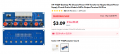
Sam if you take the ATX PSU to Bench Supply I suggest getting a pair of these ATX Breakout boards. The outputs are fused.

Ron
 

SamR

Joined Mar 19, 2019
5,470
Thanks for the heads-up. Ordered! $2.90 way cheaper than doing it piecemeal... Not to mention much faster plug and play!
 

dl324

Joined Mar 30, 2015
18,216
Thanks for the heads-up. Ordered! $2.90 way cheaper than doing it piecemeal... Not to mention much faster plug and play!
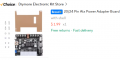
Be sure to check the wiring of the "plus 4" on a 24 pin connector. Older ATX supplies won't be compatible, but you may be able to separate the "plus 4" part.
 
Top