Facebook
 Google
 GitHub
 Linkedin


Hello,
Hope this is the correct category to ask:
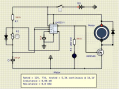
I made a circuit based on an NE555 to control the speed of a blower motor via PWM.
The output of the 555 triggers a MOSFET butthis one gets really hot with increasing frequency.
So out of interest I tried controlling it analogue via a resistor to the gate/base- and it also gets hot.
I tried different componants, they all get hot, despite the motor being below the rated amps of the MOSFET (or transistor).
Componants I tried were: IRFZ540N (33A), IRFZ44N, C5905 (20A).
The motor is rated for 12V (tested with 14,1V), uses 5,3A continuously at 14V, 0,06 mH inductance, 0,8 Ohm resistance. It's from one of those Chinese (Webasto copy) diesel heaters.
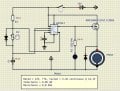
Have attached a circuit image.
Can anyone point me into a direction of where the reason for this can be found?
Attachments
-
 226.4 KB Views: 10