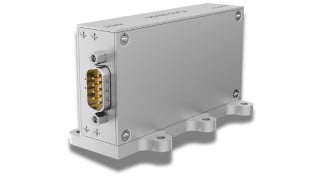
Buy a timer from Lowe's. Not one of those that have the pins or switches you set up or down, they sell a digital timer that can be set minute by minute.
Here's how I'd approach this if it were my project: Using the timer mentioned (I'll see if I can get a url and post it), set it to drain the bowl (turn on a 120 volt valve) at - oh, lets say 6:00 AM, and shut off at 6:01 AM. Six hours later (at) on at 12:00 PM and off at 12:01 PM. Again at 6:00 PM and off at 6:01 PM. To HECK with the midnight flush.
With that timer you can set it to operate daily, weekdays only, weekends only or on specific days. The timer is designed with 20 time periods.
I've used one of these along with a relay and a microswitch. At 6:00 AM it switches power on. If the micro switch is depressed (by the garage door in the open position) the relay activates (acting like) the door button, and the door begins to go down. As soon as the door moves away from the microswitch the relay drops out. At 6:01 AM the system is de-energized. Again at 7:00 AM it goes through the same cycle. Again at 9:00 PM, 9:30 PM, 10:00 PM and every half hour until 1:00 AM.
WHY? Because sometimes my wife or I forget to close the garage door. In the morning when she leaves for work the garage door will be open for less than 15 minutes, and will close itself if she forgot to close it. In the evening it will go through self closures just in case it was left open. But during the daytime when I might actually have the door open - it stays open.
Now, i only offer this as a possible solution to your dog water dish. For the life of me I can't imagine why you must drain the dish every six hours (or four hours). Is the dog that messy? Well, you know your needs better than I do. Since the dish will fill up on its own - drain it whenever you like, as often as you like. The ONLY thing with my system is that the drain is held open for one minute (1 min). OR two or three minutes - whatever you set it to.
OK, here's the timer I was referring to. Actually it's not the exact same one I'm using but it still does the same exact things - setting specific days, times for on and off functions and so on.
This one is found at Home Depot. Likely all the big box stores have them.
Thanks for the input, at this stage I am really trying to DIY. I am new to the electronics game, coming form doing a fair bit of basic 12v car and truck stuff, straight forward things like gauges, radios, trailer plugs, things like that. I am trying to diversify and learn new things.
I had no real idea though, as you can see from my first schematic, how complicated this game can be. I thought that the project I was trying would be fairly entry level. It probably is, though it is still above my level. I'm trying to pick through it, bit by bit, though I think that I will need to go back a few steps and try again after this project.
AK, I made the 1st schematic that you offered. I used a 10µf 25v instead of a 10µf 50v and it popped. Is that expected or did I put it in back-to-front? I have since ordered the 50v one.
25 V is OK, you could even go down to 15V. Caps back to back also double their voltage rating.
Connecting a polarized cap backwards can make a good stink bomb. Maybe some smoke too. No need to test it out, you keep playing with electronics nature will take its course.
The 4060 oscillator section is three inverters, and the cap (with a series resistor) is connected to two inverter outputs. It spends 1/2 of each cycle with one voltage polarity and the other half with the other polarity, so there is no front-to-back/back-to-front connection. Either find an unpolarized capacitor (high value ceramic or a non-polarized aluminum electrolytic) or use two caps in series as Wendy suggests.
Two equal resistors in series, total resistance is 2x. Two equal inductors in series, total inductance is 2x. Two equal capacitors in series, total capacitance is 0.5x. Richard Feynman could explain why, but he's dead.
22 uF/16 V + 22 uF/16 V = 11 uF / 32 V
When connecting in series to achieve bipolar operation, connect them + to + or - to -. Doesn't matter which.
When placed in series, no. Two equal resistors in series, total resistance is 2x. Two equal inductors in series, total inductance is 2x. Two equal capacitors in series, total capacitance is 0.5x. Richard Feynman could explain why, but he's dead.
22 uF/16 V + 22 uF/16 V = 11 uF / 32 V
When connecting in series to achieve bipolar operation, connect them + to + or - to -. Doesn't matter which.

 Facebook
 Google
 GitHub
 Linkedin