30Kw EV Motor Controller

Irving

Joined Jan 30, 2016
5,120
I have much respect for those that want to learn by experiment and doing their own thing. That's how I've always done it since my first crystal radio project aged 7. But I've always made the effort to find out how & why something works the way it does. IMHO the internet, whilst being the greatest disseminator of human knowledge, has sadly also made people believe anything can be done by following a 'tutorial' with no underlying knowledge or understanding.

When you get a thread where someone, who admits to having no knowledge, wants to build a "cheap" 12v DC to 120v AC inverter finds a YouTube 'how to', half copies it and then, when it doesn't work, subsequently replaces NPN BJTs with P-channel MOSFETs wired upside-down because they'd seen "a YouTube video on MOSFETs being stronger than transistors". And then refuses to accept that this isn't a good way to go about it...
 
Last edited:

Irving

Joined Jan 30, 2016
5,120
And yet I get called negative for trying to explain, explain things that I've already gone through and learned the hard way.
Sadly there a few 'experts' here, who undoubtedly have much expertise, but don't always react well to alternative views. I've run into one or two...
 

Thread Starter

Dragonoid

Joined Nov 27, 2017
64
@Irving
There is no difference that I know of between a mosfet driver and a IGBT driver, since they are both used to turn on a capacitive load, the gate.[edit] Should have said today's IGBTs, the early days of IGBT development there was a problem with something called tail currents, that need a reverse or negative spike to turn them off fast. They have since found a way to eliminate that problem in modern IGBTs. The notation, SIC is just a newer type of mosfet. https://toshiba.semicon-storage.com/us/semiconductor/knowledge/faq/mosfet_igbt/igbt-010.html

The part you linked to is only for low side, i can see no way to make it work for a high side switch. What to look for when looking for your project, is called a "half bridge driver". They give a way for both the high and low side switches to work.
This is the best driver that I could found , it is an TI based Gate driver
 

Thread Starter

Dragonoid

Joined Nov 27, 2017
64
@Irving
The Phase PCB is at the Fab Facility now, I hope to get them by the 23rd.
So now I thought of getting the Tests done on the Existing setup By using ACS 772 Which is an +-400 Current Sensor.
What should be the best way of interfacing the ACS772 With The MCU?
ADC protection ,Signal Integrity ... Etc
For the testing purpose I will be keeping the Frequency to 20Khz, So as we are using the 4 Amp Gate driver what should be the Maximum power supply voltage, I think 4x3 = 12 Amp 15v Power Supply will be used!
 
Last edited:

Irving

Joined Jan 30, 2016
5,120
What should be the best way of interfacing the ACS772 With The MCU?
ADC protection ,Signal Integrity ... Etc
There are no major issues with interfacing, the diagram in the datasheet is all you need. The ACS output is ratiometric to its supply volts, so ideally reference its power supply to the ADC reference, or arrange to be able to measure its supply volts. If your ADC is also ratiometric (as in the Arduino), power them both from the same supply. On the 400A sensor @ Vcc = 5V the resolution is 5mV per amp, centred on 2.5V, with an error of around +/-1% max (4A) so there's little point in going to >12bit resolution (approx 1.25mV or 0.25A).

The output is quite noisy, the datasheet is a little ambiguous on this claiming 85mVrms (or 510mV p-p**) across the spectrum to 200kHz (using noise density 0.15mV per √Hz) so you need an RC filter. A 1-pole RC filter at say 100Hz would give a noise level of (0.15 * √100) * 1.57 = ~2.5mVrms (or 16.5mVp-p **). So your individual readings will have an overall accuracy of maybe 6 - 8A... but if you average over say 10 readings at 10mS intervals that will improve. To get a 100Hz filter, Rf = 15k Cf=100nF, but check ADC input requirements as 15k/100nF might be too big to allow ADC sample & hold to respond in 10mS. You might need to buffer the ACS772 output with an active filter in which case a 2-pole would beneficially reduce the 1.57 multiplier to 1.1.

** based on p-p at 3σ = 6.6 x rms
 
Last edited:

Irving

Joined Jan 30, 2016
5,120
So as we are using the 4 Amp Gate driver what should be the Maximum power supply voltage, I think 4x3 = 12 Amp 15v Power Supply will be used!
Beware - all the upper gate driver supplies must be isolated from input, each other and from ground as they float at the source voltage of each upper quad of MOSFETs.
 

Thread Starter

Dragonoid

Joined Nov 27, 2017
64
Beware - all the upper gate driver supplies must be isolated from input, each other and from ground as they float at the source voltage of each upper quad of MOSFETs.
But I am unable to understand why there is an isolated power supply necessary on the Gate drivers?
 

cmartinez

Joined Jan 17, 2007
8,761
But I am unable to understand why there is an isolated power supply necessary on the Gate drivers?
'tis so that the high voltage being switched by the mosfets is completely isolated from the rest of all the electronics, ie. the MCU, power supply and the rest of the logic components.
 

Thread Starter

Dragonoid

Joined Nov 27, 2017
64
'tis so that the high voltage being switched by the MOSFETs is completely isolated from the rest of all the electronics, ie. the MCU, power supply and the rest of the logic components.
I think this Driver would be fine for the job.
And I would be using an Isolated Buck COnverter to drive the gates and another converter for driving the logic levels.
 

cmartinez

Joined Jan 17, 2007
8,761
I think this Driver would be fine for the job.
And I would be using an Isolated Buck COnverter to drive the gates and another converter for driving the logic levels.
Yes. At first glance it looks like it might do the trick... OTH, the datasheet states that isolation is only guaranteed to last 40 years... (<- that was a joke)
 

Thread Starter

Dragonoid

Joined Nov 27, 2017
64
Yes. At first glance it looks like it might do the trick... OTH, the datasheet states that isolation is only guaranteed to last 40 years... (<- that was a joke)
Yeah 40 Years guarantee, If I screw up with the design and inverter quality then I guess I might not be alive to take the blame of failed isolation barrier :D
 

shortbus

Joined Sep 30, 2009
10,050
But I am unable to understand why there is an isolated power supply necessary on the Gate drivers?
'tis so that the high voltage being switched by the mosfets is completely isolated from the rest of all the electronics, ie. the MCU, power supply and the rest of the logic components.

I may be wrong about what your talking about here, but is the isolated power for the high side driver? If so that is for the bootstrap, that needs to be ~10V or so above the mosfet D-S voltage. Most people use a 12V isolated supply because they are easily available. Using an isolated supply for this lets you forget about the rest of the bootstrap capacitor calculations and use.
 

Irving

Joined Jan 30, 2016
5,120
I may be wrong about what your talking about here, but is the isolated power for the high side driver? If so that is for the bootstrap, that needs to be ~10V or so above the mosfet D-S voltage. Most people use a 12V isolated supply because they are easily available. Using an isolated supply for this lets you forget about the rest of the bootstrap capacitor calculations and use.
No, you're exactly right. Each phase needs an isolated supply for the gate drive referenced to the upper MOSFET source. It needs to be around 12V @ 4A
 

Thread Starter

Dragonoid

Joined Nov 27, 2017
64
No, you're exactly right. Each phase needs an isolated supply for the gate drive referenced to the upper MOSFET source. It needs to be around 12V @ 4A
If we need to have isolated power supply for all the 3 Phases then how does a 3 Phase gate driver works?
What I am missing here?
 

Irving

Joined Jan 30, 2016
5,120
If we need to have isolated power supply for all the 3 Phases then how does a 3 Phase gate driver works?
What I am missing here?
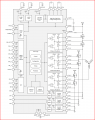
Look at this block diagram of a 3-phase integrated driver. It integrates three-phase drivers for upper & lower output MOSFETs and 3 independent charge pumps, one for each phase (3 capacitors, top right). They are derived from the PVDD supply and switching related to the high-side sources. The problem with capacitive bootstrap is there is a limit to how much current you can supply that way, so then you need to provide static supplies, but like the bootstrap supplies they need to be individually referenced to each phase.

1624120840569.png
 

Thread Starter

Dragonoid

Joined Nov 27, 2017
64
Look at this block diagram of a 3-phase integrated driver. It integrates three-phase drivers for upper & lower output MOSFETs and 3 independent charge pumps, one for each phase (3 capacitors, top right). They are derived from the PVDD supply and switching related to the high-side sources. The problem with capacitive bootstrap is there is a limit to how much current you can supply that way, so then you need to provide static supplies, but like the bootstrap supplies they need to be individually referenced to each phase.

View attachment 241668
@Irving
I understand now, Thank you for being so helpful and providing your wonderful guidance.
So to keep the 3 Phases separate from a single power supply I need to use 3 separate flyback smps to provide 12v @ 4 amp on the 3 high sides of the mosfets and for the low side I can use a single 12v 12Amp SMPS or 12v 4 Amp Dedicated smps too?
And should galvanic isolation be implemented on the input side of the mosfets gate drives too!
So as in case of fault the mcu and related parts are saved?
 
Last edited:
Top