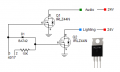
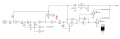
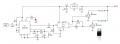
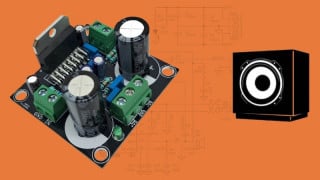
24V 5A 3-state capacitive touch switch (not a dimmer, without relay)

MisterBill2

Joined Jan 23, 2018
27,679
WOW, that is a lot of LED lighting.
How is the current for the LEDs regulated? That might be an area that could be investigated for improving efficiency. Or maybe even adding an option of a dimmer switch to set the illumination level. Just a thought.
 

Thread Starter

oslosl

Joined Jan 13, 2023
270
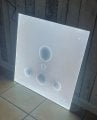
I am experimenting with even more led lighting of the front (see photo) behind the canvas, but finding something superflat that distributes/diffuses the light evenly and allow the sound to pass through is difficult, especially the highlight of the outermost holes. Maybe the geometry and varying size of the holes can improve this ?20230113_142027.jpg20230114_145639.jpg
 
Last edited:

sghioto

Joined Dec 31, 2017
8,634
Leds are 4,8w/m. It is patent pending. "Space is precious in the Flatlands" 24x24x2" external.
I estimate that's about 2.5m of LEDs equivalent to appx 12 watts or .5 amps at 24 volts.
It's still feasible to use relays for switching and shouldn't be a problem for 1.5 x 3 inch pcb.
However I would stay with the BTS50080-1 for both the LEDs and audio.
 

MisterBill2

Joined Jan 23, 2018
27,679
Certainly the power to keep a suitable FET switched on is less than required to keep a relay switched on. AND with the FET it may be that some level of PWM can deliver a similar perceived brightness while consuming less power. That might merit consideration.
 

Thread Starter

oslosl

Joined Jan 13, 2023
270
I don't understand your question. If you are suggesting using an N channel mosfet to switch the positive supply to the audio amplifier then you would need to generate a voltage of at least 5 volts more positive than the 24 volt supply. This would be required to drive the gate of the mosfet as the gate has to be driven to be more positive than the source for the mosfet to conduct between source and drain.

Les.
I just want fixed + to the BT amp, where the minus is controlled by the FET, like with the light. Reduces the number of long wires required.
 

LesJones

Joined Jan 8, 2017
4,509
If you Google the datasheet for the device you should be able to answer the question yourself by just using basic electrical calculations. (Ohms law and power calculations.) In this case you should be OK without a heat sink.

Les.
 

Ya’akov

Joined Jan 27, 2019
10,259
Considering using 21700 vs. 18650. Where do I find a 6S 21700 BMS and 3 x battery holder ?
First of all, the difference between 18650 and 21700 is entirely the size. They are the same chemistry so any BMS you might choose for 18650 is perfectly suited to 21700.

Most people are making packs from the 21700 cells, remember they won’t be individually protected so you will want to make sure you provide over- and under-voltage protection, as well as over-current and over-discharge.

While spot welding is the best way to make a pack, if you don’t have a spot welder you might not want to buy one (though it’s a good capability to have). But you can make one buy soldering the batteries and I have done that many times. It requires decent soldering skills, a good iron, the right solder (63Sn/37pb), and good, no clean flux. You can’t easily use nickel strips like the spot welded packs but you can use copper.

While you can use wires, flat copper stock offers much higher ampacity per volume occupied. That’s not to say it is magical and can carry more current somehow with the same copper just by flattening it, I mean that if the wire is 1.5mm OD it requires 1.5mm of space above it. It wouldn’t increase with two wires flat to the cells ends. But 1.5mm of flat stock as big as the terminals fits in that same space while having a lot more copper. It also means you can take up less space by using thinner stock than the otherwise required wire diameter.

Now, if making a pack is just out, you can get a variety of 21700 holders. Here’s a random example, searching will find many more.

But, I think a pack with proper insulating materials (tape. fish paper, etc) and heat shrink (all readily available), terminated in XT30 connector (easiest is premade pigtails from pack and to board) is a much more professional and flexible option. And you could build 21700 or 18650 that would plug-and-play.
 

sghioto

Joined Dec 31, 2017
8,634
Cool. Thanks. What is the difference between LP2950 and 78L05 ? Can the R5 LED part be neglected ? Where does Pin 10 and 12 goto ?
Could you draw IC1 CD40106 as a rectangle ?
The LP2950 draws less current in standby which was one of your requirements.
You can eliminate the LED if you want. It's purpose is to indicate when the touch switch is ready to activate. If you do then pin 9 must be tied to ground.
Pin 10 and 12 are not connected to anything. Any unused sections of the 40106 must have their inputs tied to ground but the outputs can be left open meaning not connected.
I suppose the chip could be drawn as a rectangle though not the norm.
 

sghioto

Joined Dec 31, 2017
8,634
You can power those CMOS ICs with 12 volts and reduce the power wasted in the voltage regulator. But you will need to increase the resistance of R5 that feeds that LED.
You could do that although the regulator only consumes 100ua. I prefer a regulated supply as the batteries start to decline.
 
Top