1kv Transistors?

Thread Starter

jcatkeson

Joined Feb 10, 2023
31
I would like to find a transistor that can switch on and off about 1kv, very low amperage like static electricity.
The range of control for the base voltage should be about 0-12v, or something reasonable a digital circuit can output.

I'm reading the data sheets for these, but a '1500v' rated transistor saturates at only 1 volt. So it's rated for a kilovolt but tops out at a drop of 1 volt across collector and emitter?
https://www.st.com/en/power-transistors/gt-1000v-transistors/products.html

Can anyone recommend a transistor that really can switch 1kv (or more) collector-emitter drop with a base-emitter voltage of <=12 volts? I can compromise on some parameters if there is something at least close to the target.

Thanks!
 

panic mode

Joined Oct 10, 2011
4,974
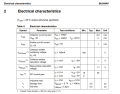
saturation voltage Vce(sat) is the Vce voltage when transistor is fully on (massive base current...). this is how low Vce can go... and usually tested with significant current. for example this product is rated for 8A and this test was done with more than 50% of rated current.

1728665570967.png
 
Last edited:

Thread Starter

jcatkeson

Joined Feb 10, 2023
31
saturation voltage Vce(sat) is the Vce voltage when transistor is fully on... this is how low Vce can go... and usually tested with significant current. for example this product is rated for 8A and this test was done with more than 50% of rated current.
Oh dang, I've been seeing it all wrong. Is this the basic idea then:

When base or gate input is at some maximum, what is the lowest possible resistance we can push the transistor to across C and E? And given a known current, saturation voltage would be the lowest possible voltage drop across that resistance?

Thanks for the correction, let me know if this is closer to the right idea.
 
Last edited:

ronsimpson

Joined Oct 7, 2019
4,690
STP03D200 2000V 100mA
STN0214 1400V 200mA
The range of control for the base voltage should be about 0-12v
The top transistors turn on at about 2V Base-Emitter but is controlled by Base current not voltage.
The second transistor turns on at 0.8V B-E.
Both transistors should not see voltage and current above 1200V.
Do you want a MOSFET that is turned on by voltage not current?
-------------------------
The BU508 is rated for 1500V with 0V Base-Emitter. If you apply current to the Base, then it is only rated to 700V! (don't turn the transistor on with more than 700V on it) It is a 8A part and probably will not work well at very low current.
--------------------------
If you want more part numbers I can find them. There is a class of transistors used in the focus control of TV sets. Most are not made now days but I probably have a box of them in storage.
 

atferrari

Joined Jan 6, 2004
5,011
STP03D200 2000V 100mA
STN0214 1400V 200mA

The top transistors turn on at about 2V Base-Emitter but is controlled by Base current not voltage.
The second transistor turns on at 0.8V B-E.
Both transistors should not see voltage and current above 1200V.
Do you want a MOSFET that is turned on by voltage not current?
-------------------------
The BU508 is rated for 1500V with 0V Base-Emitter. If you apply current to the Base, then it is only rated to 700V! (don't turn the transistor on with more than 700V on it) It is a 8A part and probably will not work well at very low current.
--------------------------
If you want more part numbers I can find them. There is a class of transistors used in the focus control of TV sets. Most are not made now days but I probably have a box of them in storage.
In the old times, T Instruments had them in their manuals.
 
Last edited:

MisterBill2

Joined Jan 23, 2018
27,508
Something about this site has changed for the worse!! No longer can we see any information about a participant, so as to even know if they are a student.
That means we have no clue as to how to respond, and what the individual is likely to understand.
This is certainly not an improvement at all.
 

Ya’akov

Joined Jan 27, 2019
10,235
Something about this site has changed for the worse!! No longer can we see any information about a participant, so as to even know if they are a student.
That means we have no clue as to how to respond, and what the individual is likely to understand.
This is certainly not an improvement at all.
Nothing has changed, Bill. Click on the Member Name, in the pop-over click on the name again, then choose the Information tab.

1728911702294.png
 

Janis59

Joined Aug 21, 2017
1,894
jcatkeson: There are just few questions must be answered before shopping.
1) What voltage
2) what amprage
3) how much fast
If third variates between 100 microseconds and 10 nanoseconds, the second variates between 10 miliamps and 10 kiloamps, the first variates between 3 Volts and 500 kilovolts. Its clear, the price is rocketing drastically, with increase of any of these parameters. For example, compare the price of Behlke 330 000 Volt 100 Amp with some slow 1.2 kV 10 Amp cheap thingy. First several hundreds, second beyound the one dollar.
 
Last edited:

Thread Starter

jcatkeson

Joined Feb 10, 2023
31
Still we have no explanation of what the TS is actually wanting to achieve. That is in addition to the details requested in post #15.
I want to make a static electricity based motor of sorts, that can push dust or styrofoam beads around on a surface. This is not a new idea, I just want my own version for learning. To do this, I will need:

1kv (more or less) square waves, in 2 phases. Current would be comparable to that of rubbing a balloon and attracting, say, salt grains, though I don't have an exact number for that. At no point would the HV electricity be shorted or even run through a resistor. It's all static fields.

The frequency should be tunable between 1hz and 100hz or higher. It's mechanical and not RF, so very slow.

Experience:
I've had OJT building power supplies, digital circuits, and some Tesla coil work for a museum. So while I understand basic passive electronics, I'm still a newbie on transistor data sheets.

Let me know if you need more information. Thanks!
 
Last edited:

Thread Starter

jcatkeson

Joined Feb 10, 2023
31
jcatkeson: There are just few questions must be answered before shopping.
1) What voltage
2) what amprage
3) how much fast
Yes, see my answer to MisterBill2. These are all very important parameters! Frequency and current can be very low, and voltage close to 1kv. Other dust motors have worked with 600v, but more is better.
 

ronsimpson

Joined Oct 7, 2019
4,690
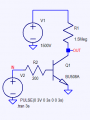
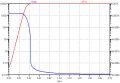
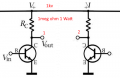
I don't know what a 600V dust motor is. I think you want two wires (outputs) out of phase. 1000 to 600V switched 1-100hz. The current is very low so we need to not use large high current transistors. (not 8A)

MOSFET
NDFPD1N150CG
MOSFET N-CH 1500V 100MA TO220-3
IXTY01N100
MOSFET N-CH 1000V 100MA TO252AA
IXTY02N120P
MOSFET N-CH 1200V 200MA TO252
Transistors
STP03D200 2000V 100mA
STN0214 1400V 200mA
1728999406289.png
 

Thread Starter

jcatkeson

Joined Feb 10, 2023
31
STP03D200 2000V 100mA
STN0214 1400V 200mA

The top transistors turn on at about 2V Base-Emitter but is controlled by Base current not voltage.
The second transistor turns on at 0.8V B-E.
Both transistors should not see voltage and current above 1200V.
Do you want a MOSFET that is turned on by voltage not current?
-------------------------
The BU508 is rated for 1500V with 0V Base-Emitter. If you apply current to the Base, then it is only rated to 700V! (don't turn the transistor on with more than 700V on it) It is a 8A part and probably will not work well at very low current.
--------------------------
If you want more part numbers I can find them. There is a class of transistors used in the focus control of TV sets. Most are not made now days but I probably have a box of them in storage.
This is extremely useful and I will look into everything here. Controlled by voltage is best, yes.
Pardon my slow replies, I only have spare time to work on this every few days or so.
 
Top