12V DC solenoid valve has blown diode

Thread Starter

JerryF13

Joined Dec 1, 2017
25
Hi, first post here, hoping someone can help. As you will be able to tell, I've forgotten most high school physics and have little current knowledge on this subject.

However - I have a 12V DC solenoid valve, US made around 1988 with a blown diode and power transistor, used to control flow in a 3500PSI hydraulic system. The makers can't give me info thats so old about the electrical component specs. I'm guessing the components are for voltage regulation and wrong polarity protection.

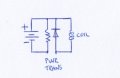
My question is - what info would I need to provide someone for them to specify new components? e.g. current draw of the coil etc. Does the diagram I've drawn look feasible?

Any pointers in the right direction very welcome. Thanks in advance!
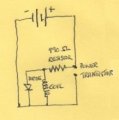
HWH Solenoid Cct JF_JerryF13.jpg
 

ScottWang

Joined Aug 23, 2012
7,501
The polarity of diode was wrong, the transistor should be have 3 pins, why the schematic only two pins?

Could you take the pictures with the double sides of the PCB?
Please upload the pictures as 800x600 jpg.

What is the id number of the transistor?
 

dl324

Joined Mar 30, 2015
18,363
I have a 12V DC solenoid valve, US made around 1988 with a blown diode and power transistor,
How do you know they're both blown?

Both need to have current ratings greater (by 50-100%) than the solenoid current. Voltage ratings shouldn't be an issue, but both need to tolerate 12V by the same derating.

Double check the circuit. Having a resistor in series with the coil would be unusual.

If you show the circuitry driving the transistor, we can determine other transistor requirements.
 

Thread Starter

JerryF13

Joined Dec 1, 2017
25
Hi ScottWang, thanks for replying. Yes sorry, as I mentioned I don't really know the correct symbols for components. There are only two pins for connection on the power transistor. From further reading just now, I think they would be emitter and base, collector being the case itself?

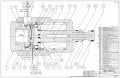
There's no PCB, the transistor is screwed onto the outside casing of the valve, and the resistor and diode have eye connectors to studs which attach to the coil and are not fixed inside the screw on cap of the valve. I've attached a drawing of the whole unit.

There's no readable markings at all on the transistor - it has been painted black and I reckon any markings have come off with the paint.

So I have nothing to go on - no id for any component, but I measured the resistor at 992 Ohms.

Thanks!

ap3572.jpg
 

Thread Starter

JerryF13

Joined Dec 1, 2017
25
How do you know they're both blown?

Both need to have current ratings greater (by 50-100%) than the solenoid current. Voltage ratings shouldn't be an issue, but both need to tolerate 12V by the same derating.

Double check the circuit. Having a resistor in series with the coil would be unusual.

If you show the circuitry driving the transistor, we can determine other transistor requirements.

Ahem. I think both blown because I decided to replace components one by one from another identical valve to see what would get it going again. I had already replaced one of the metal components, re-assembled it and it wouldn't work assembled. Discovered I had crushed the resistor when screwing on the cap. Replaced the resistor after measuring value from another valve. Still wouldn't work. Replaced diode from other valve, did work. Went to Jaycar (like RS) to get another diode but got no help in id'ing the diode. Was given a best guess, but didn't work.
Checked resistance across legs/case of the transistor in the faulty valve against a good one and concluded transistor was blown too.

There is no other circuitry I can get to which drives the transistor. There's a physically polarised power connector from a loom which lays by the valve but that's it.

I will double check the circuit tomorrow, thanks.
 

ScottWang

Joined Aug 23, 2012
7,501
Hi ScottWang, thanks for replying. Yes sorry, as I mentioned I don't really know the correct symbols for components. There are only two pins for connection on the power transistor. From further reading just now, I think they would be emitter and base, collector being the case itself?

There's no PCB, the transistor is screwed onto the outside casing of the valve, and the resistor and diode have eye connectors to studs which attach to the coil and are not fixed inside the screw on cap of the valve. I've attached a drawing of the whole unit.

There's no readable markings at all on the transistor - it has been painted black and I reckon any markings have come off with the paint.

So I have nothing to go on - no id for any component, but I measured the resistor at 992 Ohms.

Thanks!

View attachment 141224
So, are you trying to repair to make it back to its original status or just make it works ?
 

Thread Starter

JerryF13

Joined Dec 1, 2017
25
So, are you trying to repair to make it back to its original status or just make it works ?
Just make it work. I've had both valves on the bench connected to a 12V car battery and the non faulty one works consistently. I've also put the coil of the faulty one directly to the battery and it works consistently.
 

Thread Starter

JerryF13

Joined Dec 1, 2017
25
So, are you trying to repair to make it back to its original status or just make it works ?
Also, as there are 6 valves altogether in the manifold I've been able to swap positions with them to verify that the control and power supply to the relevant port is ok.

Thanks
 

Thread Starter

JerryF13

Joined Dec 1, 2017
25
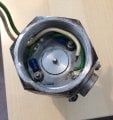
Hi again all. So, attached is a pic of the top of the valve with wiring exposed. The green wire in from the left is + 12v DC. The studs are connected directly to the coil. The white wire in from the left is - 12v DC and connects to top leg of the transistor, along with one side of the resistor. The green on the right from the coil stud connects to bottom leg of the transistor. The diode is across the coil as shown. Thanks Dennis for getting me to check circuitry again as I was quite wrong. Attached is another diagram which is (more) accurate. Resistance across the coil measures 1.2 Ohms.

All help much appreciated, thanks.

Coil Wiring zoom.jpg
Valve Cct 2 (1).jpg
 

ScottWang

Joined Aug 23, 2012
7,501
Where does the shell of power transistor connected to? (use multi-meter to measure it)
The shell is on the right bottom of the picture and it also is the number 9(left bottom) in the graphic of the posted #5.
 

Thread Starter

JerryF13

Joined Dec 1, 2017
25
Where does the shell of power transistor connected to? (use multi-meter to measure it)
The shell is on the right bottom of the picture and it also is the number 9(left bottom) in the graphic of the posted #5.
It's screwed directly into the casing of the valve. There's no electrical insulation. Multi meter reads 0 Ohms between the shell and valve case.
 

ScottWang

Joined Aug 23, 2012
7,501
It's screwed directly into the casing of the valve.
That is for the cooling.
There's no electrical insulation. Multi meter reads 0 Ohms between the shell and valve case.
The shell should be connected to somewhere, so you just use the multi-meter to test it with other wires or contacts.

According to the diode then the transistor is an NPN type, the coil of valve is connected to c of transistor, Base(it could be connected to the positive of power via the resistor) is quite strange and e is unknown(it should be connected to the negative of power).
 
Last edited:

Thread Starter

JerryF13

Joined Dec 1, 2017
25
That is for the cooling.

The shell should be connected to somewhere, so you just use the multi-meter to test it with other wires or contacts.
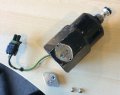
Thanks ScottWang. Here's a pic of the detached transistor - no other connectors/legs. The working valve is identical to this one.
Pwr Trans zoom.jpg

Between the shell (when it's screwed onto the casing) and the neg side of the coil measures 7.7K Ohms, and to pos side of coil measures 7.6K Ohms. Open circuit between - 12V leg and shell, zero Ohms between other leg and shell.
 

Thread Starter

JerryF13

Joined Dec 1, 2017
25
That is for the cooling.

The shell should be connected to somewhere, so you just use the multi-meter to test it with other wires or contacts.

According to the diode then the transistor is an NPN type, the coil of valve is connected to c of transistor, Base(it could be connected to the positive of power via the resistor) is quite strange and e is unknown(it should be connected to the negative of power).
When you say "according to the diode", is that based on what you can see in the photo i.e. where the stripe is, or is it from my drawing? Do you know what type of diode it is?
 

ScottWang

Joined Aug 23, 2012
7,501
Thanks ScottWang. Here's a pic of the detached transistor - no other connectors/legs. The working valve is identical to this one.
View attachment 141541

Between the shell (when it's screwed onto the casing) and the neg side of the coil measures 7.7K Ohms, and to pos side of coil measures 7.6K Ohms. Open circuit between - 12V leg and shell, zero Ohms between other leg and shell.
Could you measure the resistor and describe the colors, the resistor used 5 colors code then the tolerance could be 1% or less.
 

ScottWang

Joined Aug 23, 2012
7,501
When you say "according to the diode", is that based on what you can see in the photo i.e. where the stripe is, or is it from my drawing? Do you know what type of diode it is?
It was according to your drawing in #11, and the polarity of diode should be reverse of the power, and the diode is one kind of rectifier diode, I got some from the very old device, the diode was used as flyback diode, you can measure it use the range - diode and it only has resistance in one direction, if you can't make sure or it was damaged then you can buy a 2A rectifier diode to replace it.

What kind of diode for a solenoid?
 

LesJones

Joined Jan 8, 2017
4,509
With reference to post #11 Does one end of the resistor connect to the bottom left hand stud ? (One end of the coil.) When you say "the green wire on the right connects to the bottom leg (Emitter) of the transistor" Is this from the top right coil stud or the bottom left one ? What does the wire from the other stud connect to ? Assuming the transistor pinout is normal for a TO3 transistor then the top pin is the base. The bottom pin the emitter and the case the collector. The fact that the coil only has a resistance of 1.2 ohms suggests that the tramsistor limits the current through the coil as it would take 10 amps (120 watts) if the 12 volts was straight across the coil. I would not expect a solenoid valve to take this much power. If the green power lead (Positive ) is connected to the case (Therfore the collector.) and the white wire power lead (Negative.) is connected to the top pin (Base) of the transitor the circuit does not make sense. How much current does a working valve take ?

Les.
 

Alec_t

Joined Sep 17, 2013
15,120
According to the diode then the transistor is an NPN type
If I read the post #5 drawing correctly, the transistor (item 9) is a BDX46, i.e. a PNP Darlington. However, that would be in a TO-126 package, wheres the drawing and pics show a TO-3 package. :confused::confused:.

Edit: Looking again at the drawing, I'm now reading the transistor type as BDX66; another PNP Darlington but this time in a TO-3 package. That makes more sense!
 
Last edited:
Top