This is more of a learning exercise for me to find out what caused the SMPS to stop working. Hopefully if I do get it working, it will be a useful combined high current 12V and 5V power power supply for general use.
First of all; inspect to see if it went bang - there's usually some damage you can see. It will normally involve replacing a fair number of components. The part that caused it all may not show any damage and you'll only identify it by taking it out and checking it. Dodgy soldering can also cause an expensive phutt. There's usually a small electrolytic somewhere on the primary side that serves several purposes and can cause a blow up when it goes bad. Primarily its usually the Vcc reservoir for the PWM controller, but sometimes also stores a sample of the feedback voltage. If this capacitor is only a few uF; I search for an MLCC or a film cap small enough to shoehorn in.
Failure to start with no sign of scorch marks - the first place to look is the start up resistor. Shorted secondary side rectifiers can inhibit start up by tripping the overcurrent - sometimes this fault can go bang, but not all that often.
Repaired SMPSUs will just go bang again if you missed the part that caused it all - and the bulb trick is some way short of 100% foolproof.
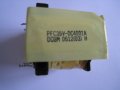
I've managed to access all the main primary-side components. I thought an inductor (see photo) marked PFC was faulty as two of the pins on one side were measuring open-circuit. However, it seems the pins are just there to support the inductor which I think is for Power Factor Correction?
I've tested the rectifiers, FETs and main capacitor and all seem fine. I can't seem to work out what would have caused the main fuse to blow?
I've managed to access all the main primary-side components. I thought an inductor (see photo) marked PFC was faulty as two of the pins on one side were measuring open-circuit. However, it seems the pins are just there to support the inductor which I think is for Power Factor Correction?
I've tested the rectifiers, FETs and main capacitor and all seem fine. I can't seem to work out what would have caused the main fuse to blow?
Isolate the PFC MOSFET and try again - the bulb trick is good for this test because the turn on surge will probably finish of what was causing the trouble anyway.
On 230V mains; the main switcher should still run, but its input voltage will be low forcing a high M/S ratio in the regulator - its possible to brew up the MOSFETs if you fully load it.

 Facebook
 Google
 GitHub
 Linkedin