Wireless Status Light System

Thread Starter

Jlett

Joined Aug 27, 2024
3
The problem is a way to communicate a “ready status” among a group of 3-5 people quietly, in the dark, over an approximate distance of 15’ separation.
The idea is a device with a series of LED’s with a push button or pressure pad activation. IE when I’m ready I press and hold my button and the first light on the other units activate, the next person is ready they do the same and the second light activates and so on until we have a “green board” and can proceed. General device parameters would be a self contained unit approximately 3” in length, 1.5” wide, 1” tall. If you imagine a rectangle the LED array would need to be visible from the end (1.5x1) with the momentary push button located on the side (3x1.5).
This proposed solution is WELL beyond my abilities, anyone know if this is feasible?
 

Ya’akov

Joined Jan 27, 2019
10,233
Welcome to AAC.

This is certainly possible to do. The question of budget is a material one and the approach and quality of result could change dramatically depending on the answer.

Assuming a sufficient budget for a good platform my conceptual approach would be:

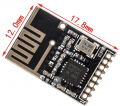
RF Communications: A miniature version of the ubiquitous nRF2401L 2.4GHz data communications module. This is very small, (12 x ~18 x ~1.5mm, runs from 3.3V and should be able to meet the ~5m distance requirement with its PCB antenna.

1724848680647.png
nRF2401L module

Microcontroller: a small, low powered µC, like the ATTiny series is a good option. The exact model and specs would be driven by requirements.

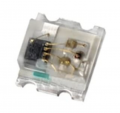
Display: An array of 2020 (2mm square) packaged WS2812 LEDs would be a very good choice. They are very small and fully adjustable for RGB color. This offers flexibility for future or overlooked features (see text). At 2mm, 5 would fit in 10mm, less than half an inch, more could be added for flexibility.

1724848049646.png
WS2812 addressable LED in a 2020 SMD package
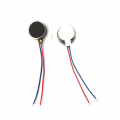
Haptic Motor: I would also include a haptic actuator for silent and dark signaling. This will allow for silent indication without requiring eyes on. This example is 10mm x 2mm (~.3" x .08").
1724850232759.png
miniature haptic actuator

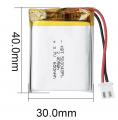
Power: A single LiPo sized to fit should provide a reasonable run time. For example the 504030 LiPo cell is very common and measures about 1.5" on the long side. It provides about 650mAh, which should be enough for runtimes hours long.

1724849615040.png
504030 LiPo
Switches: I am going to suggest two tactile switches, one on each side. These are standard items and the precise model can be determined after a prototype is made and tested. The reason for two switches is spelled out below.

There will be the need for small PCB for the indicators and one for the MCU. Each will be simple and easily designed then purchased from any one of a number of vendors.

Features: First, because there is an MCU (microcontroller) in the mix, features will often just be a software thing. Here is a list of things I think are important considering the core functionality you described.

Supervision: this means that each device would actively track the other devices indicating with some color (the RGB LEDs allow for many colors) let's say, purple, a positive assertion that the device represented by the LED is, in fact within range and operating. This will prevent confusion should one be out of range or otherwise unable to communicate.

Request for Ready Poll: In the absence of an ongoing poll for GO, any operator that signals GO (see below) will be marked as ready and initiate a poll of the others.

Positive GO Signal: The device has two buttons and a GO indication would require both be pressed for some fixed time (e.g. 2s) and at least one to be held for the GO indication to appear and stay on the remote devices. A small timeout would allow the operator to shift grip, etc., without losing the signal but if the button is released and not resumed, the signal would go out or change to a color indicating it had been on but is no longer in ready state.

Positive NO GO Signal: If the operator must signal that they cannot be ready for whatever reason, both buttons can be triple clicked which will cause the remote devices to show some signal such as a steady red indicating the operator has sent a NO GO.

Emergency Signal: If both buttons are held in, a haptic indication (short vibration) will signal to the operator that releasing the two buttons for at least one second then repressing both for at least two seconds will send out an emergency signal causing the operators indicator on remote sets to flash red with an accompanying haptic signal. This is a distress call indicating trouble and no access to other comms for some reason.

Haptic Signaling:
Three short and one long vibration will indicate that a poll for GO has been called.

During polling, the unit will vibrate short pulses matching the number of an LED that indicates a new GO signal. So, for example, if operator 3 signals GO, three pulses will be felt, &c. When all operators have checked in, the haptic motor will produce a long signal followed by five short signals.

So, that's just a quick set of ideas. But, of you want something simpler I would suggest you use the PTT on your other comms. Simply keying the mic without speaking can be used to signal. You can establish a protocol for calling for the poll and checking in.

For example when you are near the target, announce going silent. After that, whoever is command keys the radio three long times to indicate checkin has started. Each operator answers in turn by short keying for the number of times matching their assigned number (1-5). Command tracks these responses. If everyone has answered command keys long-short-long-long indicating all are ready, then long-short-short-short for GO.

If everyone didn't indicate ready, command keys the missing operators short code (e.g.: 3 shorts to poll operator 3) who responds with their code if they are ready and a long key if not. This continues until all poll GO, and then finishes as above.

All of these codes are arbitrary of course, do whatever you'd like in that regard. Also, modify the procedure to match your needs.
 

Thread Starter

Jlett

Joined Aug 27, 2024
3
Welcome to AAC.

This is certainly possible to do. The question of budget is a material one and the approach and quality of result could change dramatically depending on the answer.

Assuming a sufficient budget for a good platform my conceptual approach would be:

RF Communications: A miniature version of the ubiquitous nRF2401L 2.4GHz data communications module. This is very small, (12 x ~18 x ~1.5mm, runs from 3.3V and should be able to meet the ~5m distance requirement with its PCB antenna.

View attachment 330298
nRF2401L module

Microcontroller: a small, low powered µC, like the ATTiny series is a good option. The exact model and specs would be driven by requirements.

Display: An array of 2020 (2mm square) packaged WS2812 LEDs would be a very good choice. They are very small and fully adjustable for RGB color. This offers flexibility for future or overlooked features (see text). At 2mm, 5 would fit in 10mm, less than half an inch, more could be added for flexibility.

View attachment 330297
WS2812 addressable LED in a 2020 SMD package
Haptic Motor: I would also include a haptic actuator for silent and dark signaling. This will allow for silent indication without requiring eyes on. This example is 10mm x 2mm (~.3" x .08").
View attachment 330305
miniature haptic actuator

Power: A single LiPo sized to fit should provide a reasonable run time. For example the 504030 LiPo cell is very common and measures about 1.5" on the long side. It provides about 650mAh, which should be enough for runtimes hours long.

View attachment 330299
504030 LiPo
Switches: I am going to suggest two tactile switches, one on each side. These are standard items and the precise model can be determined after a prototype is made and tested. The reason for two switches is spelled out below.

There will be the need for small PCB for the indicators and one for the MCU. Each will be simple and easily designed then purchased from any one of a number of vendors.

Features: First, because there is an MCU (microcontroller) in the mix, features will often just be a software thing. Here is a list of things I think are important considering the core functionality you described.

Supervision: this means that each device would actively track the other devices indicating with some color (the RGB LEDs allow for many colors) let's say, purple, a positive assertion that the device represented by the LED is, in fact within range and operating. This will prevent confusion should one be out of range or otherwise unable to communicate.

Request for Ready Poll: In the absence of an ongoing poll for GO, any operator that signals GO (see below) will be marked as ready and initiate a poll of the others.

Positive GO Signal: The device has two buttons and a GO indication would require both be pressed for some fixed time (e.g. 2s) and at least one to be held for the GO indication to appear and stay on the remote devices. A small timeout would allow the operator to shift grip, etc., without losing the signal but if the button is released and not resumed, the signal would go out or change to a color indicating it had been on but is no longer in ready state.

Positive NO GO Signal: If the operator must signal that they cannot be ready for whatever reason, both buttons can be triple clicked which will cause the remote devices to show some signal such as a steady red indicating the operator has sent a NO GO.

Emergency Signal: If both buttons are held in, a haptic indication (short vibration) will signal to the operator that releasing the two buttons for at least one second then repressing both for at least two seconds will send out an emergency signal causing the operators indicator on remote sets to flash red with an accompanying haptic signal. This is a distress call indicating trouble and no access to other comms for some reason.

Haptic Signaling:
Three short and one long vibration will indicate that a poll for GO has been called.

During polling, the unit will vibrate short pulses matching the number of an LED that indicates a new GO signal. So, for example, if operator 3 signals GO, three pulses will be felt, &c. When all operators have checked in, the haptic motor will produce a long signal followed by five short signals.

So, that's just a quick set of ideas. But, of you want something simpler I would suggest you use the PTT on your other comms. Simply keying the mic without speaking can be used to signal. You can establish a protocol for calling for the poll and checking in.

For example when you are near the target, announce going silent. After that, whoever is command keys the radio three long times to indicate checkin has started. Each operator answers in turn by short keying for the number of times matching their assigned number (1-5). Command tracks these responses. If everyone has answered command keys long-short-long-long indicating all are ready, then long-short-short-short for GO.

If everyone didn't indicate ready, command keys the missing operators short code (e.g.: 3 shorts to poll operator 3) who responds with their code if they are ready and a long key if not. This continues until all poll GO, and then finishes as above.

All of these codes are arbitrary of course, do whatever you'd like in that regard. Also, modify the procedure to match your needs.
Well, I guess my need for the device wasn’t obscure enough

This however isn’t being used for a professional purpose, strictly recreational so the absolute simpler the better. After polling some other people the array of “ready lights” actuated by a press and hold seems to be the most desired. If a double click could actuate a simple series of 3 beeps from all the units I think we have winner. Now, who can build this for me?
 

BobTPH

Joined Jun 5, 2013
11,505
Not interested myself, just wondering what you thought it would cost. If I were looking for work, the quote would be mid 4 figures. You can likely find someone somewhere in the world to quote you < $100, but who knows what, if anything, they would deliver.
 
Top