Facebook
 Google
 GitHub
 Linkedin

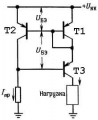
A change in the resistance in the collector T3 will result in a small change in the voltage at its base, which will lead to the same small change in the voltage at the collector T2. In T2, the Earley effect will appear, which will lead to a minuscule change in voltage already at its base, which will ultimately lead to a minuscule change in the collector current T3. So minuscule that practically the collector current T3 will not change in any way. It turns out that T3 does not get rid of the Earley effect, but only minimizes, right?
Attachments
-
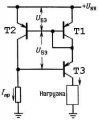 8.7 KB Views: 8