Will this thing blow up?

Thread Starter

JohnnyBravado

Joined Sep 28, 2023
21
Hi guys,

First, let me preface, I'm a software engineer, I know some things about electronics, but designing circuits wouldn't be my forte... I'm a hobbyist at best :)
I'm playing around with some WS2812B strips, and want to add some bling to my motorbike.
The strips would be controlled using ATTINY85, and the input signals would come from the indicator and brake on the bike, which are 12V.

I've drawn up this simple circuit in tinkercad:
https://www.tinkercad.com/things/7WMk3TCABll-simple-led-indicator

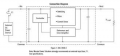
Schematic below:
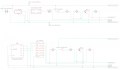
1733313013706.png
This is working fine in simulation, but I'm wondering if any of the components may possibly be subject to any over-current situations where they will get damaged and burn out over time. Should I add any protective components anywhere? Or maybe there's a better way to do it?

Thanks
 
Last edited:

seanstevens

Joined Sep 22, 2009
323
It looks Good to me. Placing a fuse in the power input would be a good practice and a reverse polarity diode just in case. An appropriately dimensioned varistor may also be a good way of protecting the components from any supply spikes.
 

Thread Starter

JohnnyBravado

Joined Sep 28, 2023
21
What is the 500 ohm resistor on the data line for?
That's what Adafruit recommends when connecting their strips to Arduino, I thought it would also apply here...
They don't give a good explanation. But I found this on Reddit:

(It's)"...a matter of driving an inductive load (the wire itself that goes from the Arduino to the neopixel). That inductance, combined with the small capacitance of the load, when driven will likely produce voltage spikes at the load that have to be handled by the protection diodes of the load. The resistor is meant to kill the Q of that circuit...".

Also seem to be missing the peripheral components on your regulator. (caps etc.)
That's why I'm here, this is the knowledge I don't posses :D
 

Thread Starter

JohnnyBravado

Joined Sep 28, 2023
21
It looks Good to me. Placing a fuse in the power input would be a good practice and a reverse polarity diode just in case. An appropriately dimensioned varistor may also be a good way of protecting the components from any supply spikes.
Oh yeah, those are definitely good things to have, thanks :) I'll add that
 

jiggermole

Joined Jul 29, 2016
185
The only thing Id be concerned about is using a linear regulator (7805) for your 5v bus. If you build it and find that its getting too hot there are some switching regulators that use the same footprint as the 7805 and put out less waste heat. So if its a problem later you shouldn't need to redesign the board just solder in a different regulator.
With a linear regulator, the whole difference between your 12v bus and your output 5v bus is dissapated as heat. A switching regulator is more efficient, less heat output for same power input.
 

nsaspook

Joined Aug 27, 2009
16,249
The only thing Id be concerned about is using a linear regulator (7805) for your 5v bus. If you build it and find that its getting too hot there are some switching regulators that use the same footprint as the 7805 and put out less waste heat. So if its a problem later you shouldn't need to redesign the board just solder in a different regulator.
With a linear regulator, the whole difference between your 12v bus and your output 5v bus is dissapated as heat. A switching regulator is more efficient, less heat output for same power input.
Good catch.
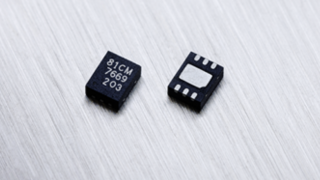
I use these in a few designs: https://www.murata.com/-/media/webr...oki-78sr.ashx?la=en&cvid=20200224052008000000

To the OP, don't forget the input fuse.
1733679628855.png
 

Thread Starter

JohnnyBravado

Joined Sep 28, 2023
21
The only thing Id be concerned about is using a linear regulator (7805) for your 5v bus. If you build it and find that its getting too hot there are some switching regulators that use the same footprint as the 7805 and put out less waste heat. So if its a problem later you shouldn't need to redesign the board just solder in a different regulator.
With a linear regulator, the whole difference between your 12v bus and your output 5v bus is dissapated as heat. A switching regulator is more efficient, less heat output for same power input.
Makes sense! Thank you.
I was going to use a SOT-89-3 package like this one, a quick search and I don't think there's any switching regulator that will match such small footprint...
 

jiggermole

Joined Jul 29, 2016
185
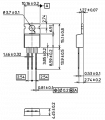
its only slightly bigger than the TO220 package that is most common for the 7805. I have actually used a similar component to the one JB recommended (thank you, saving datasheet for future use maybe). Its a good jellybean to have on hand for tinkering.

looking at the dimensions on the datasheet vs the to-220 package below its really similar in size so for board space you're not out much.
1733740364465.png
There are a lot of options out there if you do a search for 78xx replacement you come up with a lot. At the end of the day I wouldn't get hung up on it, the 7805 linear should be sufficient for what you're doing. Solder it up and see if it does what you need and tweak from there.
 

nsaspook

Joined Aug 27, 2009
16,249
Makes sense! Thank you.
I was going to use a SOT-89-3 package like this one, a quick search and I don't think there's any switching regulator that will match such small footprint...
I would use something that can supply more total peak current because your LEDs run on the 5VDC bus. Each RGB led pixel can require 40-60mA with all colors on, full brightness. Multiply that by the number of led pixels per strip at 30-60 leds/m. Your Bling light current requirements needs to be calculated (like a few amps) for the correct sized 5vdc regulator to handle a fairly high peak current for the amount of power needed.

It might be better to split the 5vdc into a lower power logic only bus using a regulator like above and fuse, with a higher powered regulated DC-DC supply just for the strips with a properly sized fuse for that.
 
Last edited:

Thread Starter

JohnnyBravado

Joined Sep 28, 2023
21
its only slightly bigger than the TO220 package that is most common for the 7805. I have actually used a similar component to the one JB recommended (thank you, saving datasheet for future use maybe). Its a good jellybean to have on hand for tinkering.

looking at the dimensions on the datasheet vs the to-220 package below its really similar in size so for board space you're not out much.
View attachment 337597
There are a lot of options out there if you do a search for 78xx replacement you come up with a lot. At the end of the day I wouldn't get hung up on it, the 7805 linear should be sufficient for what you're doing. Solder it up and see if it does what you need and tweak from there.
Thank you for all the advice, I will build this thing during the week- time permitting... I'll make sure to update the thread :)
 

Thread Starter

JohnnyBravado

Joined Sep 28, 2023
21
I would use something that can supply more total peak current because your LEDs run on the 5VDC bus. Each RGB led pixel can require 40-60mA with all colors on, full brightness. Multiply that by the number of led pixels per strip at 30-60 leds/m. Your Bling light current requirements needs to be calculated (like a few amps) for the correct sized 5vdc regulator to handle a fairly high peak current for the amount of power needed.

It might be better to split the 5vdc into a lower power logic only bus using a regulator like above and fuse, with a higher powered regulated DC-DC supply just for the strips with a properly sized fuse for that.
That's actually a very good point... I will have 8 LEDs in the strip, so max theoretical current draw of 480mA- although it should never go that high, as I will never be driving all LEDs at full brightness.
That being said, the package I was looking at, has a max current output of 100mA, so I will need to pick something beefier. Thanks!
A separate bus for logic and power? Yeah, sounds like a good idea, thanks for the suggestion.
 
Last edited:
Top