Will this precharge circuit work?

Thread Starter

mike__MecE

Joined Feb 20, 2022
92
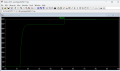
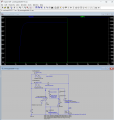
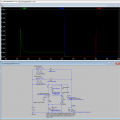
This is a precharge circuit to prevent inrush to the 12 ODrive Pro motor drivers in my project. The supply is a 14s2p LiPo (58.8 V), set to 60 V for this sim. S2 is closed and R10 limits inrush current to about 5A. Then S3 is closed and R6 limits inrush current to about 5A. Then S1 is closed turning on the MOSFET, powering the contactor coil and closing the contactor which finally sees about 3.5A inrush. After the contactor is closed, S2 and S3 would be opened during normal use and S1 is the safety stop. (C1 represents the cumulative capacitance of the 12 Odrive Pros. Current through R2 represents the cumulative standby current through all of the connected Odrive Pros.)
I'm kindly requesting a look-over of this design before I order parts to see if there might be any glaring issues I am missing. Thank you.
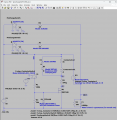
precharge.png
1768679634501.png
 

Attachments

MisterBill2

Joined Jan 23, 2018
27,281
Why multiple stage pre-charging?? AND, why a 100 ohm discharge resistor?? Is the E-STOP contactor intended to disconnect the loads or to discharge the C1 capacitance by a short circuit?????
The whole circuit does not make sense to me. What is the actual intention???
 

Thread Starter

mike__MecE

Joined Feb 20, 2022
92
Thanks for looking at this Bill,
There are multiple stages because if R10 is too large the output voltage is too low and if its too low the inrush current is too high, so I made multiple stages, R10 brings the output voltage to 52V or so and then R6 brings it to close to 60V so that there is not large inrush when the contactor closes.
The contactor is intended to deliver current ot the odrives when they begin to drive motors (and drive potentially hundreds of amps).
The 100 Ohm resistor represents the standby load of the odrive motor drivers. When power is conencted the motor driver capacitors will draw inrush current and then begin to draw standby current, thats what C1 and R2 represent.
After precharging, R10 and R6 are opened and the motor drivers will draw high currents through the contactor.

1768793106515.png
 

MisterBill2

Joined Jan 23, 2018
27,281
How often is the power actually cycled??
AND, why is there a 100 ohm resistor across that large value capacitor?? THAT is not usually done, in my extensive experience, so if it is part of the simulation it will probably result in confusing results.
In many cases pre-charging a capacitor to less than the full voltage does reduce the inrush current quite a bit. So I am suggesting that the simulation results are not an adequate reflection of the actual response.

I also suggest that increasing the time between closing that contactor and needing the motor drivers actions could be extended a bit to allow a longer charge time.
 

Thread Starter

mike__MecE

Joined Feb 20, 2022
92
How often is the power actually cycled??
AND, why is there a 100 ohm resistor across that large value capacitor?? THAT is not usually done, in my extensive experience, so if it is part of the simulation it will probably result in confusing results.
In many cases pre-charging a capacitor to less than the full voltage does reduce the inrush current quite a bit. So I am suggesting that the simulation results are not an adequate reflection of the actual response.

I also suggest that increasing the time between closing that contactor and needing the motor drivers actions could be extended a bit to allow a longer charge time.
It's only cycled on at startup. The 100 ohm resistor represents the steady standby load of the 12 motor drivers. As soon as they are powered they begin drawing a small but appreciable load. It might be odd showing r2 across the cap, it's just the standby load of the drivers.
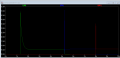
It's true that I could just use one stage / resistor for precharge but when the contactor closes that will still result in potentially a 130 amp inrush current as shown here: 1768836915894.png
 

MisterBill2

Joined Jan 23, 2018
27,281
If those motor driver modules contain active components then the load resistance at zero volts will not be close to what the TS has calculated. So substituting a fixed value resistor will not provide correct results. Using an incorrect circuit will assure that you get incorrect results.
 

Thread Starter

mike__MecE

Joined Feb 20, 2022
92
If those motor driver modules contain active components then the load resistance at zero volts will not be close to what the TS has calculated. So substituting a fixed value resistor will not provide correct results. Using an incorrect circuit will assure that you get incorrect results.
I was informed that these drivers draw about 20-50 mA during standby so a 100 ohm resistor simulates the load of 12 of them in standby here. It's just for estimating the load during precharging. I'm not sure what you're suggesting - it would not be feasible to simulate the highly complex motor driver circuits and duplicate them 12 times.
 

MisterBill2

Joined Jan 23, 2018
27,281
I was informed that these drivers draw about 20-50 mA during standby so a 100 ohm resistor simulates the load of 12 of them in standby here. It's just for estimating the load during precharging. I'm not sure what you're suggesting - it would not be feasible to simulate the highly complex motor driver circuits and duplicate them 12 times.
Very likely the current drawn by those "drivers" is a lot less at zero volts, and still quite a bit less at one volt, and even a few volts.
My point being that a fixed resistor is not an accurate substitute for an active load device in a startup simulation. That means that you will not be able to produce an accurate startup simulation by substituting a steady state value.

I suggest measuring the actual startup current of one of the drivers so that you can actually have some correct information.
AND, do a startup transient simulation without that 100 ohm resistor across the actual capacitor that is in that location..

THEN you will be able to add the individual currents and get closer to the actual values.
 

MisterBill2

Joined Jan 23, 2018
27,281
Until the voltage rises to some point, all of the input current is charging the capacitors, which will be limited by the series resistor. Certainly the current drawn at lower input voltages will not be the same as at the higher voltage. So the power contactor will need to engage at some voltage less than the full operation voltage, and provide the last part of the charging current.
IF it is possible to determine the current draw vesus the input voltage for one of those drive modules then an accurate simulation could be done.
 

Thread Starter

mike__MecE

Joined Feb 20, 2022
92
Very likely the current drawn by those "drivers" is a lot less at zero volts, and still quite a bit less at one volt, and even a few volts.
My point being that a fixed resistor is not an accurate substitute for an active load device in a startup simulation. That means that you will not be able to produce an accurate startup simulation by substituting a steady state value.

I suggest measuring the actual startup current of one of the drivers so that you can actually have some correct information.
AND, do a startup transient simulation without that 100 ohm resistor across the actual capacitor that is in that location..

THEN you will be able to add the individual currents and get closer to the actual values.
I'm having a hard time understanding your point. I get that the drives may draw more or less current than estimated and that the standby drive current likely varies over time during the precharge activity. But the estimate is from a credible source and if the drives draw less current than 50mA, such as 25A, then there will be less current through the precharge resistors and the contactor and if it draws more, such as 100mA, there will be a bit more current through the precharge resistors and contactor. So if the estimate is wrong by 100% the circuit still does pretty much the same thing since the initial condition of 0V and low resitance of the capcitors is the driving force behind the inrush current.1768956772242.png
 
Top