The easiest thing to do would be to parallel your front and rear output to a 2 ohm speaker.
The problem with using s transformer is picking the right transformer. Transformers are inductors and, therefore, can act as filters and filter out certain frequencies from your audio.
Additionally, you need to select a transformer that can handle the current and frequency range you want. Back in the days of Tube amplifiers, audio transformers were much more common but those had to step down the tube voltage to a speaker voltage. In your case, you'll need a 1:1 audio transformer. I haven't looked but finding one may be a challenge.
Firstly, you have to check if your amp is not already bridged output. Some amps are already bridged. You cannot bridge two outputs that are already bridged.
Firstly, you have to check if your amp is not already bridged output. Some amps are already bridged. You cannot bridge two outputs that are already bridged.
Coupling the 2 outputs together via the transformer may not be such a good idea.
there's probably off the shelf BTL units that add on - just dummy load the original outputs and hook it up.
Modern BTL chips have very few external components, so a DIY build isn't monumental - but supply decoupling and the requirement for sturdy PCB tracks is demanding.
Philips (and probably others) do a BTL with bootstrapped boost rails. The output signal charges bootstrap capacitors, most chips have level sensing so the charge is only used when needed.
"The problem with using s transformer is picking the right transformer. Transformers are inductors and, therefore, can act as filters and filter out certain frequencies from your audio.
Additionally, you need to select a transformer that can handle the current and frequency range you want. Back in the days of Tube amplifiers, audio transformers were much more common ..."
Over the past two weeks I have been trying to find a way to bridge a non-bridgeable output. I found this topic on a ton of forums. It seems to be a very common issue. Many people want to keep their gear and just bridge their radio [amp]. No answers found.
So, the other day I was thinking about it and dug really deep in my memory. Back to studying discreet component audio amplifiers and the [ then fairly new] operational amplifiers. However 50 years ago they were also still teaching vacuum tube amplifiers!
Wait! Didn't they use to couple the output with output transformers ? Wouldn't that work? That is why a really appreciate Gopher's answer. Yep. They did use those things! It wasn't just my imagination.....
So. " you need to select a transformer that can handle the current and frequency range you want . . ." I was hoping against hope in a perfect world someone would say, " Gary that is a [fill in the blank] do-dad. Part number xxx available at yyy.
I really don't know where to start to find this "Proposed Interface Circuit"
Today, it occurred to me that this might be a "stereo summing isolation output transformer" What do you guys think?
They sell very cheap isolation devices on ebay and other sites that pretty much do what the Proposed Interface Circuit does, only at line level, not speaker level and not summing the two channels. Channels meaning Front and Rear.
So I am going to Google " high power, stereo, summing, isolation output transformer" tonight and see what happens.
Or, maybe just have a beer, pizza, pet my cat and go to sleep !
PS Ian, thanks for your thoughts. However, I am no longer doing the wire and solder thing. Can't remember if that happened before or after I stopped chasing women ! But then you also said " off the shelf BTL units"
This is perfect even has RCA inputs. EXCEPT this is line level not speaker level. Two would be required, one for front and other for the rear channel. My thought is that after two of these circuit devices isolate the Radio Outputs that I would then BRIDGE the outputs of these two devices.
However, I am unsure of the actual power ability of this circuit device and the company is closed until Monday.
I will call them Monday and get more details, and also ask them if they sell the same circuit device at the speaker level. Will get back to you guys when I have some answers.
Why are you trying to bridge your outputs?
(besides the obvious answer - to get more power output).
Which leads to the next question(s) -
What is the power output of your amplifier?
What is the power capability of your speaker?
How old are you?
Do you have good to excellent hearing?
Did you know that when you lose it (your hearing) you can't get it back?
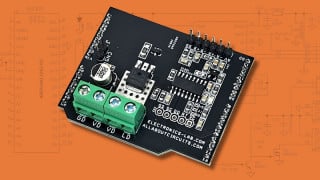
This is perfect even has RCA inputs. EXCEPT this is line level not speaker level. Two would be required, one for front and other for the rear channel. My thought is that after two of these circuit devices isolate the Radio Outputs that I would then BRIDGE the outputs of these two devices.
However, I am unsure of the actual power ability of this circuit device and the company is closed until Monday.
I will call them Monday and get more details, and also ask them if they sell the same circuit device at the speaker level. Will get back to you guys when I have some answers.
This device it meant to create a balance signal (like a microphone XLR connector). The balanced output allows running longer cables without the cable acting like an antenna (high impedance microphone-like signals). Also, allows guitar amp like signals to be converted to signals for XLR inputs on mixer boards.
Why are you trying to bridge your outputs?
(besides the obvious answer - to get more power output).
Which leads to the next question(s) -
What is the power output of your amplifier?
What is the power capability of your speaker?
How old are you?
Do you have good to excellent hearing?
Did you know that when you lose it (your hearing) you can't get it back?
Good question Mr. Chips. The answer is that I like the looks of my gear! And that it pretty much why most of the guys looking around the web ask about bridging. Obviously I could just buy a high power radio with a high power bridging amp for subwoofer.
And it is not a money thing.
I am an old school Alpine guy.[ Any others on the forum?] I love the way old school Alpine looks. If you look at their old amps, all of the input / output connections are at the rear and the face is very clean and good looking. This system will go in the back shelf of my Miata so I want a very clean no seen running in the front and out the back look.
I really didn't want to get too deep in the woods about my set up because it is the circuit solution of the "Proposed Interface Circuit" that I was looking for. I appreciate all the interest. And I am also thinking that maybe I should give up on bridging the outputs. I am not in love with the monaural subwoofer. So why not just buy a new subwoofer that has two coils. They exist. But my intellectual curiosity WILL REMAIN. Surely there has to be such a circuit when it is so much in demand. Something simple. Passive. Off the shelf.
I think the power is 25 W per channel But will have to buy a manual to know for sure.
Finally, I agree about too loud. I run my speakers at normal power. Which in my mind means, what, maybe 7 watts? Audio engineers have a word for TOO MUCH BASS like the kids like to run. And any audio guys can correct me if I am wrong. They say the system is "boomy" [in a bad way]
Well. Unfortunately. I am 70 years old.
So. I am going to close this thread. But. I know their are a lot of guys on the web always asking "How can I bridge my non-bridging output" and I was hoping there might be a simple solution.
The circuit in the drawing does not provide enough information. But it is not a good idea to ever put amplifier outputs in parallel, either directly or with a transformer, because it will be feeding power from one into the output of the other. And in a stereo system the outputs are seldom identical.
If the two outputs in the drawing are bridging outputs then there is no simple way to do it, if they are not, but rather in each case the - terminal is ground, then you can connect the two + outputs to opposite terminals on the speaker. It will work but you will not like it.
This is perfect even has RCA inputs. EXCEPT this is line level not speaker level. Two would be required, one for front and other for the rear channel. My thought is that after two of these circuit devices isolate the Radio Outputs that I would then BRIDGE the outputs of these two devices.
However, I am unsure of the actual power ability of this circuit device and the company is closed
until Monday.
The transformer described is either a microphone transformer or perhaps an audio line transformer. The microphone transformer may be OK for as much as ten MILLIWATTS (0.010watt), or it may be an audio line transformer, possibly good for as much as ONE watt. more power would probably damage them and then it still would not work.
I will call them Monday and get more details, and also ask them if they sell the same circuit device at the speaker level. Will get back to you guys when I have some answers.
Tube amplifier output transformers are impedance matching transformers, and would be upstream of what is shown in the sketch. And putting two channels of a tube type stereo amplifier in parallel is not a good idea either. There is an arrangement called a "hybrid" that would allow a connection of both, but it is complicated and you lose a lot of power.
So. Since there seems to be a continuing interest in the subject. Let me pose a new questions related to this post.
Surely, with as much demand that there is for the device in question [ A summing isolation device] that will convert speaker level car radio non bridgeable outputs to bridged outputs and drive speakers up to 25W RMS
exist! I just can't find it.
Imagine that the transformers [which are obviously good frequency wise] are also heavier duty to handle 25 W.
Then look at the Second Proposed Circuit attached.
Other considerations for problem solution:
1. Off the shelf or simple to build
2. Passive only
3. Relatively inexpensive
Why the other considerations. 1. Obvious 2 and 3 Other than passive only and inexpensive, one could just buy another amplifier that is bridgeable and accepts speaker level inputs and connect the amplifier THAT YOU LOVE AND WANT TO USE through the second bridgeable amplifier to the Monaural speaker. Whew ! Nope that is just not what we are looking for. We are looking for an off the shelf, [or simple to build], passive only, inexpensive little bridging circuit. Again, so many car audio guys want this thing. Just google something like "changing my non-bridgeable to bridgeable forum" or "how to make my non-bridgeable amp to a bridgeable amp?

 Facebook
 Google
 GitHub
 Linkedin