Facebook
 Google
 GitHub
 Linkedin

I am building a high voltage capacitor discharge device and due to ownership issues, I cannot post the schematic.
The schematic calls for 4, 50W, 1k resistors along with a few diodes and 2W resistors.
The original I seem to remember was done on a PCB but I wanted to try something different.
I am going to glue the 50W resistors on one side of a proto board?, and wire wrap the other components on the other side. In am not sure what the board is called. It is about 2.5 x 3.5 inches, the holes are copper clad and they are not connected. I plan to poke headers thru the board as needed.
So, I am asking if the mix of glue with headers will interfere or have an unwanted effect on the electronics.
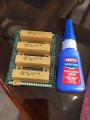
The 1st thing that comes to mind is heat. If the resistors get really hot I wonder what will happen.
What do you think ? And thanks.
The schematic calls for 4, 50W, 1k resistors along with a few diodes and 2W resistors.
The original I seem to remember was done on a PCB but I wanted to try something different.
I am going to glue the 50W resistors on one side of a proto board?, and wire wrap the other components on the other side. In am not sure what the board is called. It is about 2.5 x 3.5 inches, the holes are copper clad and they are not connected. I plan to poke headers thru the board as needed.
So, I am asking if the mix of glue with headers will interfere or have an unwanted effect on the electronics.
The 1st thing that comes to mind is heat. If the resistors get really hot I wonder what will happen.
What do you think ? And thanks.
Last edited by a moderator: