Will heater coils burn out of they don't have enough air flow?

Thread Starter

strantor

Joined Oct 3, 2010
6,875
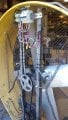
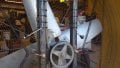
I have three 5kW/240V heater coils (11.5ohms/ea) that go to my 15kW central HVAC furnace. I am installing them inside of a 48 inch shop fan to heat my shop. I have split the third coil in half and added the two halves in series with the other two coils. So now I have effectively 2 coils, each 17.25ohms, which should be 3.34kW each. That's 6.7kW of heat for my shop. Since by increasing the series resistance I have reduced the heat output by 65%, I don't expect any problems with coils burning out, however I just wanted to verify that with the experts here. If my fan for some reason stops moving air over the coils, are they at risk of burning out? Should I add an air flow switch to turn them off if the air stops moving?
 

MaxHeadRoom

Joined Jul 18, 2013
30,590
In the normal course at full voltage, they will overheat and possibly fail if the fan quits, this is why it is usually opposite of a gas heat where the fan comes on After a pre-heat time, with electric heat, the fan comes on first.
If you are cutting the heating drastically you may be OK.
Max.
 

Reloadron

Joined Jan 15, 2015
7,869
What Max mentions. In all of the forced air systems I have seen they make sure there is airflow over the heating elements before applying power to the heating elements. It's like a permissive loop circuit.

Ron
 

MaxHeadRoom

Joined Jul 18, 2013
30,590
Mine also has a timed sequencer, that puts each element bank on line in turn.

Reminds me of an amusing incident with a neighbor that had the intention of leaving her dog in the Garage while she went out, shopping etc,
because it gets Pretty chilly here in the depth of winter, she purchased a fan heater from H.D. for the dogs comfort.
She called me and asked me to look at it as it only worked in her house, but not the garage where it always blew cold air.
Had to explain to her temp differential that a 1kw htr makes at -20°C is not going to cut it.!;)
Max.
 
Last edited:

Thread Starter

strantor

Joined Oct 3, 2010
6,875
Thanks for the advice. I went ahead and added a simple control circuit. I originally just had wired up two breakers, now there is a contactor which has two thermostat switches in series with its coil. Also in series is the fan control switch, so that if some numbskull (like me) turns the fan off before leaving the shop but forgets to unplug the heater cord, that will turn it all off.
 

Thread Starter

strantor

Joined Oct 3, 2010
6,875
P.s. If anyone was curious, the thermostats trip with the coils on and the fan off, but do not trip when the fan is blowing.
 

MaxHeadRoom

Joined Jul 18, 2013
30,590
What is the ambient temp to start with?
I have a 15kw in my triple garage/workshop.
This is OK for outside temp of -5°C to -10°C outside temp.
Max.
 

Thread Starter

strantor

Joined Oct 3, 2010
6,875
What is the ambient temp to start with?
I have a 15kw in my triple garage/workshop.
This is OK for outside temp of -5°C to -10°C outside temp.
Max.
Today was 60f/16C outside, 70f/21C in the shop. It was not a great day to have the heater on, but I wanted to test it anyway.

My shop is around the same size as a large-ish 3 car garage or a 4 car garage. It's 30ft x 30ft, with 12ft ceiling. There is a fairly large volume of air to heat but it is insulated, so I'm hopeful that 15kW will be enough.
 

oz93666

Joined Sep 7, 2010
742
If you are calculating power from coil resistance measured at room temperature it will be a long way out ..

At higher temp the resistance will be higher and power lower.

Changing the configuration as in post 1 will also change the operating temp of the coils hence the expected power ...

watching how fast the electric meter goes round must be the best way.
 

Thread Starter

strantor

Joined Oct 3, 2010
6,875
If you are calculating power from coil resistance measured at room temperature it will be a long way out ..

At higher temp the resistance will be higher and power lower.

Changing the configuration as in post 1 will also change the operating temp of the coils hence the expected power ...

watching how fast the electric meter goes round must be the best way.
That's what I was expecting, and was surprised to find that the coils resistance doesn't change much as they heat up. They are rated 5kW at 240V, which according to Ohm's law, should make their resistance 11.5 ohms and they should draw 20.83 A.

Cold, they measure just under 11 ohms, and hot they draw about 20A. So their resistance does change a little, but not nearly as much as I had expected, and I conclude that no special consideration for temperatures is required in calculations for this application.
 

Thread Starter

strantor

Joined Oct 3, 2010
6,875
I am having a little uncertainty around the physics behind this. I have a post about this project ongoing on my Facebook and someone who isn't stupid suggested that instead of rearranging the coils for more kW of heat, that I find a way to slow the fan down. Here was my response:

here's me thinking out loud... the heater coils consume the same fixed quantity of electrical power whether the fan blows fast or slow. All that power is turned to heat whether the fan blows fast or slow. Standing right in front of the fan with it blowing very slowly would probably feel like it's putting out more heat, but only because it's only throwing the heated air a few feet (distributing a fixed quantity of heat across a small area). Right now I'm distributing that fixed quantity of heat across a large area and I think that's why it doesn't feel particularly warm in front of the fan; I'm spreading too little butter across too large of a bread slice. I'm throwing the heated air all the way across the shop, which really would be ideal if there was just enough of it... it is after all intended to heat the whole shop, not just a small area right in front of the fan. Unless I have a flawed understanding of the physics behind it, I think I need more heat.
After posting that, a couple more people whose intelligence I respect, came along and agreed with the first guy. I was pretty sure of myself when I posted that, but then i considered my 23,800BTU passive kerosene heater (6.8kW = 23,202BTU, so should be directly comparable) which has ZERO airflow, and seems to heat the shop much better than my heater fan, and with nobody in my corner I'm starting to doubt myself.

Am I wrong? Is there something I'm missing? If so, what is it about slowing down the fan that would help warm the shop better?
 

shortbus

Joined Sep 30, 2009
10,050
If the heater coils don't work out for you, you could do the old body shop paint booth trick. Back in my youth electric heat wasn't very easy to come by, so many local body shops used an electric hot water heater and small car radiators to heat the shops. A circulator pump and a box fan behind the radiator completed the set up. An electric water heater was used because of no open pilot light flame.
 

Thread Starter

strantor

Joined Oct 3, 2010
6,875
If the heater coils don't work out for you, you could do the old body shop paint booth trick. Back in my youth electric heat wasn't very easy to come by, so many local body shops used an electric hot water heater and small car radiators to heat the shops. A circulator pump and a box fan behind the radiator completed the set up. An electric water heater was used because of no open pilot light flame.
Interesting idea! I'll look into it, thank you.
 

Thread Starter

strantor

Joined Oct 3, 2010
6,875
If the heater coils don't work out for you, you could do the old body shop paint booth trick. Back in my youth electric heat wasn't very easy to come by, so many local body shops used an electric hot water heater and small car radiators to heat the shops. A circulator pump and a box fan behind the radiator completed the set up. An electric water heater was used because of no open pilot light flame.
OK I've taken stock of my inventory and I have everything I'll need to build a hydronic radiator heater, except for the immersion elements and maybe some fittings, which can be had for cheap at the home depot. Tank, radiator, pump, plumbing, SSRs, heater controller, thermocouple, box fans, pressure relief, etc. all checked off the list. I just want to know before I invest time into it, technically speaking, what benefit is there to heating water to heat air, over just heating air? Heat transfer is a science I never fully grasped but I know there's radiant, convection, and conduction heating, and maybe the type of heating I'm attempting with the shop fan just isn't effective for the application where the radiator would be? I'm not expecting a dissertation on heat science but confirmation of that hypothesis/guess if it's correct and maybe some google buzzwords if I missed the mark.

Thanks!
 

Reloadron

Joined Jan 15, 2015
7,869
I think if we look at all of this, making cold air warm, electricity is the most inefficient and costly. In the case of heating water then extracting the heat out of water it comes down to how much electricity is used? Since heat is what we want why not just use electricity in the absence of another fuel source and make the heat? The water in this case is just a transfer medium for the heat.

I grew up on Long Island, New York. The Cape Cod style home, new in 1953, had what we called an Oil Burner a nice advance from coal at the time. The only merit to using an oil burner furnace was that once hot water was made it was easily distributed room to room to radiators using a circulatory pump system. This is not your case as you want the heat where you make it and making hot water requires a heck of a lot of electricity just to begin with.

In the absence of natural gas or less expensive fuel then if it comes down to using electricity I see no gain and only loss in using electric to heat water to eventually make warm air?

Ron
 

Thread Starter

strantor

Joined Oct 3, 2010
6,875
I think if we look at all of this, making cold air warm, electricity is the most inefficient and costly. In the case of heating water then extracting the heat out of water it comes down to how much electricity is used? Since heat is what we want why not just use electricity in the absence of another fuel source and make the heat? The water in this case is just a transfer medium for the heat.

I grew up on Long Island, New York. The Cape Cod style home, new in 1953, had what we called an Oil Burner a nice advance from coal at the time. The only merit to using an oil burner furnace was that once hot water was made it was easily distributed room to room to radiators using a circulatory pump system. This is not your case as you want the heat where you make it and making hot water requires a heck of a lot of electricity just to begin with.

In the absence of natural gas or less expensive fuel then if it comes down to using electricity I see no gain and only loss in using electric to heat water to eventually make warm air?

Ron
Well that's kinda what I was thinking as well but as I said I don't have a solid grasp of science of heat or HVAC so I thought maybe the water heater solution was presented because while maybe not as efficient, possibly it could be more effective? I really don't know... hence the question. If it's a fool's errand I'm quite happy to cease and desist.
 

MaxHeadRoom

Joined Jul 18, 2013
30,590
An allied story to this is when I lived in the UK, older homes were looking to have a more modern heating arrangement than the central coal fireplace.
As the interest was going the electrical route, a storage heating system was designed consisting on a furniture looking piece of equipment in chosen rooms, that consisted internally of fire brick with elements woven into them.
As these placed a load on the existing electrical service, the plan was to install a meter that automatically switched off during peak daylight hours and came on during the night to store the heat in the firebrick at off peak time.
During the day they just gave off he heat.
In older developments or homes, the Service Co ran 3 phase into the residence to balance the load.
One drawback was you had to predict the weather for the next day in order to set each units thermostat/storage value.:(
Max.
 

shortbus

Joined Sep 30, 2009
10,050
I just want to know before I invest time into it, technically speaking, what benefit is there to heating water to heat air, over just heating air?
Like I said earlier, this was in the 1960's, and in body shops. A gas heater or furnace back when had a pilot light. Open flame(pilot light) and paint fumes and sanding dust are a fire/explosion looking for a place to happen. Electric heating wasn't around back then in my area and this was a way of getting heat in a shop.

The water tank has a pretty good temperature rise on it, and since the water gets recirculated back into the tank after going through the radiator, and doesn't loose all of it's heat, it reheats just that much faster. If doing it today I'd probably use a car air conditioner condenser instead of a radiator, but back the cars weren't air conditioned around here either.

Basically what your making doing it, is a low pressure boiler system, one that is not saturated or making steam. So technically I don't know if it could be called a boiler since it doesn't boil the water, just heats it..
 
Last edited:

#12

Joined Nov 30, 2010
18,224
Post #1, last two sentences: yes and yes. It's called a, "sail switch". If the air velocity doesn't make the flag sail, the power goes off.
Burning electricity to make heat is 3.413 B.T.U.s per watt-hour. The fan speed has nothing to do with it. The fan keeps the nichrome from melting and that's about all it does besides the few hundred watts converted to heat by the fan motor.

No matter how many changes you put the heat through, 3.413 B.T.U.s per watt hour is the hard facts of every case.
Water, radiators, pumps, mean nothing compared to the 3.413 B.T.U.s per watt hour.
 
Top