Why power filter use IN DC circuit?

Thread Starter

Sophi21394

Joined Dec 8, 2024
27
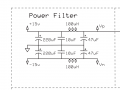
In many DC circuit i observe a power filter that applied that applied to filter the noise from DC circuit I don't understand why they are use? they are simple but my question is such power filter can really necessary or just use because in past power supply are more noisy? example figure attached
 

Attachments

LowQCab

Joined Nov 6, 2012
5,101
Electrical-Noise is everywhere,
there may also be problems with oscillations caused by a wimpy, "soft", Power-Supply.

Power-Supply-Filtering quite often eliminates or suppresses these problems.

Some Circuits actually create tremendous amounts of Electrical-Noise,
this may affect the operation of other equipment,
so the Power-Supply-Filtering may prevent that Noise from
getting into that other equipment and disrupting it's operation in some way.

Switching-Power-Supplies can be particularly bad about generating Electrical-Noise.
.
.
.
 

Papabravo

Joined Feb 24, 2006
22,065
The filter is bidirectional and will prevent noise in the device from polluting the ±15V DC power bus. In particular, the inductors appear to be configured as a common mode filter which is intended to prevent such a problem.
 

Thread Starter

Sophi21394

Joined Dec 8, 2024
27
What do you know about filters? Can you work out what kind of filter that is?
It looks like a CLC circuit with a extra capacitor. +15V 0V -15V DC input in filter Vp and Vn are out output for +15V and -15V. I want to know why so many capacitors and inductor are used to remove noise?
 

Ian0

Joined Aug 7, 2020
13,112
It looks like a CLC circuit with a extra capacitor. +15V 0V -15V DC input in filter Vp and Vn are out output for +15V and -15V. I want to know why so many capacitors and inductor are used to remove noise?
To some extent, it is because the components are not perfect. A real filter might not work as well as a filter designed with ideal components.
You might think that the 220uF and 10uF capacitors could be replaced by a single 230uF capacitor, but the 10uF capacitor will work better at high frequencies than a 220uF capacitor.[/QUOTE]
 

Thread Starter

Sophi21394

Joined Dec 8, 2024
27
Electrical-Noise is everywhere,
there may also be problems with oscillations caused by a wimpy, "soft", Power-Supply.

Power-Supply-Filtering quite often eliminates or suppresses these problems.

Some Circuits actually create tremendous amounts of Electrical-Noise,
this may affect the operation of other equipment,
so the Power-Supply-Filtering may prevent that Noise from
getting into that other equipment and disrupting it's operation in some way.

Switching-Power-Supplies can be particularly bad about generating Electrical-Noise.
.
.
.
but introduction of power filter itself develop noise in simulation, can we say we doing it in hope that power filter suppress bigger noise and as a trade off we generate small noise into system by introducing power filter?
 

Thread Starter

Sophi21394

Joined Dec 8, 2024
27
The filter is bidirectional and will prevent noise in the device from polluting the ±15V DC power bus. In particular, the inductors appear to be configured as a common mode filter which is intended to prevent such a problem.
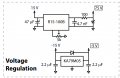
So in the figure i now uploaded where +15V is converted to +75V and -15V converted to -5V capacitors are put both at input and output to remove noise? There is some method or algorithm by which we can know where which kind of filtering like C,L,LC,CLC, should be used?
 

Attachments

ericgibbs

Joined Jan 29, 2010
21,415
hI S,
If you check the datasheets for linear regulators they advise that they require capacitors on the input and outputs, mounted as close as possible to the regulator, in order to prevent instability of the regulator.
A good rule of thumb is to use 100nF on the input and outputs, and also 47uF or 100uF caps for smoothing.

E
 

LowQCab

Joined Nov 6, 2012
5,101
but introduction of power filter itself develop noise in simulation, can we say we doing it in hope that power filter suppress bigger noise and as a trade off we generate small noise into system by introducing power filter?
.
A Filter will not "generate" Electrical-Noise.

But, it is possible, by using "ideal-Components",
( such as the generic-Components used in some Circuit-Simulators ),
and/or,
Components that may be improperly matched to each other,
to create oscillations,
especially during Power-up, and Power-down, periods.

These Oscillations, ( if any ),
are generally at a much lower Frequency than the usual types of Noise that can be problematic.

Filters must take into account all of the "non-ideal" specifications of all Components,
such as, the DC-Resistance of the Inductors, and the ESR of the Capacitors ( Equivalent-Series-Resistance ).
There are other Component "non-linearities" that must also be considered and tested.

When a Filter is well designed,
it generally will be "over-damped",
with little to no oscillations under the expected circumstances.
.
.
.
 

MrAl

Joined Jun 17, 2014
13,680
In many DC circuit i observe a power filter that applied that applied to filter the noise from DC circuit I don't understand why they are use? they are simple but my question is such power filter can really necessary or just use because in past power supply are more noisy? example figure attached
Hi,

That is a rather complicated design for a regular power rail filter. It seems that filter must have been used for a particular application. They appear to be using both electrolytic caps and what is rarer is somewhat larger ceramic caps.

These kinds of filters filter out noise on the power rail, but there are many cases when they keep noise from the circuit itself from getting to the power rail. A good example of this is with a radio frequency circuit which often uses an inductor in series with the collector of a transistor. As the transistor oscillates and/or amplifies the signal, the inductor keeps the oscillations from getting to the power rail, which would feedback into the input stages and cause problems.

Power line filters prevent noise from the circuit from getting back to the power line. There are various harmonics that if allowed to reach the power line, could add to the noise from other similar circuits online at the time and mess up the power for many customers. There have actually been studies on this. Power converters are the typical devices that can cause these problems, especially line-tied converters that get their power from batteries or solar panels.

Power filters always attempt to make the voltage smoother for the circuits that need power, and some help to keep the circuits from bothering the power line. The difference between these kinds of filters and the signal type filters is that the power filters have to handle more power.
 

Papabravo

Joined Feb 24, 2006
22,065
So in the figure i now uploaded where +15V is converted to +75V and -15V converted to -5V capacitors are put both at input and output to remove noise? There is some method or algorithm by which we can know where which kind of filtering like C,L,LC,CLC, should be used?
Your original schematic did not show the coupling polarity of the inductors. If the coupling is in phase you have a common mode filter. If the coupling is out of phase you have a differential mode filter. The basic topology is CL or LC sections. More complicated arrangements result when the basic sections are cascaded. The analysis of cascaded section is more complicated because of loading effects of one section on another.
 

Thread Starter

Sophi21394

Joined Dec 8, 2024
27
hI S,
If you check the datasheets for linear regulators they advise that they require capacitors on the input and outputs, mounted as close as possible to the regulator, in order to prevent instability of the regulator.
A good rule of thumb is to use 100nF on the input and outputs, and also 47uF or 100uF caps for smoothing.

E
Its DC even in DC it matter? I generally think only ac coupling polarity matter
 

Thread Starter

Sophi21394

Joined Dec 8, 2024
27
Hi,

That is a rather complicated design for a regular power rail filter. It seems that filter must have been used for a particular application. They appear to be using both electrolytic caps and what is rarer is somewhat larger ceramic caps.

These kinds of filters filter out noise on the power rail, but there are many cases when they keep noise from the circuit itself from getting to the power rail. A good example of this is with a radio frequency circuit which often uses an inductor in series with the collector of a transistor. As the transistor oscillates and/or amplifies the signal, the inductor keeps the oscillations from getting to the power rail, which would feedback into the input stages and cause problems.

Power line filters prevent noise from the circuit from getting back to the power line. There are various harmonics that if allowed to reach the power line, could add to the noise from other similar circuits online at the time and mess up the power for many customers. There have actually been studies on this. Power converters are the typical devices that can cause these problems, especially line-tied converters that get their power from batteries or solar panels.

Power filters always attempt to make the voltage smoother for the circuits that need power, and some help to keep the circuits from bothering the power line. The difference between these kinds of filters and the signal type filters is that the power filters have to handle more power.
 

Thread Starter

Sophi21394

Joined Dec 8, 2024
27
220µF capacitors are electrolytic, 10µF capacitors are ceramic, and 47µF capacitors are tantalum. DO correct way of thinking is - the 220µF capacitor removes larger noise, the 10µF capacitor handles the remaining high-frequency noise, the inductor reduces current noise, and the 47µF tantalum capacitor adds reliability to the circuit, especially for long-term operation ? correct or something wrong/missing ? I doubt on inductor current noise.
 

LowQCab

Joined Nov 6, 2012
5,101
Ahhh .........
The real question has been revealed ..........

You don't understand the differences between different types of Capacitors ........

A complete education on Capacitors is not practical in a public Forum.

It could take an entire year to get a reasonable and useful understanding of
each of the various types of Capacitors that are available, and why there are so many different types.

Here is a place for You to start learning about Capacitors.

Two of the most important things to know about Capacitors is that each different type and SIZE
has a specific Frequency range where it is most effective and
whether it is suitable for AC usage, or DC-only usage.

Good luck on your learning adventure.
.
.
.
 

Thread Starter

Sophi21394

Joined Dec 8, 2024
27
220µF capacitors are electrolytic, 10µF capacitors are ceramic, and 47µF capacitors are tantalum. DO correct way of thinking is - the 220µF capacitor removes larger noise, the 10µF capacitor handles the remaining high-frequency noise, the inductor reduces current noise, and the 47µF tantalum capacitor adds reliability to the circuit, especially for long-term operation ? correct or something wrong/missing ? I doubt on inductor current noise.
220uF is aluminium electrolytic and 47uF is tantalum electrolytic
 

Thread Starter

Sophi21394

Joined Dec 8, 2024
27
Ahhh .........
The real question has been revealed ..........

You don't understand the differences between different types of Capacitors ........

A complete education on Capacitors is not practical in a public Forum.

It could take an entire year to get a reasonable and useful understanding of
each of the various types of Capacitors that are available, and why there are so many different types.

Here is a place for You to start learning about Capacitors.

Two of the most important things to know about Capacitors is that each different type and SIZE
has a specific Frequency range where it is most effective and
whether it is suitable for AC usage, or DC-only usage.

Good luck on your learning adventure.
.
.
.
Its something more in terms than just frequency range as tantulum capacitor are costly compare to aluminium / cermaric that provide reliability to circuitanime-girl-with-surprised-expression-her-face-generative-ai_958124-30568.jpg
 
Last edited by a moderator:
Top