Where to buy soldering wire with real rosin inside?

Ian0

Joined Aug 7, 2020
13,307
Most lead-free solders are made from metals much less toxic than lead (wasn’t that the whole point of the exercise?) such as tin, copper, silver and bismuth. (Very occasionally you might see antimony, which isn’t nice).
I have been using lead-free solder for 15 years now, and I would have to refute the “inferior results with more effort” claim.
Whoever said that is probably using the wrong alloy - yes, 99C is dreadful, and suffers from tin-pest. But use a decent alloy and you get a solder joint that is 11% more conductive and much less prone to creep under pressure.
 

Ya’akov

Joined Jan 27, 2019
10,355
Most lead-free solders are made from metals much less toxic than lead (wasn’t that the whole point of the exercise?) such as tin, copper, silver and bismuth. (Very occasionally you might see antimony, which isn’t nice).
I have been using lead-free solder for 15 years now, and I would have to refute the “inferior results with more effort” claim.
Whoever said that is probably using the wrong alloy - yes, 99C is dreadful, and suffers from tin-pest. But use a decent alloy and you get a solder joint that is 11% more conductive and much less prone to creep under pressure.
I said it, and I am willing to say it unequivocally—soldering with eutectic Sn/Pb alloy is at least an order of magnitude easier than using any lead-free alloy I have used, and I have used at least a dozen products from reputable vendors.

The first issue is temperature, the second is while I have at least one eutectic lead-free alloy, most I encounter readily make cold joints. It is my experience this is more common with non-eutectic lead-free that with alloys like 60Sn/40Pb.

As far as toxicity goes—yes, the potential is substantially reduced, we can agree on that, but since I really don't know what is in the solder on PCBs I am working on (RoHS or not) I find it prudent to take the same precautions in every case meaning there may be a probabilistic advantage to lead-free in the toxicity regime, but there is no practical advantage since I treat it the same way.

Soldering for 15 years? You should take a break and let your iron cool off—especially since that RoHS solder of yours demands the iron operate at temperatures otherwise only seen in supernovae. </levity>
 

Ya’akov

Joined Jan 27, 2019
10,355
Most lead-free solders are made from metals much less toxic than lead (wasn’t that the whole point of the exercise?) such as tin, copper, silver and bismuth. (Very occasionally you might see antimony, which isn’t nice).
I have been using lead-free solder for 15 years now, and I would have to refute the “inferior results with more effort” claim.
Whoever said that is probably using the wrong alloy - yes, 99C is dreadful, and suffers from tin-pest. But use a decent alloy and you get a solder joint that is 11% more conductive and much less prone to creep under pressure.
As an aside, I don't doubt your ability to use the lead-free solder with facility. I have learned to use it but reverted to my beloved eutectic tinny lead when I found I was doing more work with a hotter iron and in my case, gaining nothing since I am not exporting anything.

So, I respect your opinion and don't intend to suggest it is contextually invalid—I believe that for you (and similarly situated people) the increased difficulty, if it exists for you at all, is not enough to used lead.
 

Ian0

Joined Aug 7, 2020
13,307
As an aside, I don't doubt your ability to use the lead-free solder with facility. I have learned to use it but reverted to my beloved eutectic tinny lead when I found I was doing more work with a hotter iron and in my case, gaining nothing since I am not exporting anything.

So, I respect your opinion and don't intend to suggest it is contextually invalid—I believe that for you (and similarly situated people) the increased difficulty, if it exists for you at all, is not enough to used lead.
It's like making a stack of pennies 10 high or 20 high. Obviously one is twice as difficult as the other, but neither is that hard.
Leaded solder is a dim and distant memory to me. I remember how nicely it flowed and how shiny it looked, but TSC gets the job done without a fuss, and we can legally ship out our emergency lighting systems along with a tonne of lead in the batteries.
 

dl324

Joined Mar 30, 2015
18,490
I have been using lead-free solder for 15 years now
RoHS was misguided. The amount of lead that ends up in the environment from electronic equipment is small. All the EU did was bring back tin whiskers. When that phenomenon was first observed, it was determined that adding lead made it go away. Now it's back due to some clueless officials in the EU. Fortunately, NASA and, I believe, the airline industry are exempted.
 

Ian0

Joined Aug 7, 2020
13,307
RoHS was misguided. The amount of lead that ends up in the environment from electronic equipment is small. All the EU did was bring back tin whiskers. When that phenomenon was first observed, it was determined that adding lead made it go away. Now it's back due to some clueless officials in the EU. Fortunately, NASA and, I believe, the airline industry are exempted.
Maybe. Getting rid of Cadmium, hexavalent Chromium, mercury and all the various organic compounds was probably a good idea. Not sure about lead. All I know is that there were two studies, one funded by the EU which said it leached out of landfills, and one funded by someone else that said it didn't.
There are so many exceptions that they make a mockery of some parts of it. Did you know that most brass connector pins contain 4% lead? (because they are"easy machining brass" and that is perfectly acceptable)
Lead has a very high recycling rate, but that is due to batteries an roofing lead. I'm not sure how many scrapyards would want to recycle pcbs, but they would get the tin and a bit of gold.
 

dl324

Joined Mar 30, 2015
18,490
Not sure about lead. All I know is that there were two studies, one funded by the EU which said it leached out of landfills, and one funded by someone else that said it didn't.
Since this thread is about solder, I was only referring to lead and the resulting tin whiskers.
Did you know that most brass connector pins contain 4% lead? (because they are"easy machining brass" and that is perfectly acceptable)
Yes. California passed Proposition 65 (to protect drinking water from chemicals known to cause cancer, birth defects, or other reproductive harm) in 1986 that required placing warning labels on brass plumbing fixtures. I lived in California at the time. Now I live in Oregon and we see Prop 65 warnings on a lot of things.
 

Homebrew1964

Joined Nov 22, 2024
289
For the home hobbyist i don't think there is any chance of getting sick through inhaling solder fumes, it's not like we are going to spend hours soldering and all these remedies that have been mentioned are in my opinion overkill, i'm quite partial to a sniff of flux residue myself and can say it's never bothered me.
Spend that cash you might have spent on fume extraction on some components and have fun :)
 

WBahn

Joined Mar 31, 2012
33,312
Since this thread is about solder, I was only referring to lead and the resulting tin whiskers.
Yes. California passed Proposition 65 (to protect drinking water from chemicals known to cause cancer, birth defects, or other reproductive harm) in 1986 that required placing warning labels on brass plumbing fixtures. I lived in California at the time. Now I live in Oregon and we see Prop 65 warnings on a lot of things.
Notice that California exempts itself from Prop 65. Otherwise every "Welcome to California" sign would have to have a label informing people that the state contains substances known to the state of California to cause cancer.
 

Ya’akov

Joined Jan 27, 2019
10,355
For the home hobbyist i don't think there is any chance of getting sick through inhaling solder fumes, it's not like we are going to spend hours soldering and all these remedies that have been mentioned are in my opinion overkill, i'm quite partial to a sniff of flux residue myself and can say it's never bothered me.
Spend that cash you might have spent on fume extraction on some components and have fun :)
You "don't think" there is any danger with a sample of one. Maybe you should do some research to see how much exposure is dangerous and how much time other hobbyists actually spend soldering.

I get it is overkill "in your opinion" but your opinion seems informed by very Iittle. I'm sorry if my response seems harsh but this is a health and safety issue and involves asthma—a condition that is on the rise due to environmental particulates from things like diesel particulates.

The colophony smoke can sensitize a person to asthmatic responses and so it is not an isolated thing. Lead poisoning (through ingestion from residues on hands, for example, is cumulative. So it is another case where the soldering may just be one factor.

Your evidence that your "sniff of flux residue" has "never bothered you" is not evidence to support your assertion that it isn't dangerous—even to you. I do hope you never develop asthma but you are basically playing chicken with a chronic disease.
 

Jon Chandler

Joined Jun 12, 2008
1,653
I've never had a problem with rosin fumes – rosin is a natural product from pine trees

But I have definitely have adverse reactions to some of the activated, no-clean or water-clean fluxes. Irritated nose and throat, burning eyes.... to the point I won't use a newly full roll of solder.

A word of warning – water-clean fluxes may cause rapid corrosion if not cleaned.
 

Thread Starter

sonohe

Joined Jan 11, 2025
96
Occasional exposure is probably not harmful
This is why I am asking about this topic exactly. I am aware of the risks of the fumes, if I solder for a long time I wear a mask. But it happens you just need to do a soldering fast. Or even in case you use an extractor, some fume can escape, or circulate back on you in the air. I'd rather use solder with real rosin in that case, because that does smell like a natural substance at least, and don't irritate me at all, unlike the modern fluxes.

I heard about of the Kester, it was mentioned it has a formula that has been unchanged for decades. Me, I don't know, but if that is the case it can be a good reference point regarding the flux issue.

What kind of filter is in the fume extractors? Are they similar to black sheets that you can purchase for kitchen extractors over the stoves? Can you link some?
 

Thread Starter

sonohe

Joined Jan 11, 2025
96
Thanks for the suggestions from everyone!

Just for the sake of the situation here:

In the past two days I did some tests, and I think, even if not on every continent, but here in the EU, something must have changed in the flux in the past few (or more years).

The old solder that I mentioned had intensive rosin smell, that was similar in the past with every solder I bought or used, so that solder was purchased by me about 10 years ago in a shop, I remember now. That was the one I have just run out of. As I mentioned I bought a new roll on Aliexpress, the specs claimed it is SnCu. That brand smells terrible. It has very strong annoying smell. Similar to bone glue burning.

Then there is another one, which I purchased at the same shop where I got the one that had the classic rosin smell, and that I have just run out of. The shop where I got it sells stuff at acceptable quality. . It is SnPb, yet that one also smells differently now. I can stand the smell of the newly purchased one more or less, but the core is not the one it was earlier. I think that is the replacement brand for the one I purchased 10 years ago from the same shop.

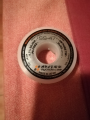
Okay, so even after this, one might think I am not buying the quality stuff. It revealed my father has a Japanese brand of wire, with silver inside. Here is the photo:

1781692776276.png

This one smells very similar to the one I have just purchased from the local shop. Definately not rosin, or if it is that, it has to be some different type. Or I don't know, but not the classic old rosin smell. However I can stand it much better than the one from Aliexpress.

Today I went to a store that sells quality stuff. I purchased a tube of SnPb from Poland. Soldering wires and irons made there has been respected and considered good quality here. That is the market where I expected to find something that has the good old rosin core. Similarly to the Japanese, no rosin smell, but smells like some artificial flux. Definately much less irritating than the one from Aliexpress.

Then, luckily, I managed to find another old batch of wire in our garage today, in a box. As I remember that box has not been opened for 20 years, it is a box of my father. I tried it: TADAAM, the good old rosin smell. Just like in case of every other wire I puchased or tried back then, and before.

In the past few days I thought I remembered wrongly, but trying the old wire again, I am quite sure now that these wires in the past had a different kind of flux. I remember just any kind of wire that I used that long ago had the good rosin smell, and it seems none have the flux like that today. Or if any does, it is difficult to find. I talked to someone from Poland and he confirmed he has the same problems with fluxes.

By the way, someone was suggesting getting solid core wires with 0% fluxes and rosin. Here where I am, I can buy pure 100% natural rosin (boiled and refined,so not the one right from the tree). Can I use that one as flux? If yes, how do you use it with the solid core wires? You melt a pinch off from the rosin piece with the hot tip of the soldering iron and start soldering like that, or you need to dissolve the rigid resin in something?
 

B-JoJo-S

Joined Jan 3, 2026
595
You've mentioned "OLD" solder. Perhaps the old solder you've become accustomed to actually had chemically changed with age. Maybe what you're thinking is normal is actually like old milk. You've grown used to its smell and don't recognize it has expired. In the industries I've worked, solder does have an expiration date. A date in which the company will remove it from stock. The spool I have in hand at this moment has a D.O.M. of November 05/14. In other words it's approaching 12 years from Date Of Manufacture come November. The place I got it from was a company I worked for. They assigned a 3 year period of usefulness, though it's still highly useful for what I do with it. It is 60/40 tin/lead 0.60mm size. After the expiration date assigned by the company that purchased it has passed they toss it out. I've gotten quite a bit of solder that way. So much so that I'll probably never use it up before I pass. Off hand I can't find some of the other solder spools I have laying around so I can't provide more examples. As to how they smell when in use - I can't say there's a distinct smell, good or bad. New or old.

So far I worked from an old big pile of soldering wire, that my father purchased long ago.
That was from your first post. How "Old" was the solder you were using?
 

dl324

Joined Mar 30, 2015
18,490
if I solder for a long time I wear a mask. But it happens you just need to do a soldering fast.
What kind of filter is in the fume extractors?
Unless you're soldering for several hours a day, a mask and fume extractor are overkill. Just hold your breath while you're actually soldering. Even if you're soldering for hours; just hold your breath while soldering.

When I worked as a technician (building refrigerator sized computers for a year and several years as an R&D tech), there was never a fume extractor. I spent more time soldering as an R&D tech, but it was never a majority of my work.
 

Thread Starter

sonohe

Joined Jan 11, 2025
96
Unless you're soldering for several hours a day, a mask and fume extractor are overkill. Just hold your breath while you're actually soldering. Even if you're soldering for hours; just hold your breath while soldering.

When I worked as a technician (building refrigerator sized computers for a year and several years as an R&D tech), there was never a fume extractor. I spent more time soldering as an R&D tech, but it was never a majority of my work.
I wouldn't use the mask and the extractor together. But the mask is that big, full face one. That is quite heavy and my neck gets tired after a while, so an extractor would be better. I saw some of these, they consist of a frame and a black sponge-like stuff in it, and a computer cooler fan at the back. I could easily assemble one if I knew what type of sponge or textile I need to catch the fume effectively.
 

dl324

Joined Mar 30, 2015
18,490
I could easily assemble one if I knew what type of sponge or textile I need to catch the fume effectively.
If they use a filter, it's usually an activated charcoal type.

But, as I said earlier, unless you're soldering for many hours at a stretch, mask and extractor are unnecessary. Just hold your breath while you're actually soldering.
 
Top