what is this spike...?

Thread Starter

toffee_pie

Joined Oct 31, 2009
235
Greetings folks,

hope everyone is keeping well.

I thought it a good idea to pop this up here as no doubt someone else will understand this more than me..!

This is a scope trace from the ripple of a design I have been working on, its basically a switching power supply - its a company product so need to be discrete but I am wondering what is the repetitive spike and what is its source?

The ripple is around 45mv which for all intents and purposes is not too bad but I think its can be better -- the evaluation board I have that uses this dc dc converter [ LMZM23601 has around 20mv of a ripple and no spikes, but I delved into its gerber files and seen it uses 4 layers... and a solid plane for ground and power - I only have a basic 2 layer board and after much fiddling managed to get all tracks routed on the top side and my bottom layer is solid ground - I should point out my board is done on a non commercial route machine, so one of those pieces of kit that companies uses for proto types etc..I have plated thru holes also on this.​

If this board was done by a commercial outfit would the ripple be reduced or is there something more sinister going on? I should point out the first version of my board had almost a 200mv ripple so I am definitely seeing improvements...! - basically this board I am using has almost commercial level performance minus these spikes I am seeing...

I should point out the product has circa 24V in and a 12V/1A output - this trace is for a fully cranked up load, so 12R/25Watt wire wound resistor with a heatsink


Thread Starter

toffee_pie

Joined Oct 31, 2009
235
That is the switching noise which is why most prefer non-switching linear power supplies for bench use.
hmm, really... I am getting this trace with a 24V power brick plugged into my PCB..

The evaluation board (no spikes) I use a bench supply, the output is pretty as above but without spikes..

is the source of the spikes the actual power brick itself?
 

Papabravo

Joined Feb 24, 2006
22,082
It is the result of an impedance mismatch and lack of damping between the output impedance of the power supply and the input impedance of the device being powered. Without going into detail it is difficult to remediate this problem without the ability to analyze and test both the source and the load. No simple, back of the envelope calculation, will do the job.
 

Thread Starter

toffee_pie

Joined Oct 31, 2009
235
Not sure what a power brick is but that is typical switching power supply noise.
wall wart...! we call them power bricks over across the pond..

now I need to power this pcb up with my bench supply -- never thought this noise was attributed to the brick itself...
 

Papabravo

Joined Feb 24, 2006
22,082
wall wart...! we call them power bricks over across the pond..

now I need to power this pcb up with my bench supply -- never thought this noise was attributed to the brick itself...
It is the combination of the output impedance of brick and the input impedance (if any) of the device connected to it.
It is how they make them small and efficient. If they didn't make them that way, they would make dandy whole house heaters or "igniters".
 

Thread Starter

toffee_pie

Joined Oct 31, 2009
235
Thanks folks,

I have put in a footprint for an inductor at the input of this pcb (currently shorted out by a 0R link) , and mindful of what I have been told I am going back to the lab tomorrow to do two things

1. Check this pcb with a bench power supply (not a wall wart) and compare ripple with the pic above
2. Plug in my ready to go SMD inductors at the input, I am going to cheat a bit as I have a whole bunch to try out, but if they improve things I know I am on the right path.
 

Papabravo

Joined Feb 24, 2006
22,082
Thanks folks,

I have put in a footprint for an inductor at the input of this pcb (currently shorted out by a 0R link) , and mindful of what I have been told I am going back to the lab tomorrow to do two things

1. Check this pcb with a bench power supply (not a wall wart) and compare ripple with the pic above
2. Plug in my ready to go SMD inductors at the input, I am going to cheat a bit as I have a whole bunch to try out, but if they improve things I know I am on the right path.
I applaud your industry, but inductors may or may not be the correct solution. I just cannot tell from the available information.
 

Juhahoo

Joined Jun 3, 2019
302
Switch noise, visible even in their datasheet. Try to feed SYNC pin another frequency and see what it does.
You can manipulate pin10 (even that it is not recommended), it is the switch node and add a snubber circuit to damp EMI.

https://fscdn.rohm.com/en/products/...er/switching_regulator/buck_snubber_app-e.pdf

https://www.google.com/url?sa=i&url=https://www.richtek.com/Home/Design%20Support/~/media/DT_PDF/EMI_design_tips.pdf&psig=AOvVaw1fzzX4M6HXQgx-wYnnWKPq&ust=1632263202068000&source=images&cd=vfe&ved=0CAoQjhxqFwoTCMC70L3MjvMCFQAAAAAdAAAAABAD
 
Last edited:

dcbingaman

Joined Jun 30, 2021
1,065
hmm, really... I am getting this trace with a 24V power brick plugged into my PCB..

The evaluation board (no spikes) I use a bench supply, the output is pretty as above but without spikes..

is the source of the spikes the actual power brick itself?
When it comes to switching power supplies, layout and route is critical. You may want to share the schematic and the gerber files.
 

Thread Starter

toffee_pie

Joined Oct 31, 2009
235
I checked my PCB with a bench supply and was surprised to see the spikes still there - I think I am pushing this design to the limits as I am only using 2 layers and the DCDC chip is maxed out, 12V 1A out - it was mid way through the design phase the current requirement changed from 500mA to 1A ... typical - also I noticed if I solder the 12R load direct to the PCB the ripple improves loads, down to around 25mV, but I do need some length of wire from the V+ V- mounting holes to the usable load, I think some inductance or some resonance is created from the longer wires causing this extra ripple?

The ripple in the top photo is not too bad and I will see how it fares for EMC, this was the previous proto - it failed at circa 160MHz with a 5dB peak over the limit, the changes to the recent board include adding 3 x 100p caps to Cin of the converter, improvement in overall tracks and track widths and keeping the bottom layer as ground with no tracks - that has yielded the picture in the original post.


dcbingaman

Joined Jun 30, 2021
1,065
What type of wire are you using to go from the board to the load? Maybe you already are, but you will want to use twisted pair wiring to the load. The more twists per inch the better.
 

Thread Starter

toffee_pie

Joined Oct 31, 2009
235
What type of wire are you using to go from the board to the load? Maybe you already are, but you will want to use twisted pair wiring to the load. The more twists per inch the better.
Been grabbing anything I get hold of...! I we have this type in the lab but I have not used it, should I use this and either join a few strands together or just not use then? I only need to draw 1A
https://miro.medium.com/max/1200/1*GZ5cPqRXlobaHqSxf7NfGg.png
 

dcbingaman

Joined Jun 30, 2021
1,065
Ok, if you want to use standard ethernet cable that is fine as long as it is wired as such:
1632260360017.png
That is use all four twisted pairs. Each twisted pair should take the positive and negative of the power supply. If you wire it any other way you will have higher inductance and possibly higher resistance. Keep the pigtails at the end as short as reasonably possible and use heaver gauge wire for that. Recommend say 16-18 gauge for the pigtails that interconnect it.
 

William Ketel

Joined Jan 23, 2018
28
Spikes and other grief in switching power supplies are a common problem, and some noise is usually present. Some of the problems are caused by the PCB layout itself. Trace inductance is one cause, another cause is coupling due to multiple currents flowing through a section of circuit board trace. Board layout for switchers is very tricky, and requires a great deal of understanding exactly how the circuit works.
 

Thread Starter

toffee_pie

Joined Oct 31, 2009
235
greetings all,

so, a quick update - I think I have been overly worrying about the spike in question. I put this board through all the EMC tests today (we can do in house) and it passed Radiated Emissions (V/H) with a bare bones PCB and with the PCB in its housing shell as its intended to be sold commercially - the improvement was also surprisingly good, it was around 30 dBuV/m below the threshold limit which was remarkable - I thought.

It also passed conducted emissions, Transients and the ESD 'zap' test...

My handiwork was-done with Zuken and on a cheap FR4 board we have in house, the previous board failed emissions at around 160 MHz, this has superior performance - the main things done are the solid unbroken ground plane on the bottom side, the body of the chassis electrically grounded, wider tracks etc on the top side where necessary and the inclusion of the 3 x 100pf caps alongside the input cap Cin for the converter.

I should point out this is my 5th attempt! first one had almost 400mV ripple..:D -- so yes layout for switching stuff is black magic - I am not an experienced engineer but you learn this as you move along for sure

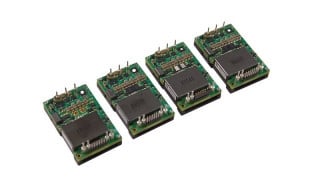
May well put this onto a 4 layer board as the next proto spin will be most likely done by a professional PCB company as the project ramps up to the phase where more tests and compliance is done with a focus on commercial aspects - the commercial PCB should have improved performance I would imagine due to solder mask coating etc.?

thanks for the advice folks
 

MisterBill2

Joined Jan 23, 2018
27,508
There is a lot of useful information and analysis available regarding switcher power supply design, including a whole lot about board layout and loop analysis. It seems that not only does layout affect ripple and noise spikes, it can also affect stability. So I suggest looking at the output with a scope setting that will put just one cycle on the screen and see if you find any oscillation. Better now than after they go into production. Trust me on that part.
 

Thread Starter

toffee_pie

Joined Oct 31, 2009
235
There is a lot of useful information and analysis available regarding switcher power supply design, including a whole lot about board layout and loop analysis. It seems that not only does layout affect ripple and noise spikes, it can also affect stability. So I suggest looking at the output with a scope setting that will put just one cycle on the screen and see if you find any oscillation. Better now than after they go into production. Trust me on that part.
you mean ringing on the output? I am sure I can look into this next week as today I was in the EMC chamber all week.

I think a 4 layer board will further improve things but I appreciate the guidance
 
Top