Facebook
 Google
 GitHub
 Linkedin

When we talk about RLC circuits, we have the following concept of quality factor:
High Qs = High selectivity → The circuit is more accurate and focuses well on the resonance frequency.
Low QS = Low selectivity → The circuit is less accurate and does not focus well on the resonance frequency, covering a wider range of frequencies.
So, you are correct: the higher the QS, the higher the selectivity and the sharper (accurate) the response of the circuit around the desired frequency.
But I didn't understand when we entered the power part I found an image where we have 1/2 power in red and black but I couldn't understand the logic and behavior Could someone explain.
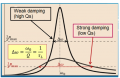
Sources: https://pessoal.ect.ufrn.br/~ronai/Principal/PFE2014-2/Aulas/S29/5.html
https://en.wikipedia.org/wiki/Q_factor
High Qs = High selectivity → The circuit is more accurate and focuses well on the resonance frequency.
Low QS = Low selectivity → The circuit is less accurate and does not focus well on the resonance frequency, covering a wider range of frequencies.
So, you are correct: the higher the QS, the higher the selectivity and the sharper (accurate) the response of the circuit around the desired frequency.
But I didn't understand when we entered the power part I found an image where we have 1/2 power in red and black but I couldn't understand the logic and behavior Could someone explain.
Sources: https://pessoal.ect.ufrn.br/~ronai/Principal/PFE2014-2/Aulas/S29/5.html
https://en.wikipedia.org/wiki/Q_factor